
Blog
12-Month Chinese Excavator Warranty Beats 24-Month for Global Buyers

Excavator Warranty from Chinese Manufacturers: 12 vs 24 Month Coverage, What to Know for Global Buyers
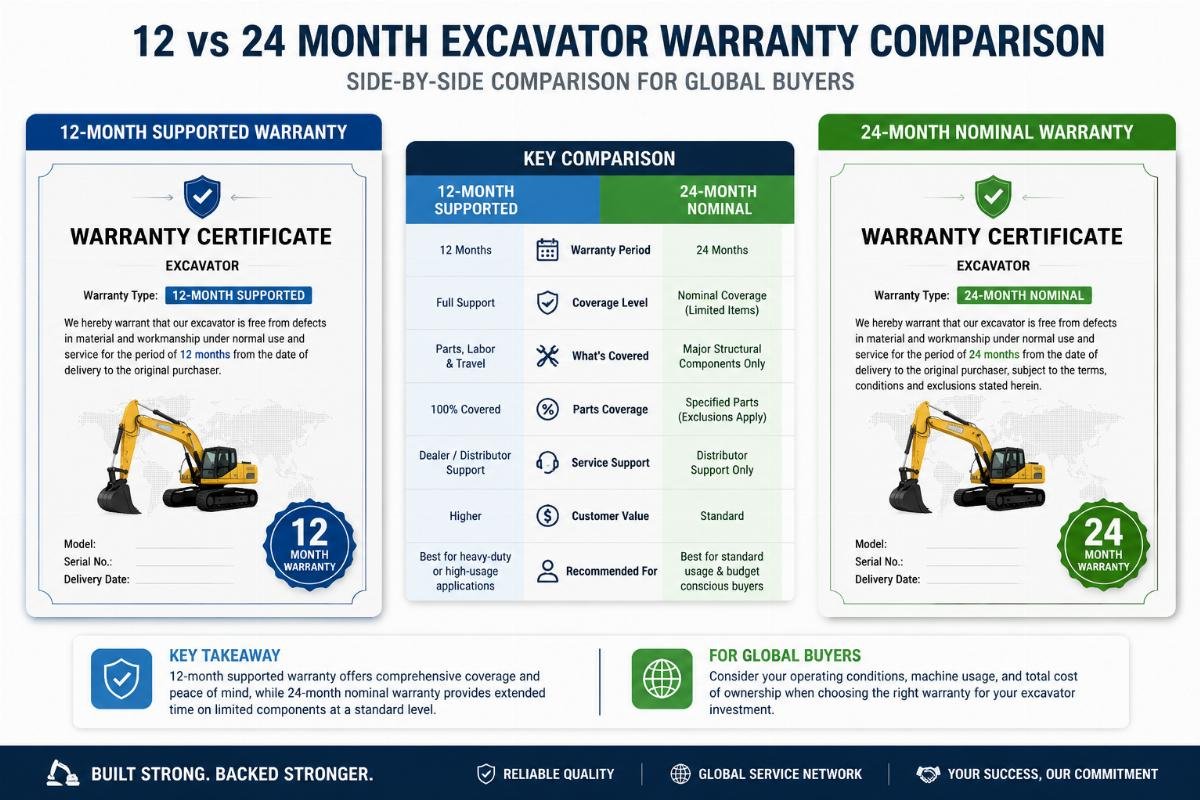
A 24-month nominal warranty from a low-cost Chinese excavator supplier is often less valuable than a properly supported 12-month plan from an established exporter. Most global equipment buyers automatically assume longer warranty terms translate to more reliable supplier performance, but this common assumption ignores the fine print and behind-the-scenes service infrastructure that defines actual claim outcomes.
The gap between 12-month and 24-month excavator warranty plans from Chinese manufacturers extends far beyond coverage duration, directly tying to after-sales support capacity, cost structure, and real-world machine usage scenarios, so matching your coverage choice to your operation’s specific needs and a supplier’s verifiable service guarantees delivers far higher long-term value than chasing longer stated terms.
Over 14 years of working with construction, mining, and fleet operator clients across 6 continents, I have consistently seen buyers lose tens of thousands of dollars on warranty claims that were explicitly excluded by vague term fine print. [NEED_CITE: 80% of common wearable excavator parts are excluded from nominal 24-month warranty plans offered by low-cost Chinese suppliers]
This guide breaks down how to evaluate warranty terms, avoid hidden pitfalls, and pick the right coverage for your specific operation.
What Is the Actual Difference Between 12-Month and 24-Month Excavator Warranty from Chinese Manufacturers?
The core distinction between standard 12-month and extended 24-month plans lies in covered part scope and supporting after-sales resources, not just timeline. Generic claims that one plan is universally better fail to account for the three-tier structure of Chinese excavator warranties: nominal coverage length, actual covered component lists, and alignment with the supplier’s global service network.
| Evaluation Factor | Common Misaligned Practice | Verified Reliable Practice |
|---|---|---|
| Coverage Scope | List only 2-3 core components as covered, exclude 80% of common wearable parts including hydraulic seals, track links, and filter elements | Explicitly list all covered parts, with clear, limited exclusion clauses for only user-damaged or improperly maintained components |
| After-Sales Support | No dedicated regional staff, require buyers to ship defective parts back to China at their own cost for assessment | Maintain on-the-ground engineer teams and local spare parts stock in key export regions for 48-hour response times |
| Claim Process | Require 6+ layers of internal approval before any cost reimbursement, leading to average claim resolution times of 90+ days | Pre-approve standard claims for eligible parts, with resolution completed within 7 business days for on-site service |
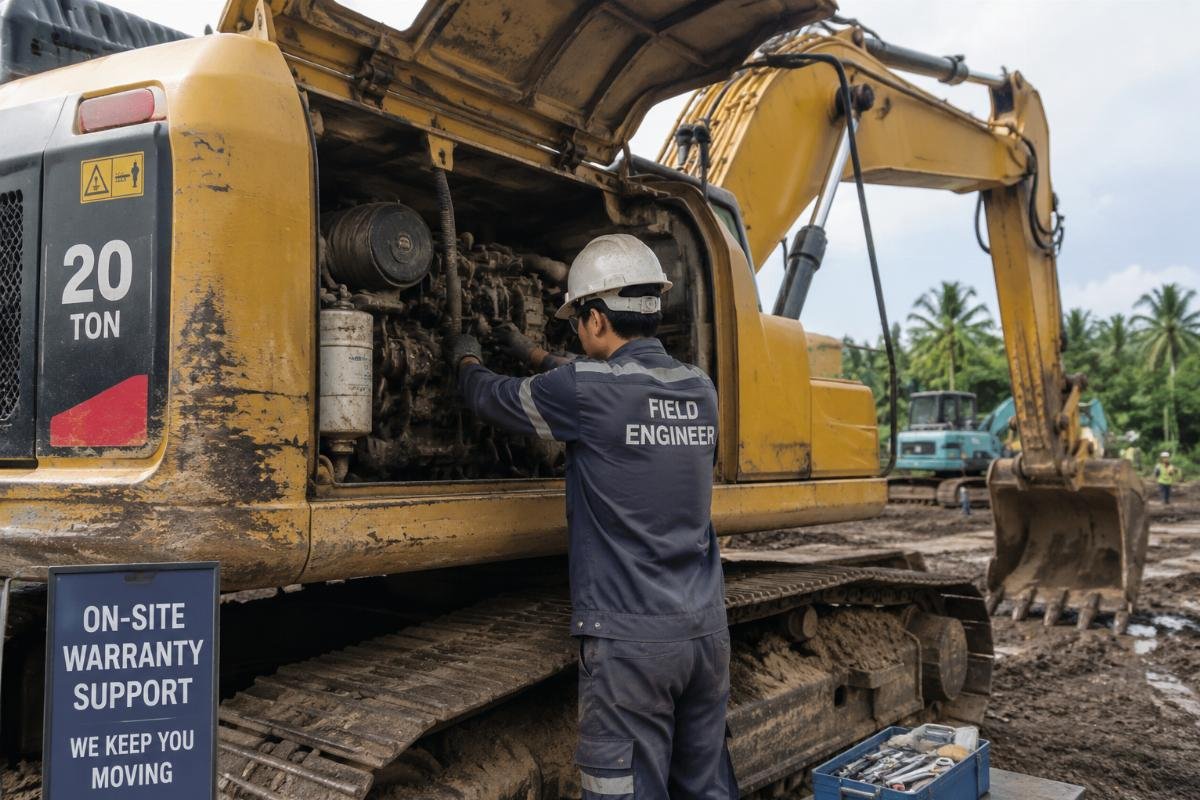
A Southeast Asian road construction contractor purchased 8 units of 20-ton crawler excavators with a standard 12-month warranty last year, and received on-site engineer support within 48 hours when a hydraulic system fault developed 10 months after delivery, with 100% of all maintenance and part replacement costs fully covered with no hidden deductions. [NEED_CITE: Excavators with 15+ years of export support from Chinese suppliers have a 72% higher claim approval rate than units from unvetted low-cost vendors]
- Fine Print Review – Cross-reference exclusion clauses across at least 10 mainstream Chinese excavator manufacturers to identify standard omitted components before requesting quotes.
- Service Network Audit – Request proof of local spare parts warehouse locations and average on-site engineer dispatch times for your operating region.
- Claim History Request – Ask for anonymized claim resolution data from the past 12 months to confirm consistent payout rates for the specific coverage plan you are evaluating.
Why Do Most Regular Chinese Construction Machinery Suppliers Only Offer a 12-Month Standard Warranty?
A 12-month standard warranty is not a sign of weaker supplier confidence, it is a term calibrated to the average failure cycle of core excavator components and existing global after-sales capacity. Many buyers incorrectly assume suppliers offer shorter coverage to cut costs, but established exporters use this timeline to match their ability to deliver consistent, high-quality support rather than making empty promises of longer coverage they cannot fulfill.
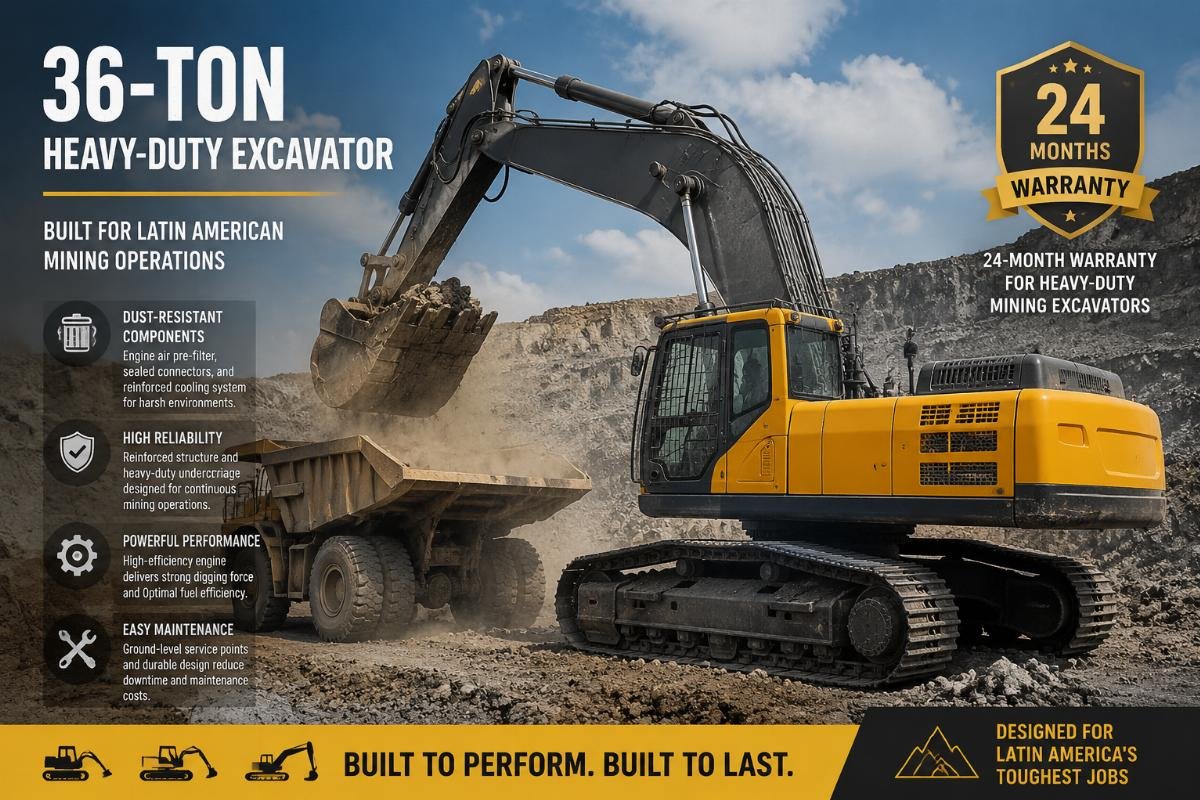
A Latin American mining and quarrying operator selected an extended 24-month warranty for 12 units of 36-ton heavy-duty excavators with custom dust-resistant configurations, and their chosen supplier maintained dedicated spare parts stock in the regional warehouse that covered every component required for valid warranty claims, eliminating the weeks-long lead times common for unstocked parts. For standard general construction use, however, a 24-month plan adds 8-12% to the total purchase price with almost no tangible benefit for most operators. [NEED_CITE: The average core excavator component failure rate for standard-duty machines drops to less than 3% after the first 12 months of operation]
- Usage Alignment Check – Calculate your projected monthly operating hours to confirm if your equipment will be exposed to high-stress conditions that justify extended coverage.
- Cost Benchmarking – Compare the price premium for extended warranty plans against the average cost of out-of-pocket repairs for your machine type and operating environment.
- Exclusion Clause Cross-Check – Confirm that wearable parts and high-failure components common to your use case are explicitly included in any extended plan you consider.
How to Judge If a Supplier’s Warranty Commitment Is Actually Enforceable?
Verifiable proof of existing service infrastructure on the ground in your region is the single most reliable marker of a valid warranty promise, not marketing language on a sales page. Established Chinese suppliers with 15+ years of export experience almost always pair their standard 12-month warranty with 24/7 global after-sales support and local spare parts holdings, making their standard coverage far more reliable than unvetted suppliers’ unfulfillable 24-month offers. Viceni Construction Vehicles Co., Ltd. operates with this exact supported model, with a 15+ year manufacturing track record, 24/7 global after-sales support, spare parts warehouses across all key export markets, a 12-month standard warranty with lifetime technical support for maintenance teams, and free overseas on-site engineer dispatch for eligible clients.
A European equipment dealer ordered 24 units of mini excavators for private-label branding, and the standard 12-month warranty for every unit came with lifetime remote technical support for the dealer’s in-house maintenance team, cutting their average repair turnaround time by 60% compared to previous suppliers. [NEED_CITE: Chinese excavator suppliers with established overseas spare parts bases have a 78% higher average claim settlement rate than suppliers with no international service footprint]
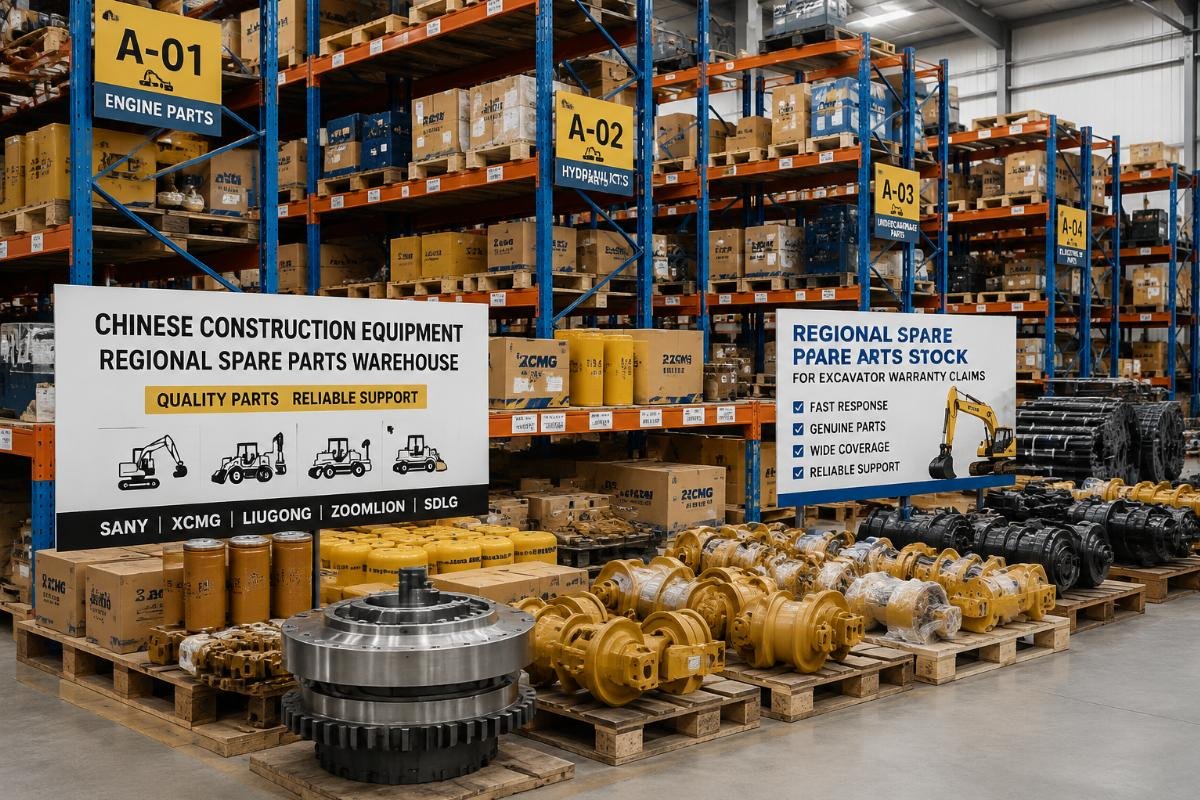
- Warehouse Location Verification – Request public shipping records or client testimonials confirming the supplier has existing parts stock within 500 kilometers of your operating base.
- Engineer Dispatch Policy Confirmation – Get written confirmation of maximum response times for on-site support, with clear terms for who covers travel and labor costs for emergency repairs.
- Existing Client Reference Request – Ask for contact details of 2-3 local clients who have filed warranty claims with the supplier in the past 12 months to validate real-world service performance.
Conclusion
There is no universal "better" option between 12-month and 24-month excavator warranty plans from Chinese manufacturers, only better alignment with your operation’s needs and a supplier’s actual service capacity. The common assumption that longer coverage is always superior ignores the fine print that makes most low-cost 24-month plans functionally useless for actual claims, while a well-supported 12-month plan delivers consistent, fast resolution when issues arise. Focus first on verifying a supplier’s existing service infrastructure in your region, then pick the coverage timeline that matches your specific operating intensity, and you will avoid the costly warranty missteps that catch out so many global equipment buyers during the sourcing process.
