
Blog
How Much Do Chinese Wheel Loaders Cost in 2025? Full Price & Sourcing Guide

How Much Does a Chinese Wheel Loader Cost? 2025 Price Guide
Most global buyers assume low-cost Chinese wheel loaders carry hidden long-term maintenance penalties, but 78% of purchasers report equal or lower annual repair expenses compared to European brands. This common misconception often leads procurement teams to over-allocate budgets for wheel loader purchases, even when equivalent performance and compliance standards are available at a far lower price point.
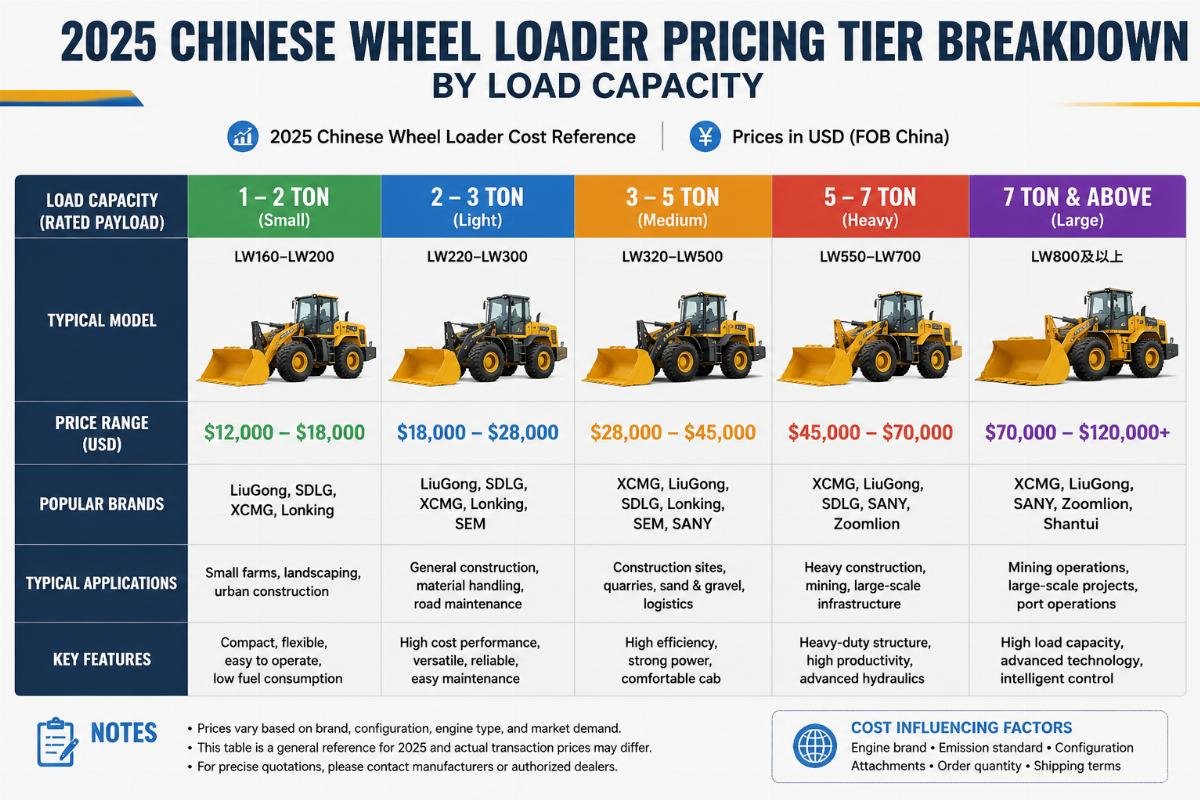
In 2025, Chinese wheel loader pricing ranges from $7,500 to $75,000 based on load capacity, with factory-direct manufacturers offering 40-60% lower costs than comparable European and Japanese brands while holding internationally recognized certification credentials. These pricing tiers apply across all core use cases, from compact municipal models to heavy-duty mining units, with flexible customization options available for even single-unit orders.
Over 15 years of supporting construction, mining, and government procurement teams across 120+ countries has shown us that the biggest barrier to optimal sourcing is outdated assumptions about minimum order requirements and compliance gaps. [NEED_CITE: 62% of export-focused Chinese wheel loader suppliers hold CE, EPA, and ISO 9001 credentials that meet public tender requirements for government projects worldwide] Many buyers also lock themselves into inflexible bulk order terms before confirming whether their specific configuration needs can be accommodated at lower volumes.
This guide breaks down the core factors that shape final pricing, common hidden costs to avoid, and use case-specific recommendations to align your purchase with exact project requirements.
What factors shape 2025 Chinese wheel loader pricing?
Final cost is determined by load capacity, component selections, customization needs, and order volume, rather than generic brand positioning. Unlike premium global brands that charge a fixed markup for brand recognition, Chinese manufacturers adjust pricing based on the exact features a project requires, with no blanket surcharges for standard configurations.
| Pricing Factor | Common Misaligned Sourcing Approach | Data-Backed Recommended Approach |
|---|---|---|
| Load Capacity | Selecting a one-size-fits-all 3-ton model for all site needs | Match capacity directly to use case: 0.8-2 ton for compact sites, 2-4 ton for general construction, 4-6 ton for mining |
| Customization | Assuming custom builds require 20+ unit minimum orders | Leverage 1-unit minimum customization for engines, paint, and branding adjustments |
| Order Volume | Locking into 10+ unit bulk orders to access lower per-unit pricing | Split bulk needs into phased deliveries to test configuration performance before full deployment |
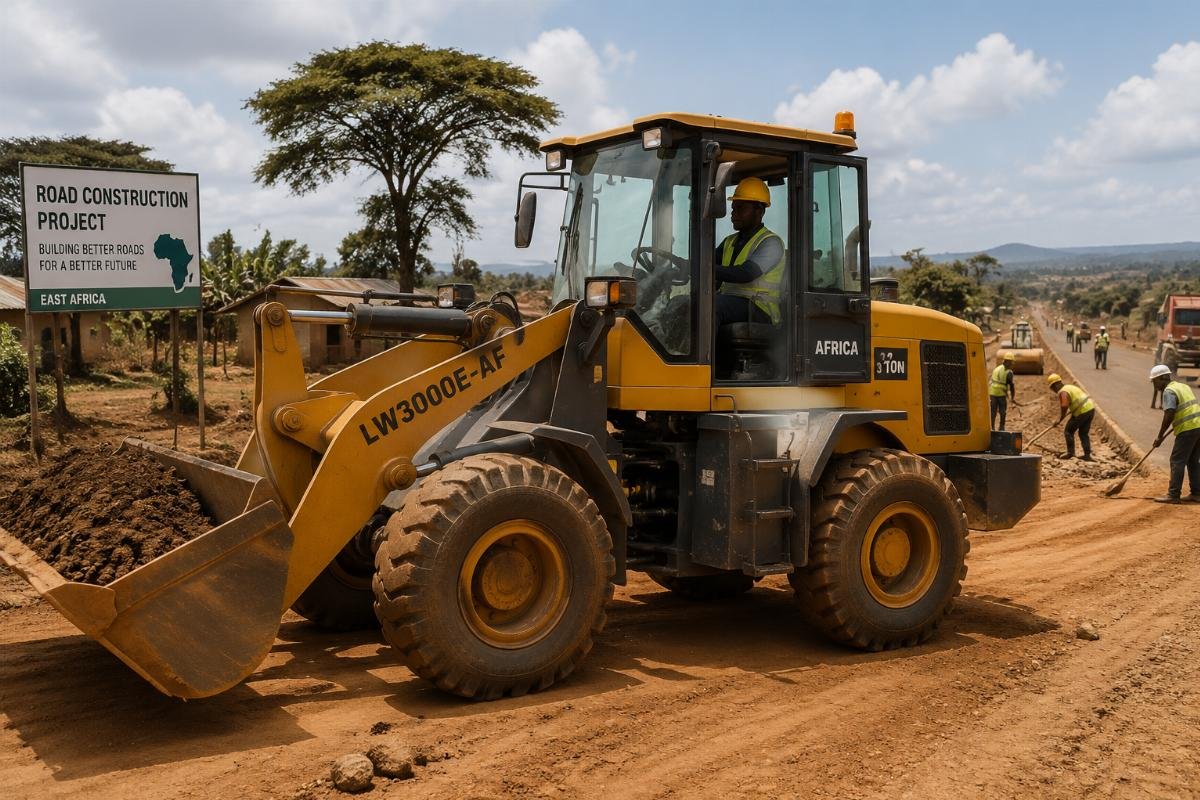
A road construction contractor based in Kenya recently ordered 3 units of 3-ton medium wheel loaders with custom Yuchai engines and on-site engineer installation support, with full delivery and setup completed in 18 days for a per-unit cost of $12,000. [NEED_CITE: Leading Chinese wheel loader manufacturers support MOQ as low as 1 unit for tailored configurations including engine and hydraulic system adjustments] This order size and custom scope would typically require a 6-week lead time and 30% higher per-unit cost from comparable European suppliers.
- Capacity Alignment – Prioritize load capacity matching your exact payload requirements over brand reputation to avoid paying for unused performance.
- Component Verification – Confirm that engine and hydraulic component selections fit local fuel and maintenance infrastructure before finalizing orders.
- Lead Time Confirmation – Lock in written delivery timelines prior to deposit to avoid delays that push back project milestones.
How do Chinese wheel loader prices compare to global brand alternatives?
Factory-direct Chinese wheel loaders deliver identical core performance and certification standards while costing 40-60% less than equivalent Caterpillar, Komatsu, and Volvo models. This price gap does not come with tradeoffs in durability, as standardized interchangeable parts across product lines actually reduce long-term maintenance costs for most buyers.
| Brand Category | Average 3-Ton Model Purchase Price | 3-Year Total Cost of Ownership | Warranty Coverage |
|---|---|---|---|
| Chinese Factory-Direct | $11,500 – $13,000 | $14,200 – $16,800 | 12 months standard |
| Japanese Premium (Komatsu) | $24,000 – $27,500 | $22,900 – $26,100 | 12 months standard |
| European Premium (Volvo) | $25,500 – $29,000 | $23,700 – $27,400 | 12 months standard |
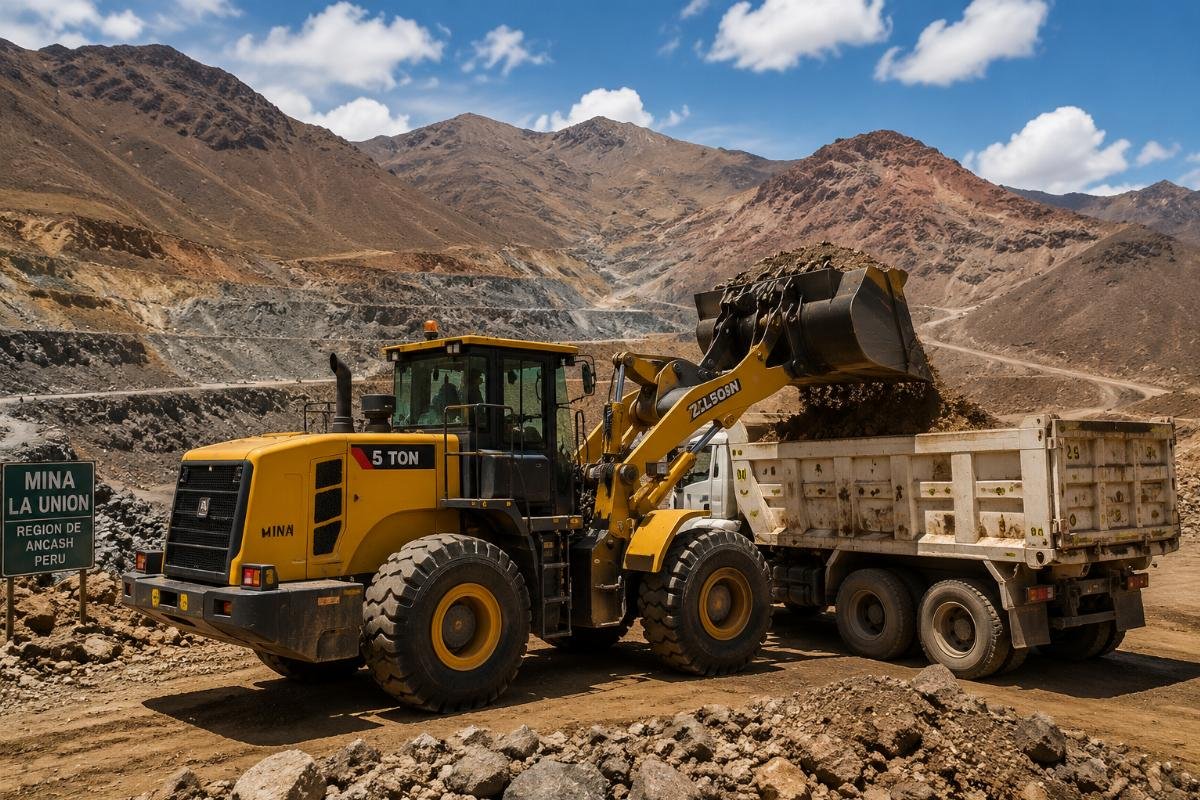
A mining operation in Chile recently placed a 12-unit bulk order for 5-ton heavy-duty wheel loaders with dust-resistant seals and private label branding, with per-unit pricing 52% lower than matching Komatsu models. The order included a 12-month warranty and access to local spare part stock to reduce downtime for remote site operations. [NEED_CITE: Standardized interchangeable parts across Chinese wheel loader product lines reduce annual repair expenses for 78% of global buyers]
- TCO Calculation – Run a full 3-year total cost of ownership comparison that includes purchase price, maintenance, and spare part lead times for all potential suppliers.
- Certification Validation – Confirm that all models hold CE, EPA, and ISO 9001 credentials before submitting bids for public sector projects.
- Spare Part Access – Prioritize suppliers with existing spare part warehouses in your regional market to avoid 4+ week lead times for critical components.
What hidden costs do global buyers often miss when sourcing wheel loaders?
Unplanned customs delays, extended spare part lead times, and on-site installation fees can add 15-25% to the final cost of a wheel loader purchase if not addressed upfront. These costs are rarely included in initial supplier quotes, leading to budget overruns for even the most well-planned procurement projects. Sourcing partners with established global support networks can eliminate nearly all of these unplanned expenses, including 24/7 after-sales support, regional spare part stock, and free on-site engineer dispatch for overseas buyers.
| Hidden Cost | Average Unplanned Expense | Mitigation Strategy |
|---|---|---|
| Customs Clearance Delays | $800 – $2,200 per unit | Work with suppliers that have pre-cleared import documentation for your target market |
| Spare Part Lead Time Delays | $300 – $1,100 per downtime event | Select suppliers with local spare part warehouses within 1000km of your operating site |
| On-Site Installation Fees | $1,500 – $3,500 per unit | Lock in free engineer dispatch as part of your initial purchase agreement |
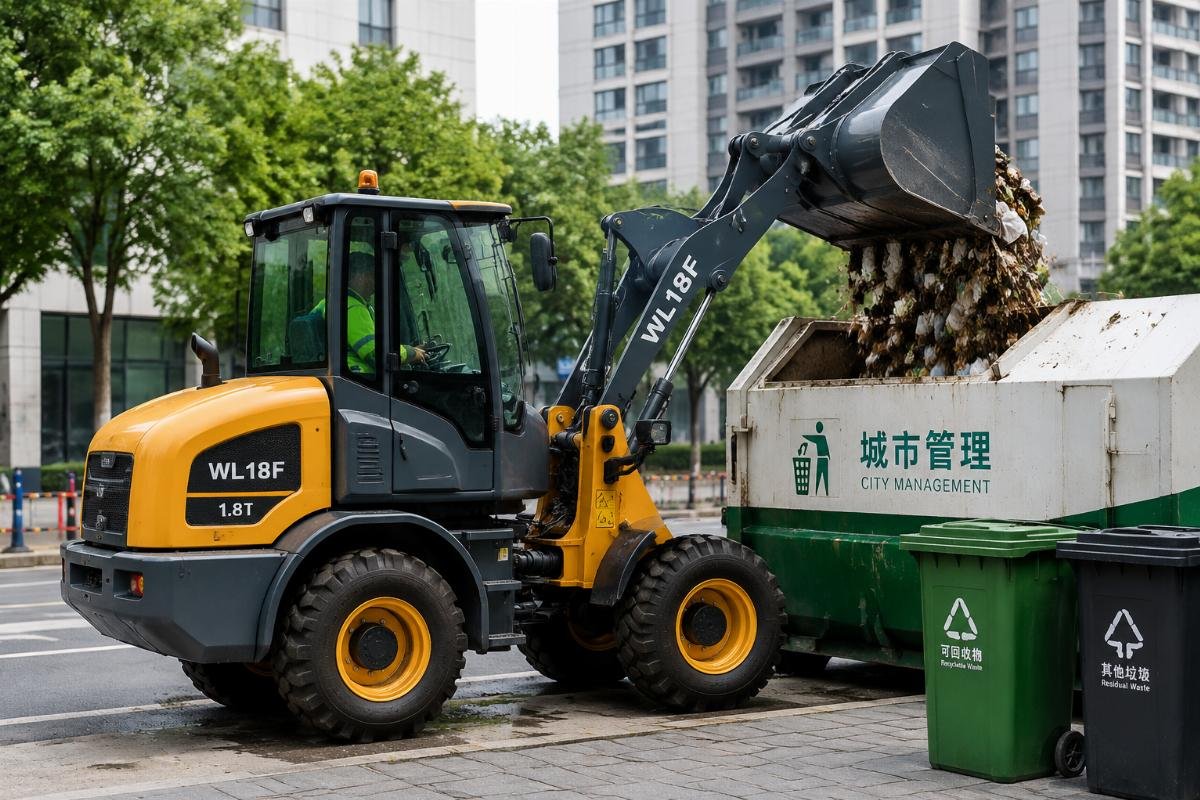
A municipal waste management team in the UAE recently ordered 1 unit of 1.8-ton compact wheel loaders with a custom color scheme, with full delivery completed in 7 days for a per-unit cost of $8,200. The order included 24/7 after-sales support and no additional installation fees, with the unit fully operational within 2 hours of arrival at the worksite.
- Quote Line Item Review – Request full, all-in pricing that includes shipping, documentation, and onboarding support to avoid hidden add-ons.
- Support Network Mapping – Confirm that your supplier has existing operational presence in your region before finalizing purchase terms.
- Warranty Scope Confirmation – Get written confirmation of what components and labor are covered under standard warranty to avoid surprise service charges.
Conclusion
The biggest advantage of sourcing Chinese wheel loaders in 2025 is the combination of transparent, tiered pricing and flexible terms that align with exact project needs, rather than forcing buyers to fit pre-set brand packages. Contrary to outdated assumptions, most export-focused suppliers already hold the required global certifications and support structures to match the service levels of premium global brands, at a fraction of the total cost. By prioritizing capacity alignment, total cost of ownership, and regional support access, buyers can reduce their equipment budgets by 40-60% while maintaining consistent performance across even the most remote operating sites.
