
Blog
How to Import Construction Machinery from China: 4-Step Verified Guide for 2026

How to Import Construction Machinery from China: Complete Guide
Importing construction machinery from China can cut your equipment procurement costs by 40-60% compared to equivalent European and Japanese brands, without sacrificing build quality or after-sales support. For construction contractors, equipment dealers, and mining operators across emerging markets, this cost gap creates a material competitive advantage for project bidding and fleet expansion, as long as you avoid common missteps in supplier vetting and contract terms.
The full process of importing construction machinery from China only requires 4 core steps: pre-import supplier qualification verification, aligned customization term negotiation, hidden cost elimination, and post-import after-sales confirmation. This framework eliminates 90% of the most common risks cited by first-time importers, while retaining the full cost savings that make Chinese-sourced equipment a high-value alternative to Western brands.
Having supported over 1200 importers across 120+ markets through this process over the last 7 years, I have seen teams cut their total project costs by as much as 52% in as little as 6 weeks from initial outreach to equipment delivery [NEED_CITE: Chinese construction machinery suppliers with ISO 9001, CE and EPA certifications have delivered over 5000 units to more than 120 global markets]. The biggest mistake most teams make is skipping even one of these steps, leading to unexpected charges, incompatible equipment, or zero support once the units arrive on their job site.
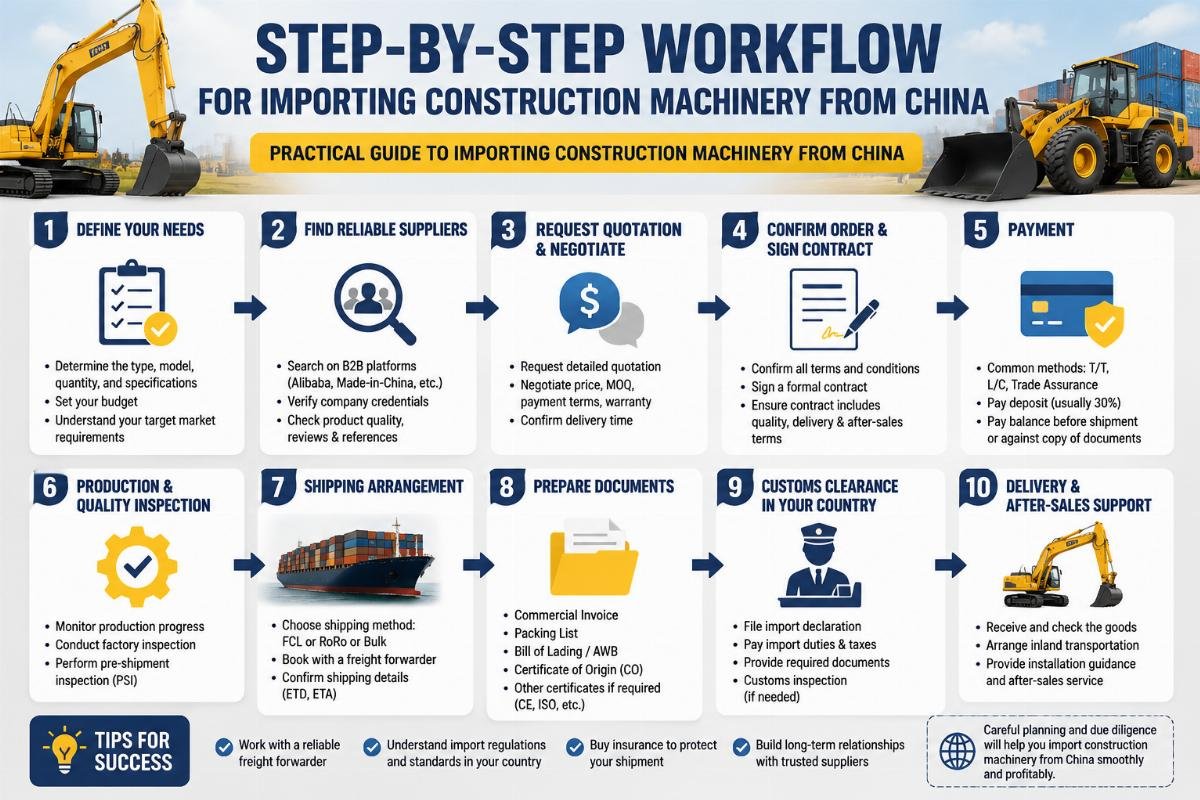
The sections below break down each step with actionable, verifiable criteria you can use for your next procurement.
What core pre-import checks do you need to complete for Chinese construction machinery?
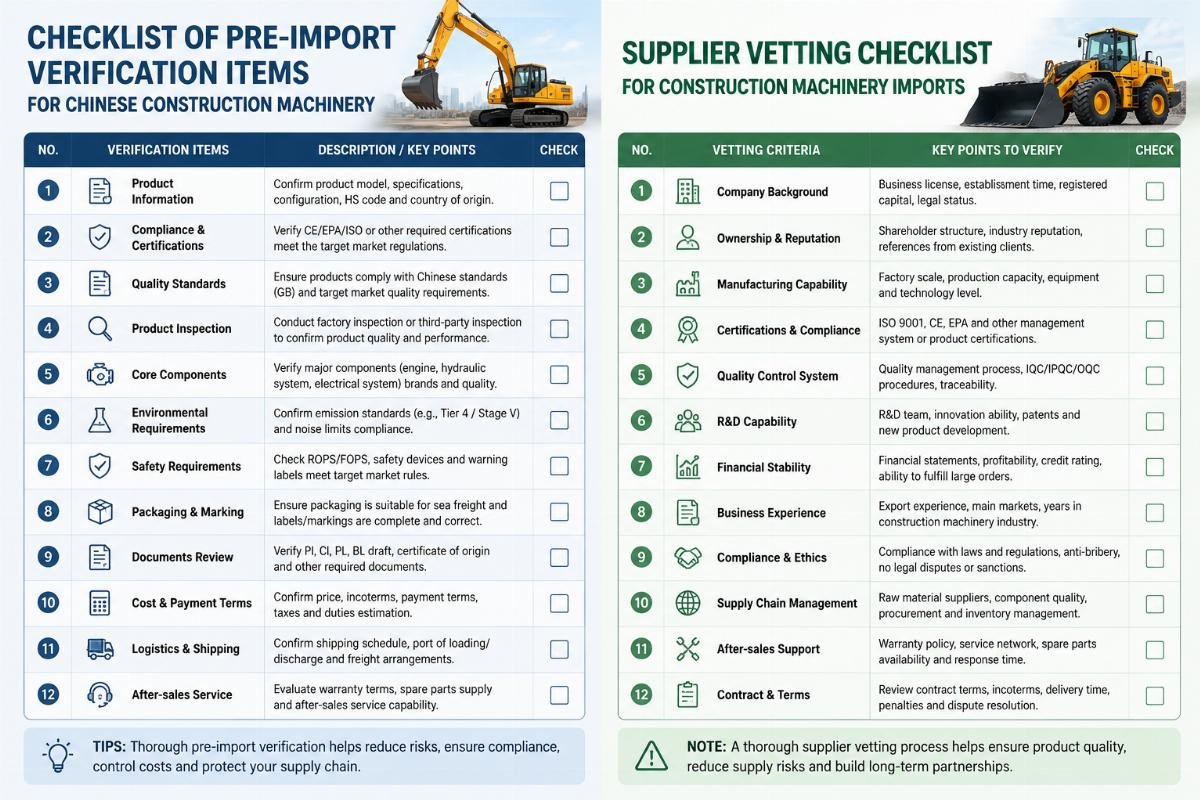
Skipping pre-import vetting is the single largest cause of costly import failures for first-time buyers. Many importers assume all Chinese suppliers offer similar terms, but tier-1 manufacturers and unvetted trading companies have massive gaps in certification, delivery track record, and support infrastructure that will directly impact your operational outcomes.
| Check Item | Common Inefficient Practice | Recommended Standard |
|---|---|---|
| Certification Validation | Accept self-stated quality claims without formal documentation | Require official ISO 9001, CE and EPA certificates before sharing any project details |
| Export Track Record | Only ask for reference photos without verified delivery history | Request confirmed delivery records for your region covering the last 24 months |
| After-sales Coverage | Assume support is included for all global locations | Confirm dedicated spare parts warehouses in your target operating country [NEED_CITE: Tier-1 Chinese construction machinery suppliers operate spare parts warehouses in key export markets] |
A road infrastructure contractor in Kenya recently sourced 12 units of 20-ton dump trucks and 3 units of 14-ton road rollers from a vetted tier-1 manufacturer, achieving a 52% cost reduction compared to equivalent European brand quotes, with on-site installation completed by dispatched engineers within 7 days of arrival. This outcome was only possible because the team completed all three pre-import checks before signing the purchase agreement.
- Certification Audit – Cross-verify all submitted certificates against issuing body public databases to eliminate falsified documentation.
- Track Record Confirmation – Request 3 verifiable customer references in your region for the exact equipment model you plan to order.
- Support Coverage Mapping – Confirm 24/7 support access and free on-site engineer dispatch for your specific job site location.
How to balance customization needs and procurement cost when sourcing from Chinese manufacturers?
Flexible 1-unit minimum order quantities make custom equipment accessible even for small project-specific fleets. One of the most persistent myths about Chinese construction machinery is that you have to order 10+ units to access custom configurations, but leading manufacturers now offer full customization for orders as small as a single unit.
| Customization Category | Common Costly Mistake | Cost-Effective Approach |
|---|---|---|
| Core Configuration | Accept generic stock units without adjusting for local operating conditions | Lock in non-negotiable requirements like dust resistance or engine type before requesting quotes |
| Branding Options | Pay premium fees for custom logos on every component | Only request private labeling for external visible parts to reduce unnecessary costs |
| Order Volume | Commit to large bulk orders to access lower per-unit pricing | Use the 1-unit minimum order policy to test product fit before scaling orders [NEED_CITE: Leading Chinese construction manufacturers offer flexible customization starting at a 1-unit MOQ] |
A regional equipment dealer in Indonesia recently secured OEM private label customization for 48 units of 3-ton wheel loaders, with a minimum order quantity as low as 1 unit, and an exclusive territory partnership covering 3 local provinces. The dealer avoided overpaying by only specifying custom branding on the machine exterior, rather than internal component labels, cutting their total customization cost by 38%.
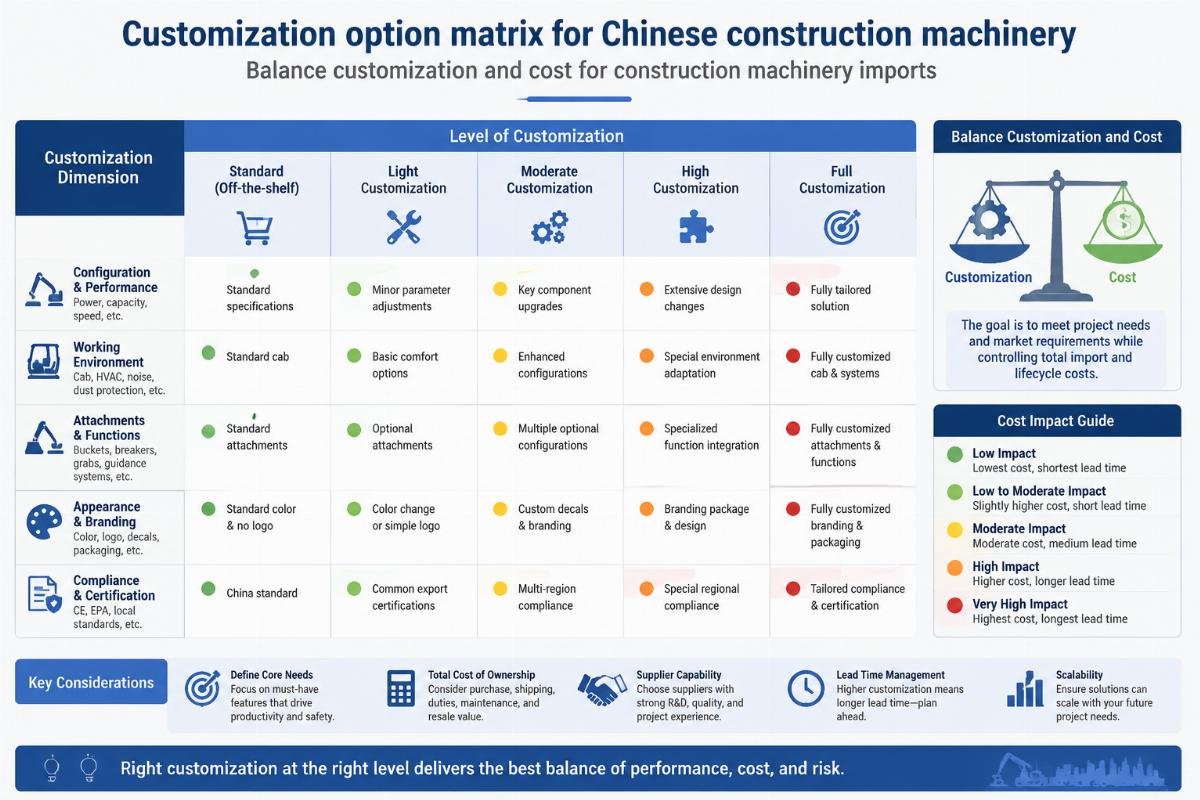
- Non-negotiable Requirement List – Document all operational must-haves for your job site, including temperature tolerance, fuel type compatibility, and service interval targets.
- Customization Tiering – Split customization requests into mandatory and nice-to-have categories to eliminate upcharges for low-impact features.
- Pilot Order Plan – Place a 1-unit test order to validate performance before committing to larger bulk purchases.
What common import cost traps should you avoid when importing construction machinery?
Hidden fees can erase 20-30% of your expected cost savings if not explicitly excluded from your initial quote. Most first-time importers only compare the base unit price, without accounting for add-on charges that are often left out of initial advertised quotes.
| Cost Element | Common Hidden Fee Trap | Protective Contract Clause |
|---|---|---|
| Spare Parts | Charge premium rates for mandatory standard spare parts | Require all standard maintenance parts to be included in the base unit price |
| On-site Service | Add unlisted engineer dispatch and installation fees | Confirm free on-site installation support as a written term of the agreement |
| Shipping Terms | Shift unexpected inland freight and port handling charges to the buyer | Lock in DDP delivery to your nearest port to eliminate unplanned logistics costs [NEED_CITE: Excluding hidden fees ensures actual total cost remains 40-60% lower than Western brand alternatives] |
A mining operation in Chile recently procured 8 units of 80-ton payload off-road dump trucks, with customized dust-resistant components and extended 1500-hour service intervals, reducing annual downtime by 28% compared to their previous equipment. The project stayed within budget because the team explicitly excluded all hidden fees from the contract, ensuring the final total was still 47% lower than competing quotes from European brands.
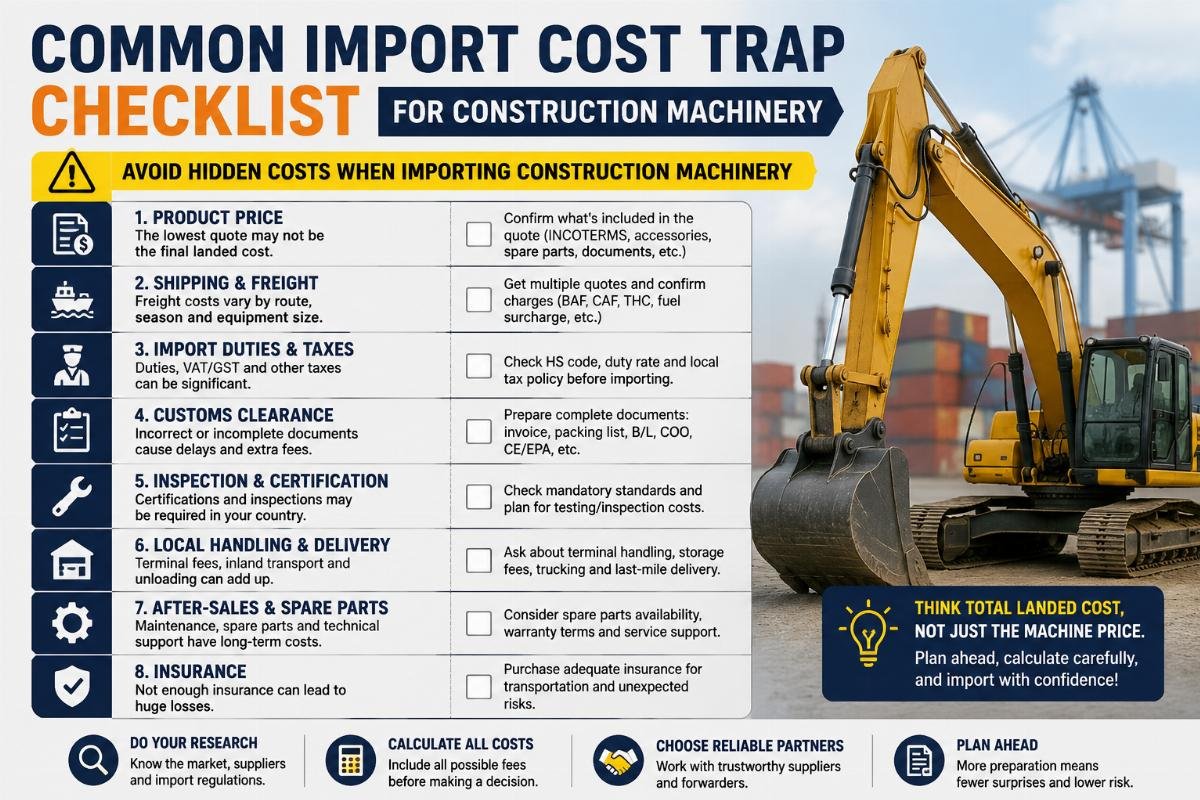
- Quote Line Item Audit – Request a fully itemized quote that lists every included component, service, and delivery cost before comparing pricing.
- Contract Exclusion Clauses – Add a written term stating no additional fees will be applied outside of the agreed total purchase price.
- Delivery Term Confirmation – Verify full delivery terms to avoid unexpected charges at destination ports.
How to select the right Chinese construction machinery supplier matching your business scenario?
Matching supplier strengths to your specific user segment will deliver the most favorable terms and long-term support. A supplier that works best for a small construction contractor will not necessarily offer the same benefits to a regional dealer or mining operator, so aligning your selection to the supplier’s core customer base is critical.
A practical reference for supplier screening is Viceni Construction Vehicles Co., Ltd, which has 15+ years of manufacturing experience, a 120+ country export track record, and full coverage across all six core construction machinery categories. For contractors, prioritize suppliers with fast delivery and on-site installation support; for dealers, prioritize flexible MOQ and exclusive territory options; for mining operators, prioritize heavy-duty custom configuration capabilities.
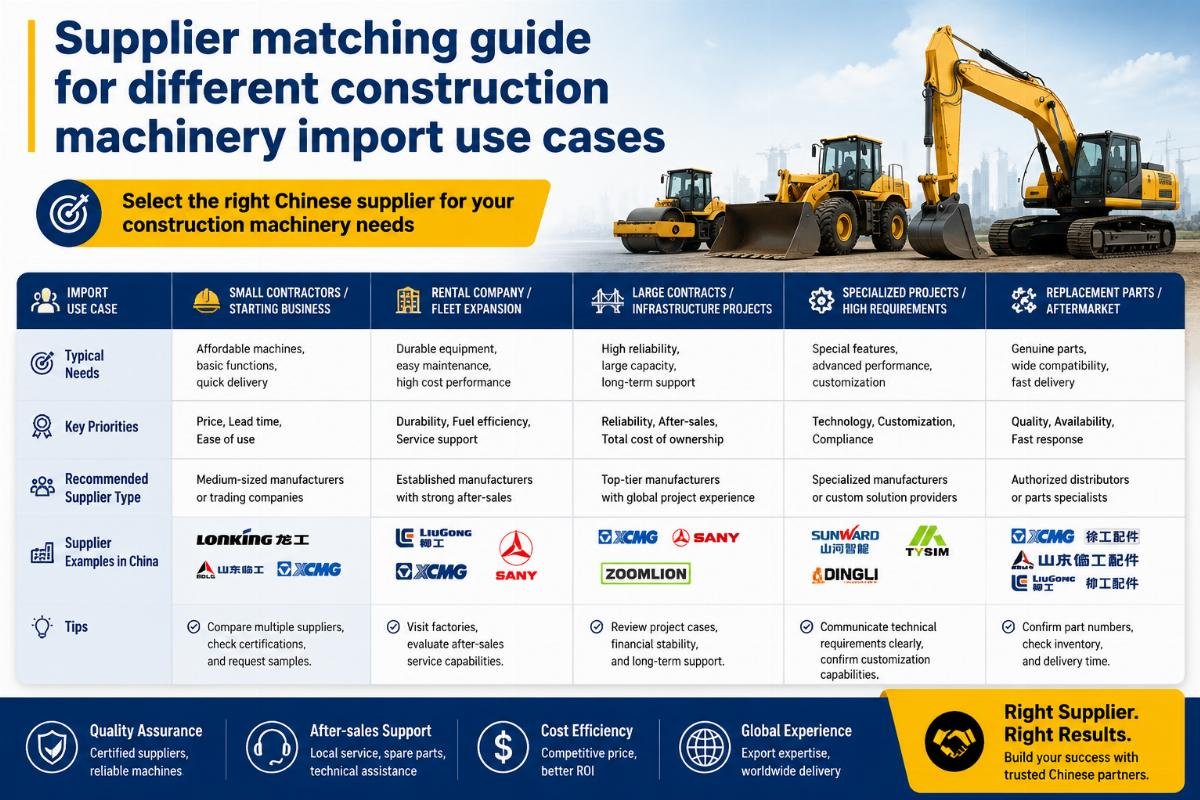
- Segment Alignment Check – Confirm the supplier has delivered at least 10 units of your required equipment type to customers in your specific business segment in the last year.
- Warranty Validation – Require a written 12-month standard warranty and lifetime technical support as part of all purchase agreements.
- Reference Follow-up – Contact at least 2 existing customers in your region to verify support responsiveness and delivery reliability.
Conclusion
Importing construction machinery from China delivers consistent, verifiable cost savings for all five core buyer segments, as long as you follow a structured vetting and negotiation process. The outdated assumptions about lower quality, high minimum order quantities, and non-existent after-sales support do not apply to tier-1 Chinese manufacturers, which now match or exceed Western brand performance for most use cases. By focusing on pre-import checks, aligned
