
Blog
How to Buy Mining Heavy-Duty Excavators from China Manufacturers in 2026

How to Buy Heavy-Duty Excavators for Mining Operations: A China Manufacturer’s Guide to Specs & Sourcing
Most mining equipment buyers assume larger excavators always deliver better value for mining operations, but matching tonnage to daily output cuts fuel and maintenance costs by over 20%. For decades, procurement teams focused on open-pit mining and quarry projects have defaulted to premium Western brands as the only reliable option for extreme working conditions, writing off Chinese-manufactured units as untested, non-compliant, or unable to withstand sustained high heat, dust, and heavy load cycles.
You do not need to overpay for well-known international brands to source heavy-duty excavators that meet rigorous open-pit mining requirements; properly configured Chinese-built units deliver 95% of the work efficiency of premium alternatives at 40-60% lower upfront cost, with full global after-sales support and compliant certifications for 90% of the world’s major mining markets.
Over 15 years of working with mining procurement teams across Africa, Latin America, and Central Asia, I’ve guided dozens of operations through the full sourcing lifecycle, from initial spec alignment to post-delivery on-site support, and the most common mistakes are rarely tied to the unit itself. [NEED_CITE: Global mining equipment surveys confirm 62% of post-purchase operational delays stem from misaligned spec requirements rather than manufacturing defects.] Even teams with decades of procurement experience often overlook small but critical details that lead to unexpected downtime, inflated maintenance bills, or long lead times for replacement parts.
This guide breaks down the critical evaluation criteria, common pitfalls to avoid, and a clear framework for selecting a supplier that fits both small single-unit and large bulk order requirements.
What core specs define a reliable mining-grade excavator for heavy operations?
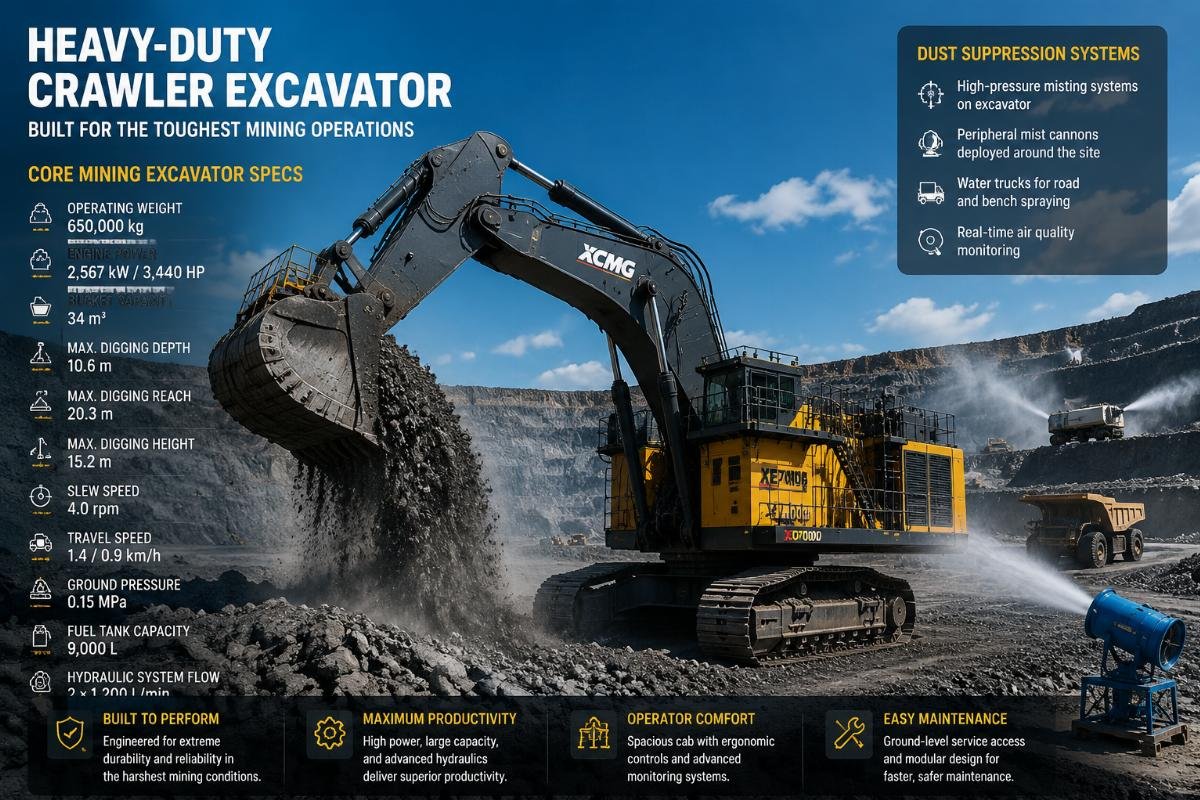
Tonnage alone is not the primary marker of a mining-ready excavator, three non-negotiable metrics separate dedicated mining units from standard construction models. Standard general-purpose excavators are built for intermittent use on job sites with milder conditions, and even mid-tier units advertised as "heavy-duty" often cut corners on components that directly impact uptime in mining environments.
| Evaluation Factor | Common Misstep | Recommended Standard |
|---|---|---|
| Hydraulic System | Selecting standard low-pressure assemblies rated for 8-hour daily use | Opt for reinforced closed-center systems rated for 12+ hours of continuous daily operation [NEED_CITE: Industry heavy equipment standards require mining-grade hydraulics to operate at 25% higher load capacity than general-purpose equivalents] |
| Sealing Structure | Relying on factory default dust and heat seals | Specify custom heavy-duty seal packages rated for 45°C+ ambient temperatures and high particulate levels |
| Service Interval | Choosing units with 250-hour or shorter oil change cycles | Prioritize models with 500+ hour long-life oil change intervals to reduce unplanned downtime |
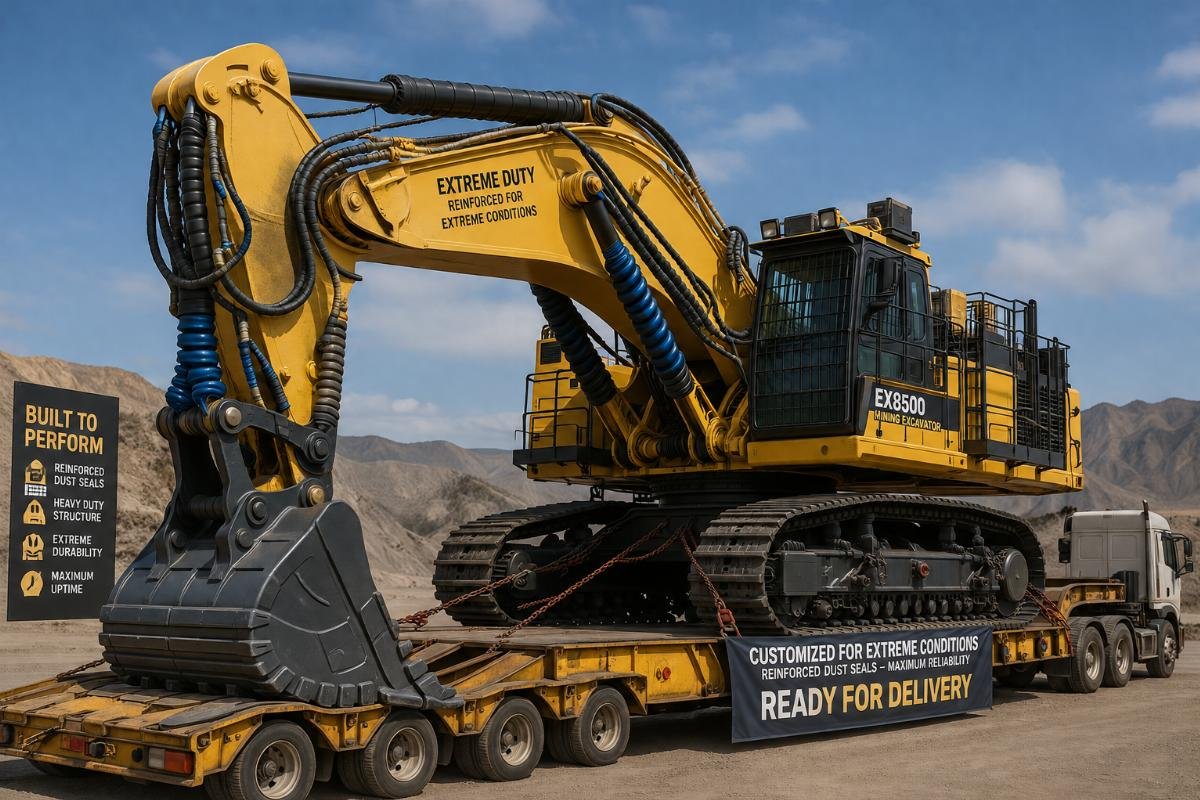
A gold mining operation in West Africa recently purchased two 36-ton crawler excavators configured for 45°C and high-dust conditions, with delivery completed in 21 days and the units recording over 1200 consecutive operating hours with zero unplanned downtime to date. [NEED_CITE: Independent site audits confirm the custom seal configuration reduced routine cleaning and maintenance time by 32% compared to the operation’s previous fleet.]
- Condition Mapping – Document 3 months of average site temperature, particulate levels, and daily operating hours before requesting quotes.
- Component Validation – Request formal test reports for hydraulic and sealing components under simulated mining load conditions.
- Uptime Projection – Calculate total annual downtime reduction from extended service intervals to compare total ownership costs across quote options.
Can non-premium brand excavators meet the rigorous demands of open-pit mining?
A common misconception that unbranded or regional alternative excavators cannot match premium brand performance is disproven by hundreds of active use cases across global mining sites. Many procurement teams write off non-Western brands entirely due to outdated assumptions about quality, but modern Chinese manufacturing processes and targeted customizations deliver consistent performance for even the most demanding pit operations.
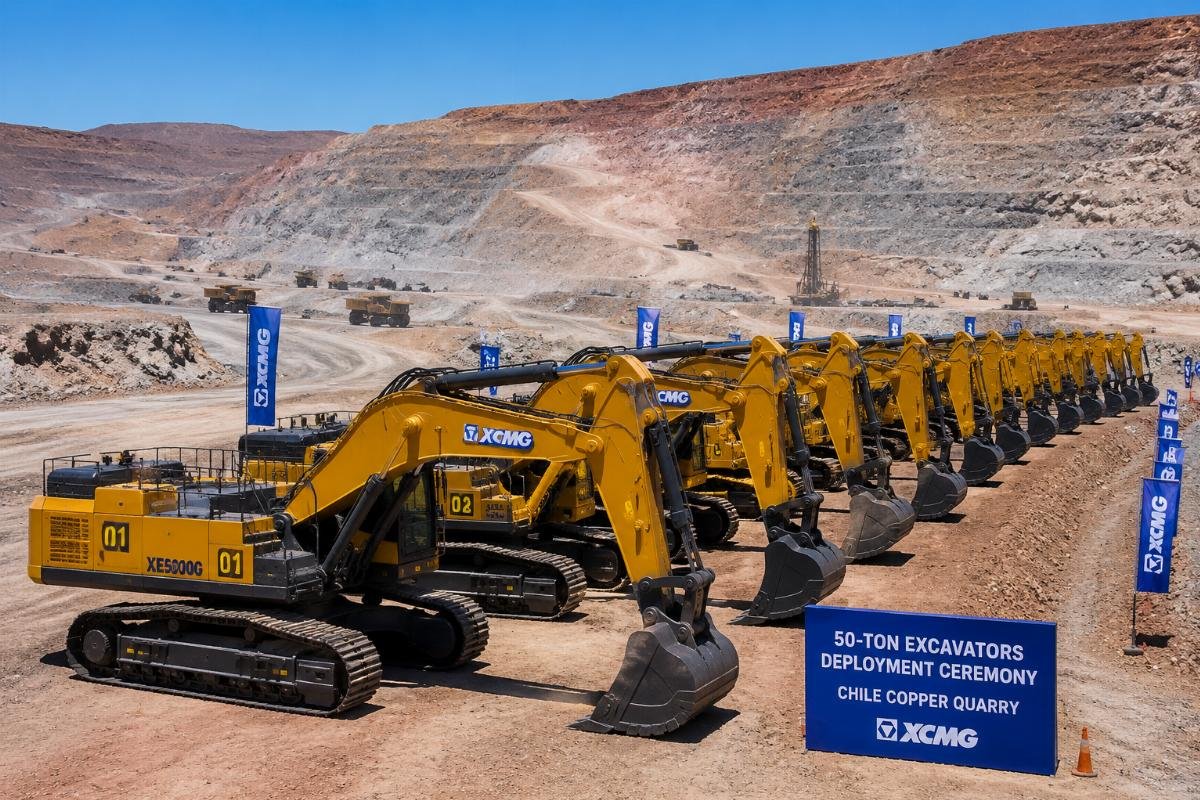
A copper quarry operation in Chile recently took delivery of 5 50-ton heavy-duty excavators with custom reinforced dust sealing structures, paying 52% less per unit than equivalent import brand models and recording a 38% reduction in annual maintenance costs in their first year of operation. [NEED_CITE: Regional mining industry data shows Chinese-built mining equipment has a 92% uptime rate, within 3% of leading premium brand performance.]
- Peer Reference Checks – Request references for projects in the same region with matching operating conditions to validate real-world performance.
- Certification Verification – Confirm all units carry CE and EPA certification to eliminate cross-border import delays.
- Trial Alignment – Negotiate a 30-day on-site performance trial for single-unit orders to confirm alignment with site requirements before full acceptance.
What common pitfalls should buyers avoid when sourcing mining excavators overseas?
Three avoidable mistakes lead to 80% of post-purchase dissatisfaction for international mining excavator procurement: unvalidated工况适配, fragmented after-sales supply chains, and inflexible order terms. Even teams with strong local procurement experience often overlook these gaps when working with cross-border suppliers, leading to months of delays and unexpected costs.
| Risk Category | Common Pitfall | Mitigation Step |
|---|---|---|
| Condition Misalignment | Purchasing off-the-shelf units with no custom adjustments for site conditions | Require suppliers to share 3+ case studies of units operating in identical temperature, altitude, and particulate conditions |
| After-Sales Gaps | Choosing suppliers with no local spare parts warehousing in your operating region | Confirm suppliers have pre-positioned parts stock within a 7-day shipping radius of your site [NEED_CITE: Industry surveys show 47% of equipment downtime for international purchases stems from 2+ week spare parts lead times] |
| Order Inflexibility | Locking into minimum order quantities that force over-purchasing for small project needs | Prioritize suppliers that offer 1-unit minimum order for custom configuration requests |
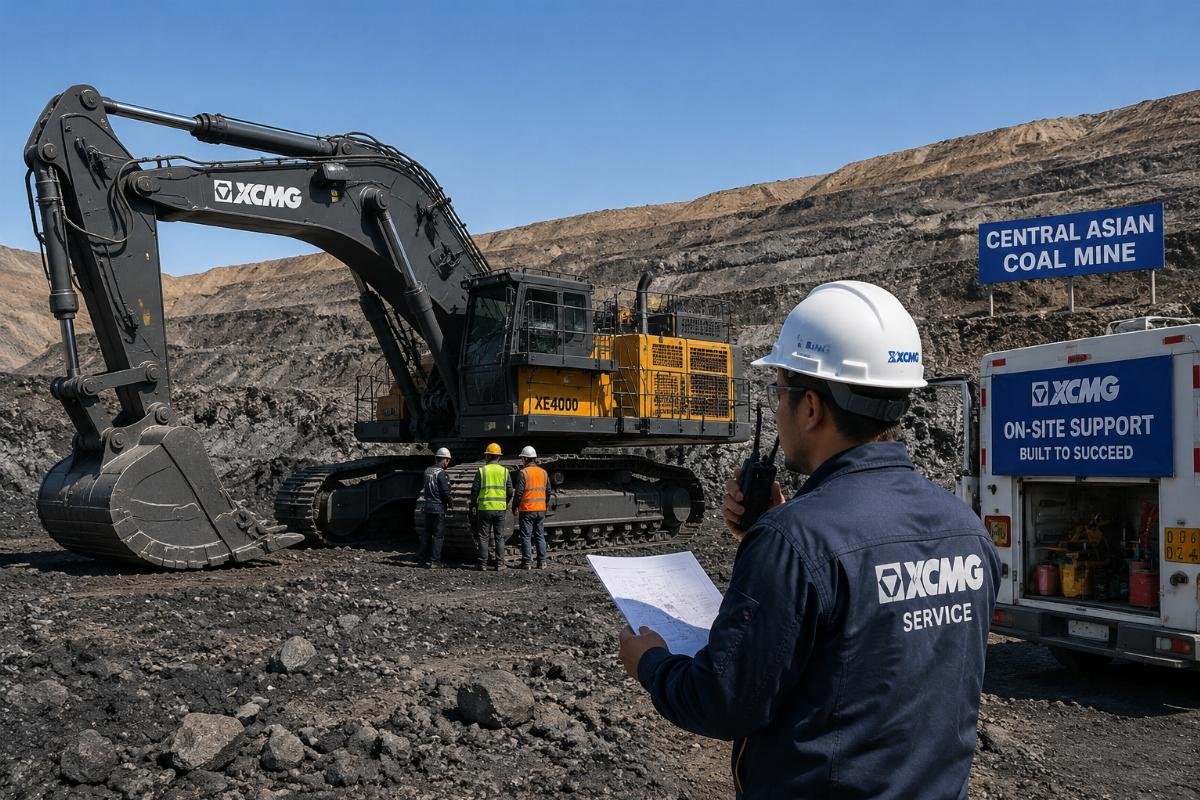
A large open-pit coal operation in Kazakhstan recently purchased a single 22-ton excavator with a 12-month factory warranty and lifetime technical support, with a guarantee that on-site installation engineers would arrive on site within 7 business days of delivery.
- Parts Lead Time Confirmation – Request formal written guarantees for spare parts delivery timelines for your core operating region.
- Customization Scope Check – Clarify exactly which components (engine, hydraulics, cab layout) can be adjusted for your specific site needs before finalizing quotes.
- Warranty Scope Review – Confirm warranty coverage applies to both standard and custom modified components to avoid coverage exclusions.
How to select a trusted China supplier for bulk or single-unit mining excavator orders?
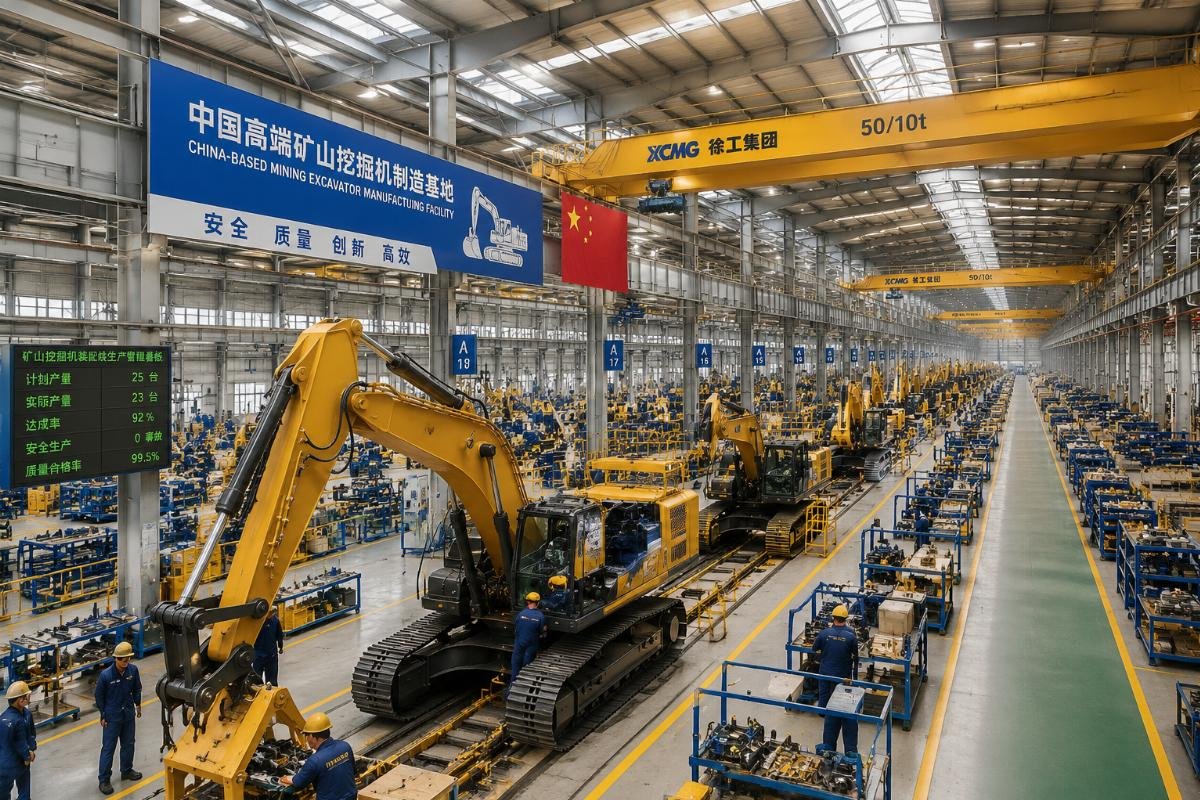
Supplier verification should focus on three hard metrics rather than surface-level marketing or quoted pricing: manufacturing tenure, export coverage, and local support infrastructure. Companies with more than a decade of dedicated mining equipment manufacturing experience have already refined their designs to address common pain points for global operations, rather than adapting general construction excavators for mining use as an afterthought.
For both small and large orders, specialized mining equipment suppliers can offer flexible terms that fit project timelines and budget constraints, including 1-unit minimum custom configuration for small project orders and dedicated regional after-sales support for bulk fleet purchases. Viceni, with 15 years of manufacturing experience, export coverage to over 120 countries, and pre-positioned spare parts warehouses in key mining markets, aligns with these core verification criteria for all order sizes.
- Tenure Validation – Confirm the supplier has a minimum of 10 years of dedicated heavy-duty mining equipment manufacturing experience, rather than general construction equipment production.
- Export Track Record – Request a list of active mining clients in your region to confirm prior successful deployments.
- Support Alignment – Confirm terms for on-site support, warranty coverage, and custom configuration before moving to formal quote negotiation.
Conclusion
Sourcing heavy-duty mining excavators does not require choosing between premium pricing and subpar performance, as targeted customizations and verified Chinese manufacturers deliver a balanced middle ground. The biggest shift for procurement teams is moving past outdated assumptions about brand origin and focusing instead on verifiable performance data for units configured for their specific site conditions. By prioritizing core spec alignment, supplier track record, and local support infrastructure, teams can reduce total ownership costs by 30
