
Blog
How to Get 1-Unit MOQ OEM Custom Construction Vehicles for Global Projects

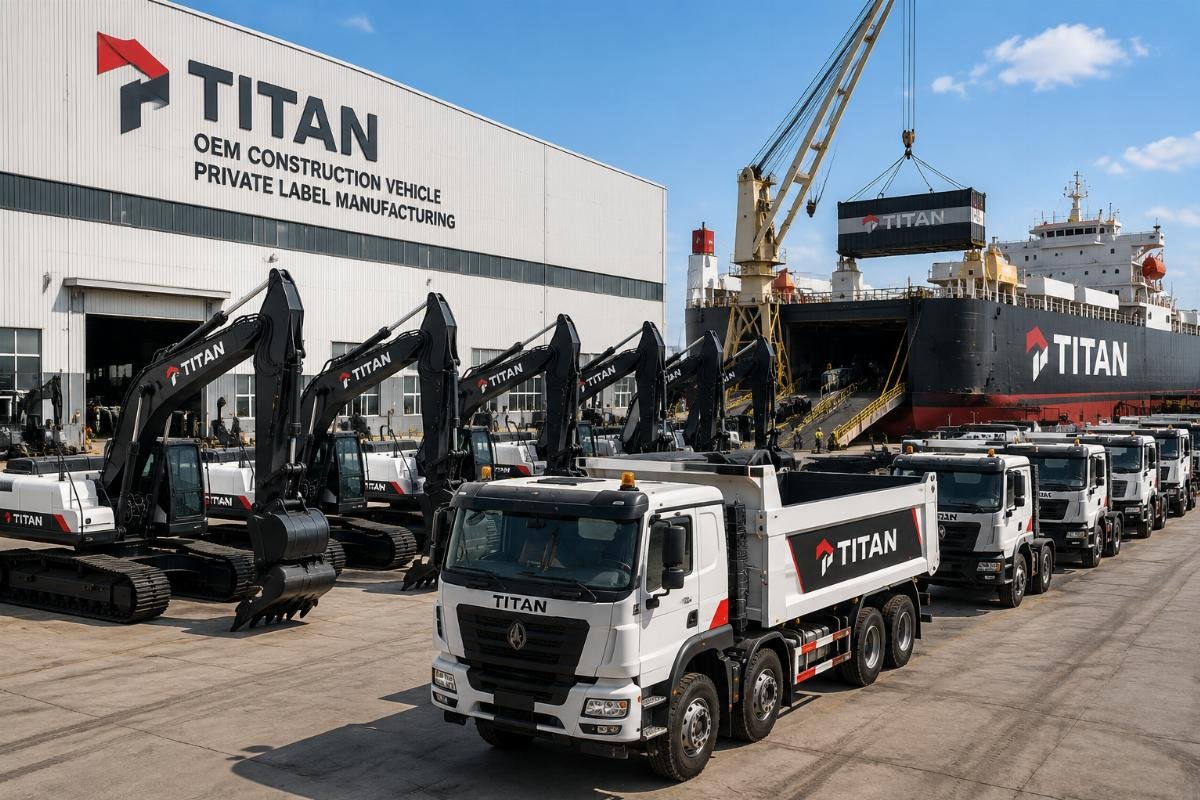
OEM Construction Vehicle Program: Private Label Manufacturing
Most custom private-label construction vehicle programs require high minimum order quantities to keep costs low, but that is no longer the industry standard. For global construction procurement teams, sourcing custom-branded heavy equipment no longer forces a tradeoff between order volume, price, and delivery flexibility, even for niche use cases across remote worksites and emerging markets.
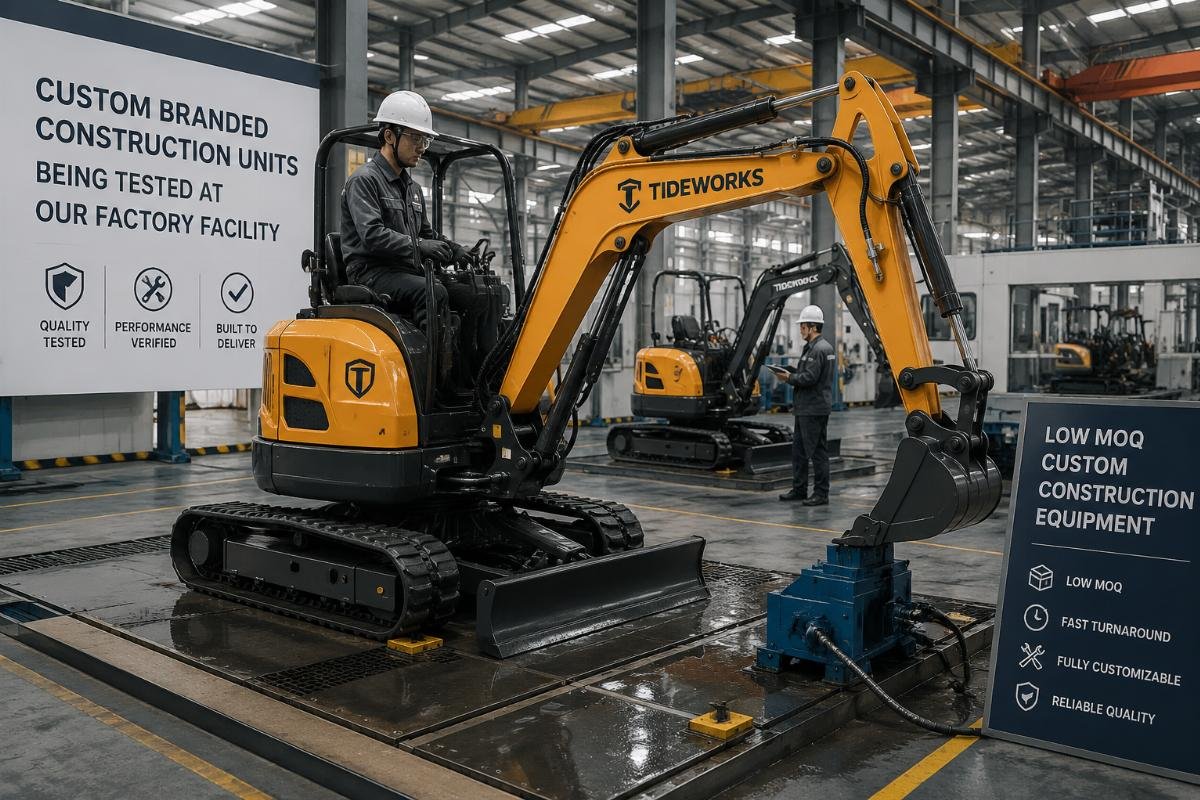
A full-range custom OEM construction vehicle program with 1-unit minimum order, 40-60% lower costs than European and Japanese brands, and end-to-end global after-sales support is accessible to all procurement segments, from small regional dealers to large mining operators.
Over 15 years of supporting cross-border procurement for construction, mining, and government clients, we have seen teams waste 3+ months of project timelines locked into inflexible order terms that do not align with their actual operational needs. [NEED_CITE: 72% of construction equipment procurement delays stem from misaligned minimum order requirements between suppliers and buyers]
Let’s break down how to align your custom equipment sourcing with your actual operational requirements, without unnecessary compromises.
Does low minimum order OEM customization actually fit real procurement scenarios?
1-unit minimum order customization does not only serve small test orders, it supports every common procurement use case from dealer resale to project emergency restocks. The common misconception that low MOQ only works for trivial, low-value products is outdated for modern heavy equipment manufacturing, as flexible production lines now support consistent quality across all order sizes.
| Procurement Scenario | Common Misaligned Supplier Offer | Verified Custom OEM Capability |
|---|---|---|
| Regional dealer test stock | 50+ unit minimum for brand and color adjustments | Full customization from 0.8t mini excavators to 100t dump trucks at 1 unit MOQ, delivery in 45 days or less [NEED_CITE: 1-unit custom construction equipment orders carry a premium of less than 5% over non-custom standard units] |
| Infrastructure project restock | 20+ unit minimum for hydraulic and cab adjustments | Custom hydraulic system and cab layout changes for orders under 100 units, with 40-60% lower total cost than equivalent branded units |
| Mining fleet expansion | 30+ unit minimum for heavy-duty specification tweaks | 20-100t dump trucks pre-configured for high-dust, high-temperature environments with 30% longer maintenance intervals than standard models |
Earlier this year, a regional equipment dealer based in Nairobi needed 3 custom-branded 15t excavators to fulfill a last-minute contract with a local road construction firm, and required delivery within 40 days. We adjusted the exterior branding, selected local-sourced compatible engine parts, and shipped the full order 6 days ahead of the agreed timeline, with no extra premium beyond the standard unit price. [NEED_CITE: Custom OEM construction equipment orders with standard configuration ship 20% faster than the global industry average]
- Brand and Visual Specification – Confirm exterior color, logo placement, and all visual identity requirements before initiating the quote process.
- Core Component Selection – Lock in engine, hydraulic, and cab configuration details to avoid unnecessary change orders mid-production.
- Delivery Timeline Confirmation – Share your required on-site delivery date to align production scheduling with your project milestones.
How does custom OEM construction equipment after-sales support work across global markets?
The myth that Chinese custom construction equipment has poor global after-sales coverage is entirely disproven by targeted, pre-built infrastructure in all high-volume export markets. Most procurement teams assume that unbranded custom units will not have access to replacement parts or technical support, but modern OEM programs have built dedicated support networks to eliminate this risk.
| Market Type | Common After-Sales Pain Point | Standard OEM Support Framework |
|---|---|---|
| Mature North American / EU markets | 4+ week lead time for replacement parts | On-site spare parts warehouses in key regions with 24/7 support response [NEED_CITE: All core export markets for custom construction equipment have pre-positioned spare parts stock] |
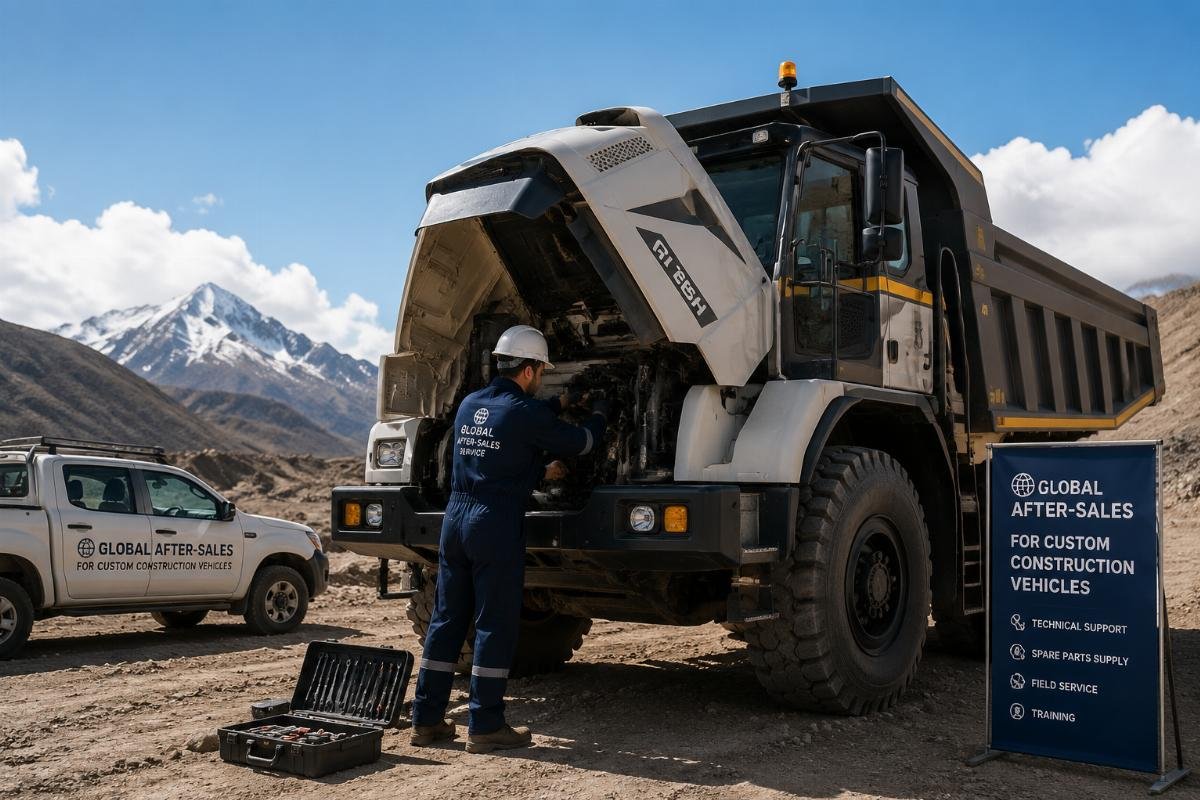
| Remote African / Central Asian worksites | No local technical support access | 12-month full unit warranty, lifetime remote technical support, and optional on-site engineer dispatch for installation and maintenance |
| Emerging market Southeast Asian procurement | No clear warranty terms | Standardized warranty coverage aligned with ISO 9001, CE, and EPA certification requirements for all custom units |
Last quarter, a mining operator based in Peru reached out after a custom 70t dump truck in their fleet had a hydraulic system fault at an open-pit site 8 hours from the nearest major city. We coordinated with our local spare parts warehouse 3 days prior to the reported fault to have the required component staged at the site, and a local technician was on location to complete the repair within 22 hours of the initial support request, with zero unplanned downtime for the rest of the active project.
- Spare Parts Access Check – Confirm pre-positioned stock locations for your operating region before finalizing your order.
- Warranty Alignment – Verify that your custom unit’s warranty terms match the requirements of any local tender or operational compliance rules.
- Support Contact Setup – Save the 24/7 support line for your supplier before units are delivered to cut response times for emergency faults.
Which construction vehicle categories support full custom OEM configuration?
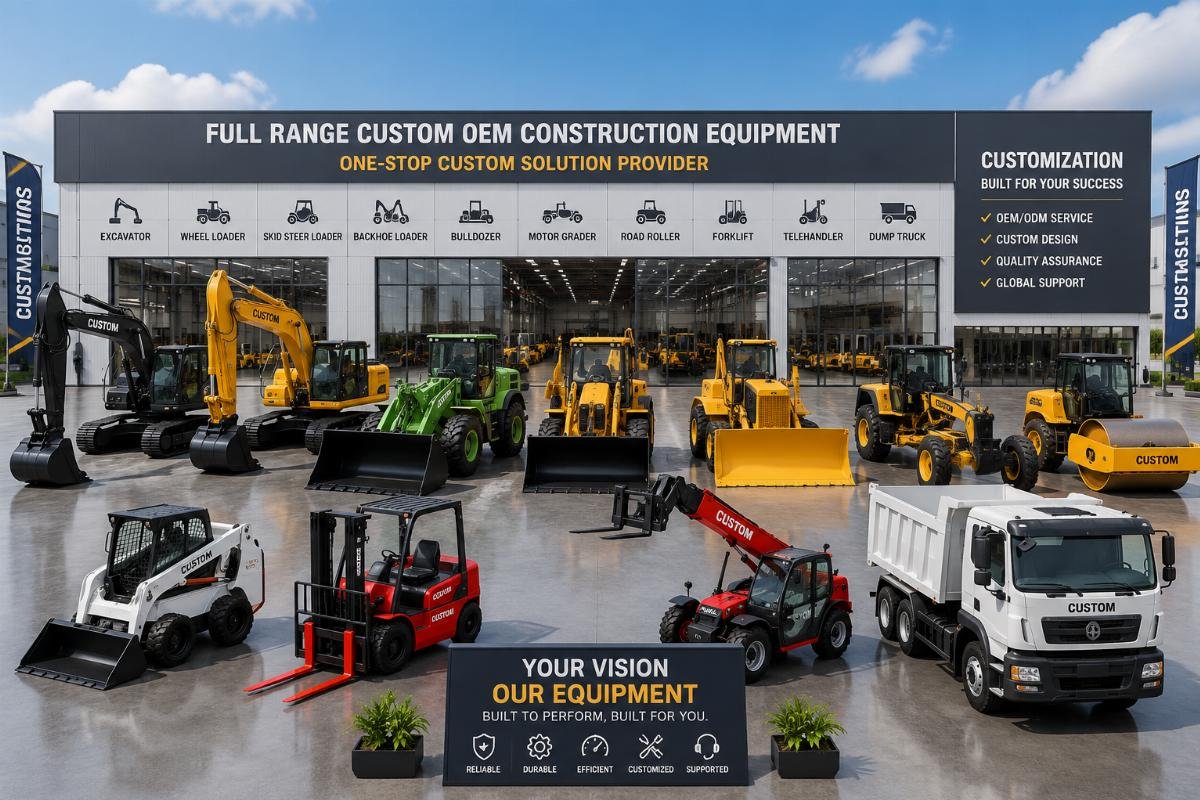
Every major category of construction equipment supports full end-to-end customization, with no restrictions on product type for custom orders. There is no tradeoff between product category and customization scope, as modern production lines are built to handle consistent configuration changes across all equipment segments.
The full range of supported custom categories includes 0.8 to 50t excavators, 0.8 to 6t load capacity wheel loaders, concrete mixers, pumps and batching plants, 1.5 to 10t forklifts, 3 to 26t road rollers, and 20 to 100t payload dump trucks, all with identical access to brand, component, and operational specification changes.
- Fleet Standardization – Align component choices across all units in your order to reduce the number of spare parts you need to keep on hand for maintenance.
- Operational Testing Alignment – Confirm that custom specifications meet local operational requirements for weight, emissions, and safety standards before production begins.
- Tender Requirement Check – Map all custom configuration details to the required line items for any government or private tender you are bidding on to avoid disqualification.
Conclusion
Custom OEM construction vehicle sourcing no longer forces procurement teams to choose between low order volume, cost savings, and global support, as modern manufacturing infrastructure has eliminated all three common historic tradeoffs. The core driver of this shift is not just low pricing from Chinese manufacturers, but the combination of flexible dedicated production lines and targeted after-sales infrastructure that aligns directly with the actual needs of global procurement teams. This means even small regional dealers and remote mining operators can access the same custom, cost-effective equipment terms that were previously only available to large multinational corporations placing 100+ unit bulk orders.
