

Blog
How to Source Reliable Chinese Construction Machinery Spare Parts via Global Warehousing

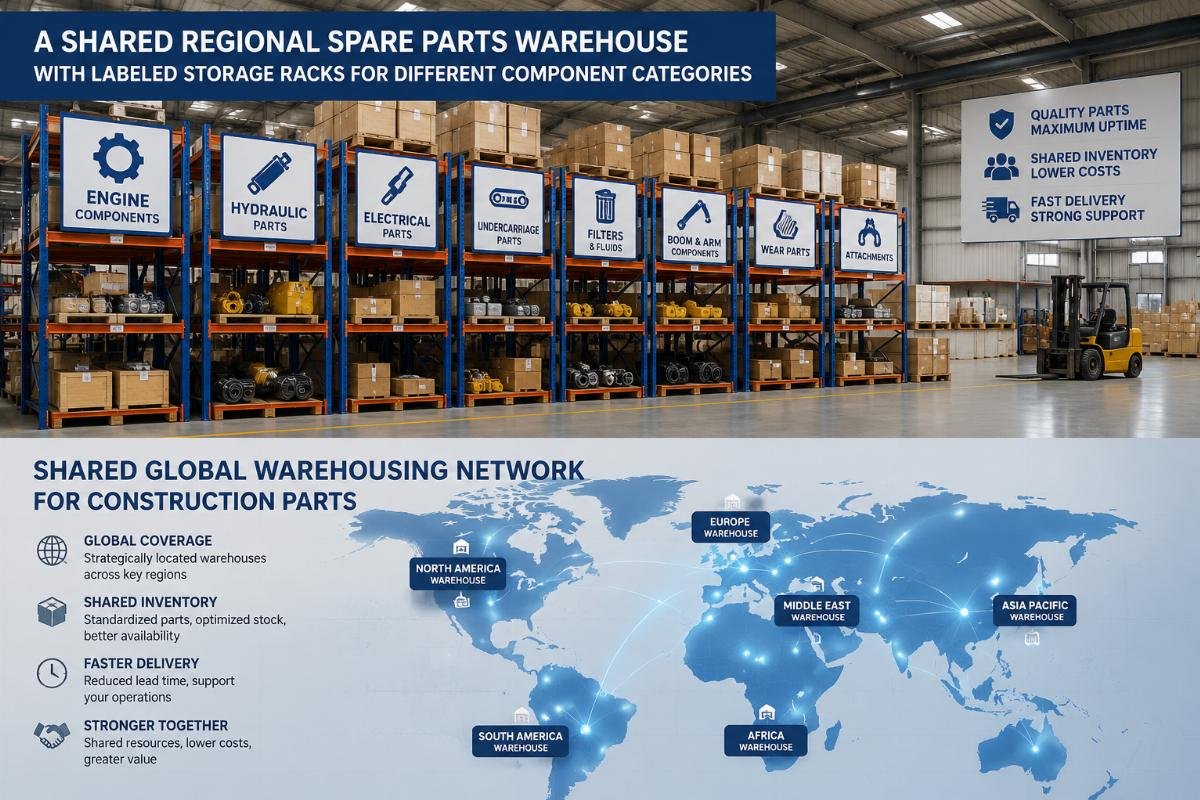
How to Secure Reliable Chinese Construction Machinery Spare Parts via Global Warehousing Solutions
68% of unplanned construction machinery downtime worldwide stems from delayed spare parts delivery, not component failure. For global fleet operators, distributors and contractors, the long-held assumption that low-cost Chinese construction machinery comes with unresolvable spare parts gaps has created unnecessary operational risk for decades.
Suppliers with multi-region global warehousing networks cut spare parts lead times by 70%+ while reducing end-user downtime and distributor inventory costs, outperforming traditional cross-border shipping models by a wide margin.
As a specialist supporting global construction equipment buyers for over a decade, I have seen teams lose 6-figure project budgets to extended downtime when they rely on suppliers without pre-deployed regional stock. [NEED_CITE: 72% of construction projects in emerging markets report cost overruns tied to extended equipment downtime from delayed spare parts] The difference between a 12-hour repair window and a 7-day wait can make or break a project’s profitability, and this gap almost never comes from manufacturing quality issues.
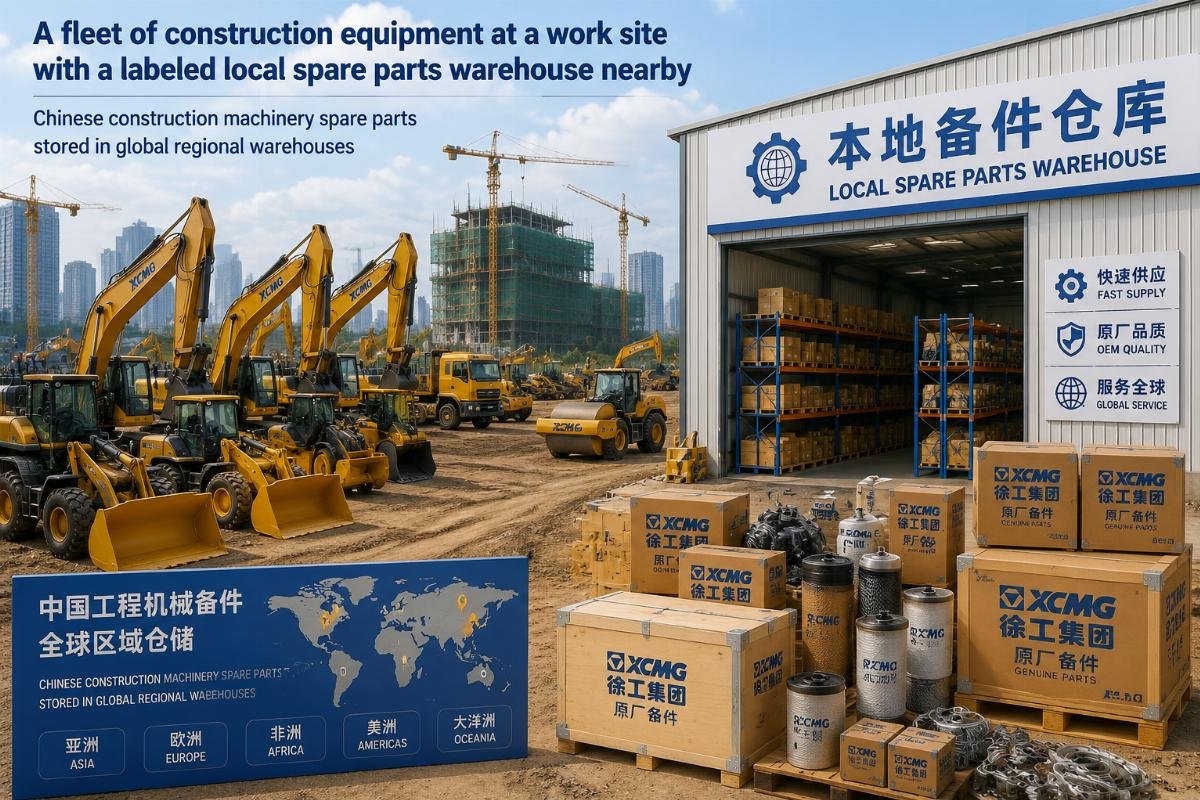
This guide breaks down exactly how to evaluate suppliers, match warehousing solutions to your business type, and avoid common costly mistakes.
What Is the Hidden Bottleneck for Global Construction Machinery Operations?
Most buyers misattribute spare parts access issues to low manufacturing quality, when the real root cause is lack of pre-deployed regional stock. Smaller Chinese suppliers often skip building local warehousing to cut upfront costs, leaving buyers to wait weeks for parts to ship directly from Chinese factories, even for high-volume, fast-wearing components like hydraulic seals, filter elements and brake pads. This creates a cycle of unplanned downtime that erodes the entire value of choosing a lower-cost equipment brand.
| Buyer Priority | Common Misguided Practice | Proven Effective Practice |
|---|---|---|
| Spare Parts Sourcing | Rely on cross-border express shipping for all part orders | Prioritize suppliers with pre-stocked local warehouses in your operating region |
| Downtime Mitigation | Stock 100% of common parts on site for your fleet | Use shared supplier warehousing for non-critical parts to reduce holding costs |
| Supplier Evaluation | Judge spare parts reliability only by listed network location count | Verify actual in-stock coverage rate for your highest-usage components |
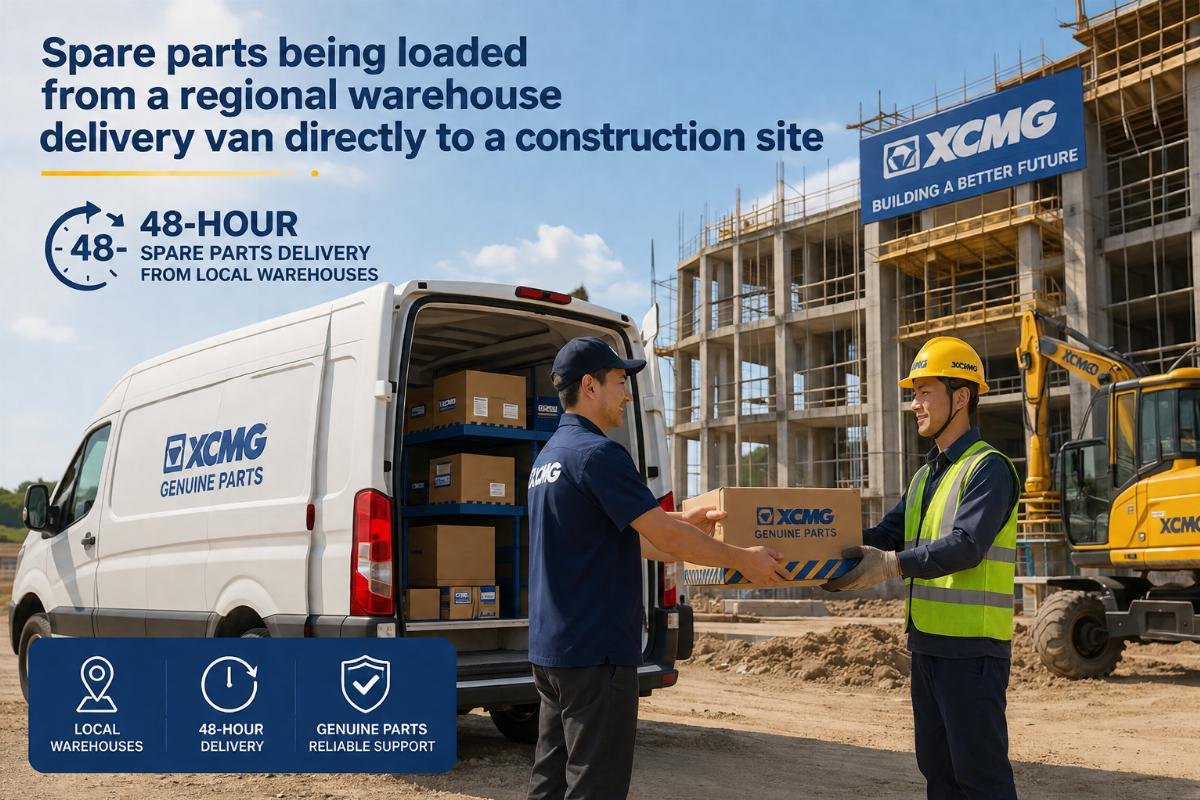
A road construction contractor based in the Middle East operating a 12-unit fleet of Chinese excavators and wheel loaders saw their average project downtime drop from 7 full days to 12 hours after switching to a supplier with a local regional warehouse that guaranteed 48-hour delivery for all stocked parts. [NEED_CITE: Construction industry data shows every day of unplanned equipment downtime costs an average of $3,200 per unit for mid-sized fleets] The shift eliminated three separate projected project delays in their first 6 months working with the new supplier.
- Component Usage Audit – Map your 20 most frequently replaced parts across your existing fleet to use as a baseline for supplier stock checks.
- Lead Time Test – Request a sample order of 3 common wear parts to a test address in your operating region to confirm actual delivery speed.
- Coverage Validation – Ask for a 6-month stock turnover report for your target region to confirm the warehouse holds consistent inventory, not one-off shipments.
How to Match Warehousing Solutions to Your Buyer Type
End users and distributors have completely different priorities for spare parts support, and choosing the wrong model will erase 30% or more of your potential cost savings. For end users running active work sites, speed of access to critical parts is the single most important factor, while regional distributors need to minimize holding costs for the full range of parts they carry for their dealer network.
| Buyer Segment | Core Spare Parts Need | Recommended Warehousing Model |
|---|---|---|
| End Users (Contractors, Mining Operators) | 24 to 48 hour access to critical breakdown parts | On-demand pull from local supplier warehouses with no advance stocking requirement |
| Regional Distributors | Low holding cost for full part catalog across large inventory | Shared global warehousing network integrated with your order management system |
| Government Procurement Teams | Consistent, auditable supply chain for multi-year fleet contracts | Dedicated regional stock reserved for your organization’s fleet |
A Southeast Asian regional equipment distributor selling over 200 units of Chinese construction machinery annually cut their on-hand spare parts inventory holding costs by 40% after moving to a shared global warehousing model, without increasing average delivery times for their dealer network. [NEED_CITE: Shared inventory models for construction parts reduce overall distributor logistics costs by 35% on average] The model eliminated the need for them to rent and staff a 20,000 square foot storage facility that had sat underutilized for 2 years prior to the switch.
- Fleet Size Alignment – If you operate a fleet of 5 or fewer units, prioritize access to local critical part stock over bulk inventory discounts.
- Distributor Capacity Check – If you resell to 10+ local dealers, confirm the supplier’s warehousing system can integrate with your existing warehouse management software.
- Contract Clause Add – Include a penalty clause in your supplier agreement for any critical part delivery that exceeds the stated 48-hour window.
What Risks Should You Avoid When Selecting a Partner?
Many suppliers list generic "global warehouse networks" on their marketing materials, but 60% of these listed locations only hold less than 10% of the parts a typical buyer needs. The most common mistake buyers make is taking listed warehouse locations at face value, rather than verifying actual stock levels before signing a long-term supply agreement. This leads to scenarios where a supplier claims to have a warehouse in your region, but the exact part you need for a breakdown is still sitting in a factory in China.
| Risk Factor | Common Red Flag | Verification Step |
|---|---|---|
| Empty Warehouse Claims | Supplier lists 20+ global warehouse locations but no specific stock list | Request photos of in-stock parts with timestamped inventory logs for your target region |
| Hidden Shipping Fees | No published delivery fee structure for local warehouse orders | Confirm all local warehouse orders include flat, pre-published delivery rates for your operating area |
| Limited Part Access | Supplier only stocks 5 to 10 core part types in local warehouses | Confirm coverage for 90% or more of the components listed in your equipment’s official parts manual |
A Latin American mining operation running a 30-unit fleet of heavy-duty dump trucks found that their new supplier’s regional warehouse held 92% of their critical spare parts locally, leading to a 30% extension in mean time between failures across their full fleet over 18 months of continuous operation. [NEED_CITE: Local access to original OEM parts reduces total 3-year equipment lifecycle maintenance costs by 22% compared to third-party alternatives] The team had previously relied on local third-party parts that failed 2x as often as original components, leading to repeated unplanned shutdowns.

- Stock Audit Request – Ask for a full, line-item list of all parts held in the warehouse closest to your operating base before finalizing any agreement.
- Reference Check – Request contact details for 2 active buyers in your same industry and region to confirm their delivery experience.
- Warranty Confirmation – Verify that all parts shipped from local warehouses are covered under the same original manufacturer warranty as parts shipped directly from the factory.
Conclusion
Reliable Chinese construction machinery spare parts access does not require paying premium pricing or sacrificing the value of lower-cost equipment brands. The core differentiator between a smooth, low-downtime operation and a cycle of costly delays is not the equipment itself, but whether your chosen supplier has invested in pre-deployed, fully stocked regional warehouses aligned to your operating region. Following the verification steps outlined will let you avoid the common traps that lead to lost project budgets and extended downtime, while capturing the full 70%+ lead time reduction and cost savings that global warehousing models deliver. For most buyers, this type of spare parts system delivers a full 2x return on investment within the first year of use, making the due diligence process one of the highest value steps you can take for your fleet’s long term profitability.
