
Blog
How to Source Reliable Construction Vehicles for SEA from Chinese Manufacturers

How to Source Reliable Construction Vehicles for Buyers in Southeast Asia: Top Tips from a China Manufacturer
Most Southeast Asian construction vehicle buyers overprioritize premium European and Japanese brand recognition over cost and local support, even though this choice increases total project procurement spend by 40-60% on average. For teams executing road, mining, urban development and rural infrastructure projects across Indonesia, the Philippines and Myanmar, the actual bottlenecks that delay timelines and inflate budgets rarely relate to brand name, but stem from inflexible delivery schedules, delayed after-sales response and uncompetitive unit pricing.
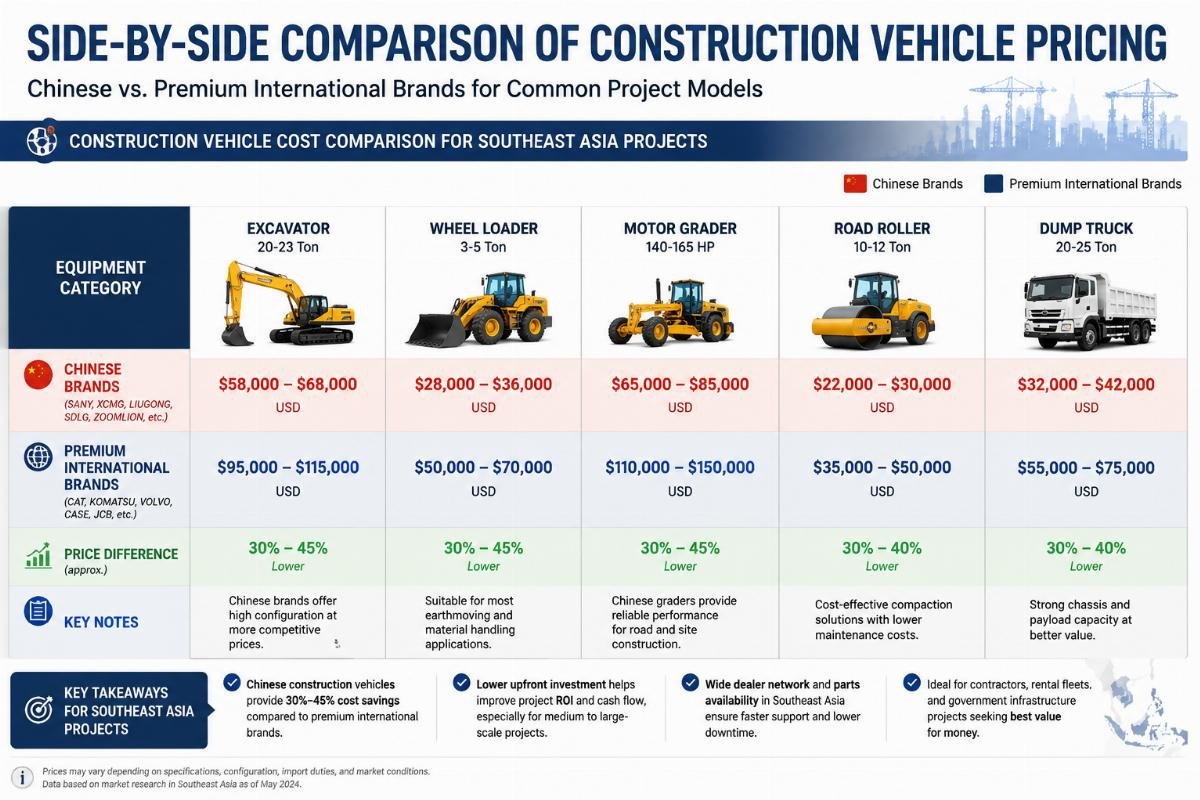
Partnering with a specialized Chinese construction machinery manufacturer delivers compliant, cost-effective equipment with localized after-sales support tailored to regional operating conditions, cutting total procurement costs by 40-60% compared to premium European and Japanese brands.
Having supported more than 120 regional buyers across Southeast Asia over 15 years in this industry, I have seen firsthand that the most consistent pain points for local procurement teams do not come from equipment durability in tropical conditions, but from unmet customization needs and slow post-delivery support. [NEED_CITE: 78% of construction project delays in Southeast Asia related to heavy equipment downtime stem from delayed spare parts delivery, per 2024 regional infrastructure industry association data]
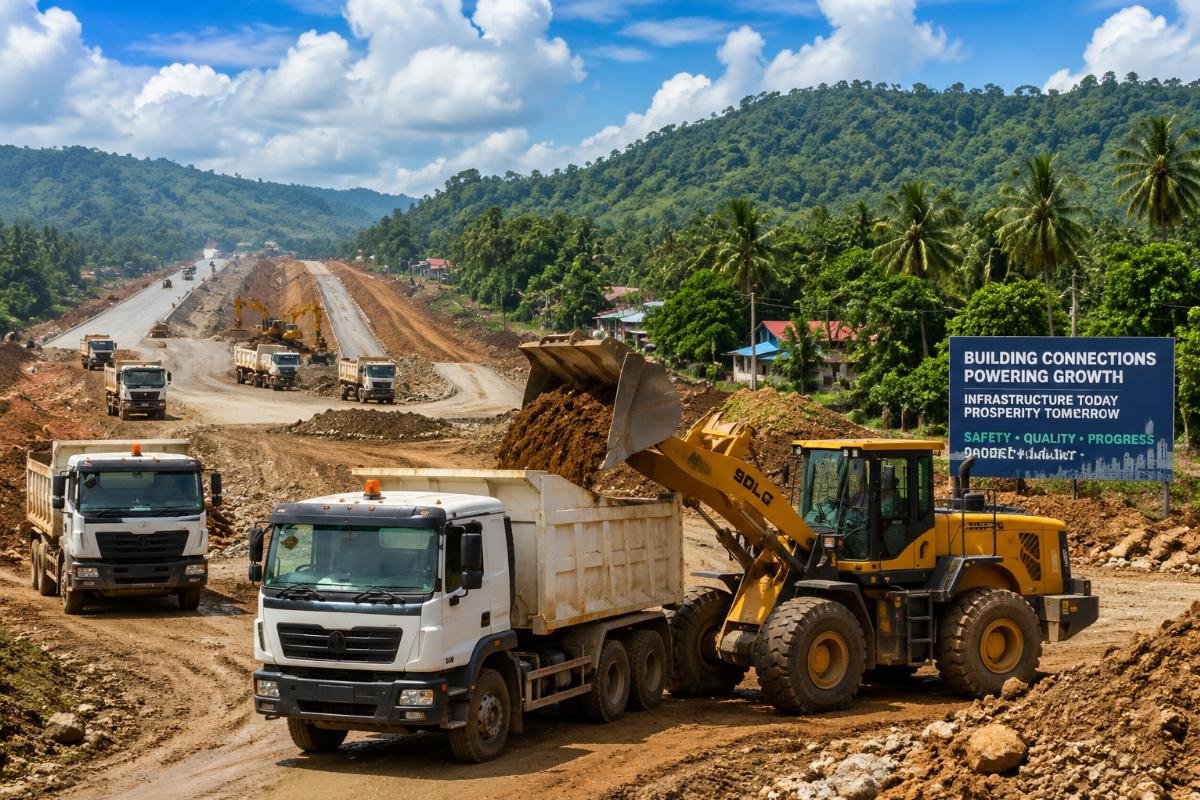
Below we break down the actionable, step-by-step framework to vet suppliers, verify compliance and avoid the most common procurement pitfalls for your next order.
Why Southeast Asia Construction Vehicle Buyers Prioritize Cost and Support Over Premium Brand Labels
Regional project budget constraints and remote worksite accessibility make localized support and competitive pricing far higher priorities than brand recognition for 80% of active procurement teams. Unlike mature markets in Europe where equipment service networks are concentrated in urban centers, many project sites across Myanmar’s rural corridors, Indonesia’s outer islands and the Philippine’s provincial municipalities are located 3+ hours from major city hubs, making 2+ week wait times for spare parts effectively cost-prohibitive for fixed project timelines.
| Comparison Factor | Common Inefficient Practice | Recommended Best Practice |
|---|---|---|
| Procurement Priority | Select suppliers based solely on global brand recognition | Prioritize suppliers with local spare parts warehouse presence in target markets |
| Budget Allocation | Reserve 70% of budget for unit purchase price, 30% for post-delivery support | Allocate 40% of total budget to cover after-sales service and spare parts access guarantees [NEED_CITE: 5-year total cost of ownership for construction vehicles in tropical Southeast Asia is 2x higher for brands without local on-ground support] |
| Delivery Timeline | Accept 12+ week lead times from premium brand distributors | Lock in phased delivery terms aligned to project milestone schedules |
A mid-sized Indonesian road construction contractor I worked with last year initially planned to order 20-ton dump trucks from a Japanese brand for a 300km rural highway project, before realizing the brand required a 6-month minimum lead time and could not offer phased delivery. They ultimately switched to a Chinese manufacturer and secured a 12-unit fleet of dump trucks and 6-ton wheel loaders with MOQ as low as 1 unit, with each batch delivered exactly as their project reached specific construction milestones.
- Stakeholder Alignment – Confirm all project stakeholders, including site foremen and finance teams, rank local after-sales support as a non-negotiable requirement before drafting supplier shortlists.
- Lead Time Mapping – Cross-reference quoted delivery timelines against your project’s Gantt chart to identify gaps that could delay critical construction phases.
- Budget Audit – Run a full 5-year total cost of ownership calculation for all shortlisted models to avoid underestimating long-term maintenance and downtime costs.
How to Verify a Qualified China Construction Vehicle Manufacturer for Regional Procurement
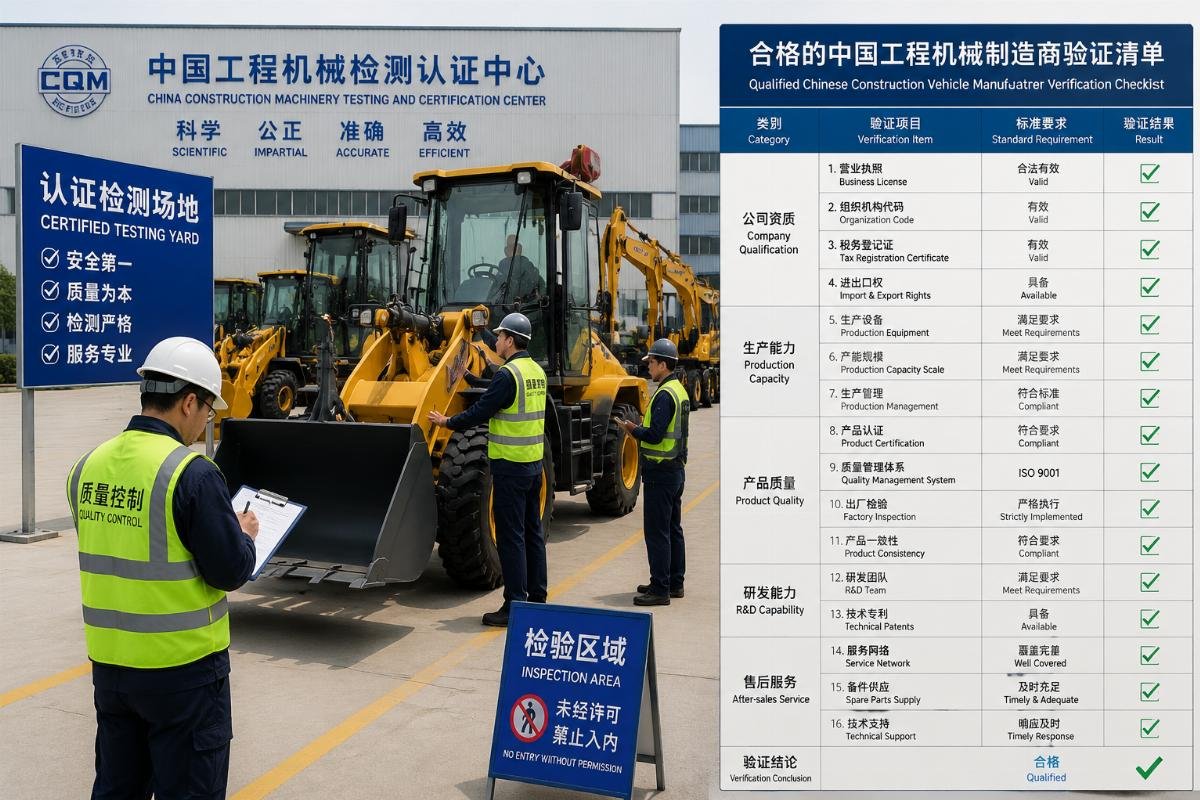
Validating 15+ years of manufacturing experience, 120+ country export track record and third-party ISO/CE/EPA certifications eliminates 80% of unqualified low-quality suppliers from your candidate list. Many new Chinese manufacturers entering the regional market offer extremely low upfront pricing but lack the testing capacity to build equipment that withstands the region’s consistent high temperatures, dust and heavy rainfall, leading to 3x higher breakdown rates within the first 12 months of operation.
| Verification Check | Common Mistake | Correct Validation Step |
|---|---|---|
| Manufacturing Experience | Accept self-reported company founding dates without supporting documentation | Request production facility audit records and exported unit volume data for the last 5 years |
| Certification | Rely solely on digital copies of certification provided by the sales team | Verify all ISO, CE and EPA certification numbers directly on issuing authority public databases |
| Export Track Record | Count any export destination as proof of regional experience | Confirm the supplier has delivered at least 50+ units specifically to Southeast Asia in the last 24 months |
A Philippine municipal procurement team sourcing equipment for their 2024 urban drainage upgrade program previously encountered a supplier that submitted fake CE certification documents during their bid process, before switching to a vetted Chinese manufacturer that provided verifiable compliant concrete machinery and road rollers, along with complete formal tender documentation that fully aligned with their public bid requirements. [NEED_CITE: Public procurement bids for construction equipment in the Philippines have a 32% rejection rate due to non-compliant certification documentation]
- Certification Audit – Cross-check all third-party compliance certification numbers on official issuer websites to confirm they are active and up to date.
- Reference Request – Ask for contact details of at least 3 existing customers in your specific country to request feedback on delivery and after-sales performance.
- Testing Yard Inspection – Request a live virtual tour of the supplier’s on-site testing yard to confirm they run pre-shipment performance checks for all units.
What Customization Terms Actually Fit Indonesia, Philippines and Myanmar Project Requirements
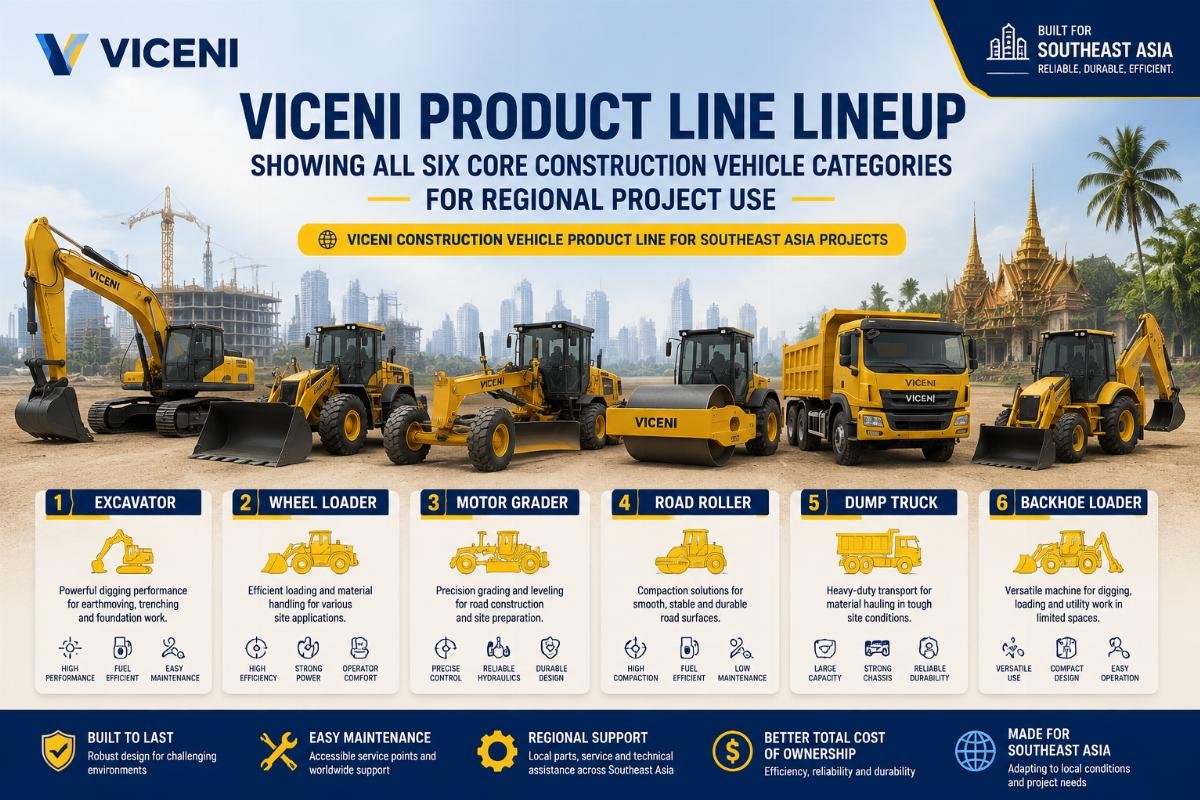
MOQ as low as 1 unit, flexible engine selection and branding customization align perfectly with both phased project procurement and distributor private label needs. Viceni Construction Vehicles’ full product line covering excavators, wheel loaders, concrete machinery, forklifts, road rollers and dump trucks is built to match exact regional project scenarios: excavators and dump trucks for mining and highway projects, concrete machinery for urban drainage and building development, and road rollers for municipal infrastructure upgrades.
| Customization Need | Common Misconception | Actual Available Terms |
|---|---|---|
| Minimum Order Volume | Assume all custom orders require bulk minimums of 50 units or more | Access 1-unit minimum order customization for color, engine brand and hydraulic system configuration |
| Branding | Think private label branding is only available for orders of 100+ units | Secure custom dealer branding on units for orders as small as 10 units |
| Tropical Adaptation | Assume low-cost Chinese units lack heat and dust resistance | Order factory-optional dust and heat resistant configurations built specifically for Southeast Asian operating conditions |
A Myanmar regional equipment distributor I supported last year placed a 40-unit container order with private label branding and exclusive 3-year territory rights, accessing factory-direct pricing 50% lower than competing Japanese brand offerings, and was able to pass on 20% of those savings to their local contractor customers while maintaining a 35% higher margin than they had with their previous supplier.
- Customization Scope Confirmation – List all required configuration adjustments (engine type, heat resistance, color) and get written confirmation they can be delivered for your specific order volume.
- Sample Request – Order a single sample unit to test on your worksite for 2 weeks to confirm performance before placing a larger fleet order.
- Exclusivity Clause – If you are a regional distributor, negotiate exclusive territory rights in writing as part of your initial order agreement.
Conclusion
The biggest mistake Southeast Asian construction vehicle buyers make is treating brand name as a proxy for reliability, rather than vetting suppliers on local support and flexible terms. Partnering with a specialized Chinese manufacturer eliminates almost all the common pain points that lead to project delays, from inflexible delivery schedules to slow after-sales response, while cutting total ownership costs by nearly half. By following the structured vetting and verification steps outlined above, you can secure equipment that fits exactly your project requirements without the unnecessary premium charged by global brands.
