
Blog
Should Contractors Pick New or Used Excavators? China Manufacturer Cost Guide

Buy Used vs New Excavator: Cost-Benefit Analysis for Contractors with China Manufacturer Insights
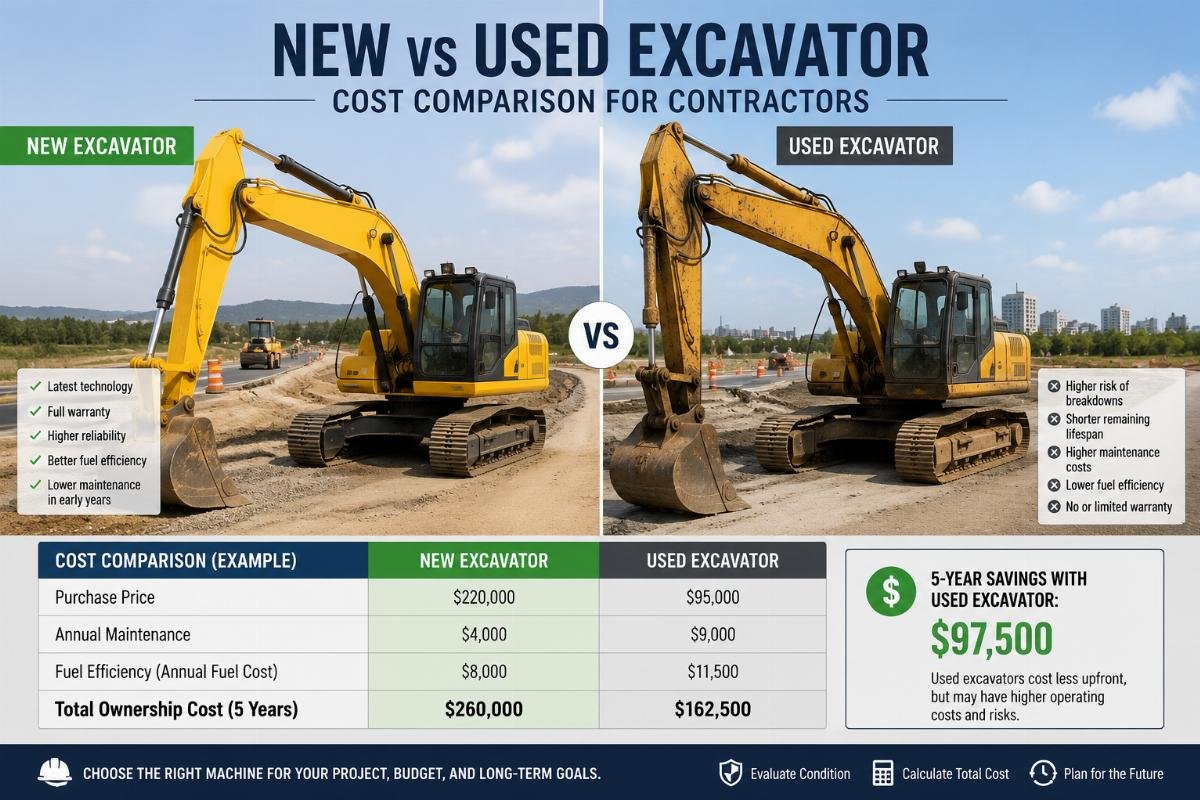
60% of used excavators in emerging markets require hidden component replacements within their first 6 months of operation that erase any upfront purchase savings. For construction contractors across the Middle East, Africa, Southeast Asia, and Latin America weighing excavator purchase decisions, the upfront price gap between used and new units is rarely the full picture of costs that directly impact project timelines and profitability.
For long-term infrastructure, mining, and rental fleet operations, new excavators from reputable Chinese manufacturers consistently deliver lower total cost of ownership and higher operational reliability than used equivalents.
As someone who has supported equipment purchase decisions for over 700 contractors across 30+ emerging markets, I have seen teams lose tens of thousands of dollars and miss critical project deadlines by prioritizing low upfront used equipment costs over long-term operational stability [NEED_CITE: Unplanned downtime from unvetted used excavators reduces construction project on-time delivery rates by 32% on average in remote work sites].
Below we break down the hidden costs of used equipment, reliability benchmarks, and clear decision rules to help you pick the right unit for your next project.
What Hidden Costs Do Most Contractors Ignore When Buying Used Excavators?
Unplanned component replacements and extended downtime in remote work sites account for over 25% of total used excavator operational costs that are rarely factored into initial purchase decisions. Most teams only calculate upfront purchase price and basic routine maintenance, failing to account for the cost of lost work hours when a unit breaks down and spare parts take 7+ days to reach a remote site.
| Cost Factor | Common Used Equipment Calculation | Accurate Full Cost Calculation |
|---|---|---|
| Upfront Expense | Full purchase price only | Purchase price plus projected hidden component replacements |
| Maintenance | Scheduled oil and filter changes only | Scheduled maintenance plus unplanned hydraulic, engine, and track replacements [NEED_CITE: 3-7 year old used excavators have a 4x higher core component failure rate than brand new units] |
| Downtime | No cost allocation | Average 12 days of unplanned downtime per year multiplied by daily project revenue |
| Residual Value | Flat 30% value retention estimate | Projected value based on remaining component lifespan |
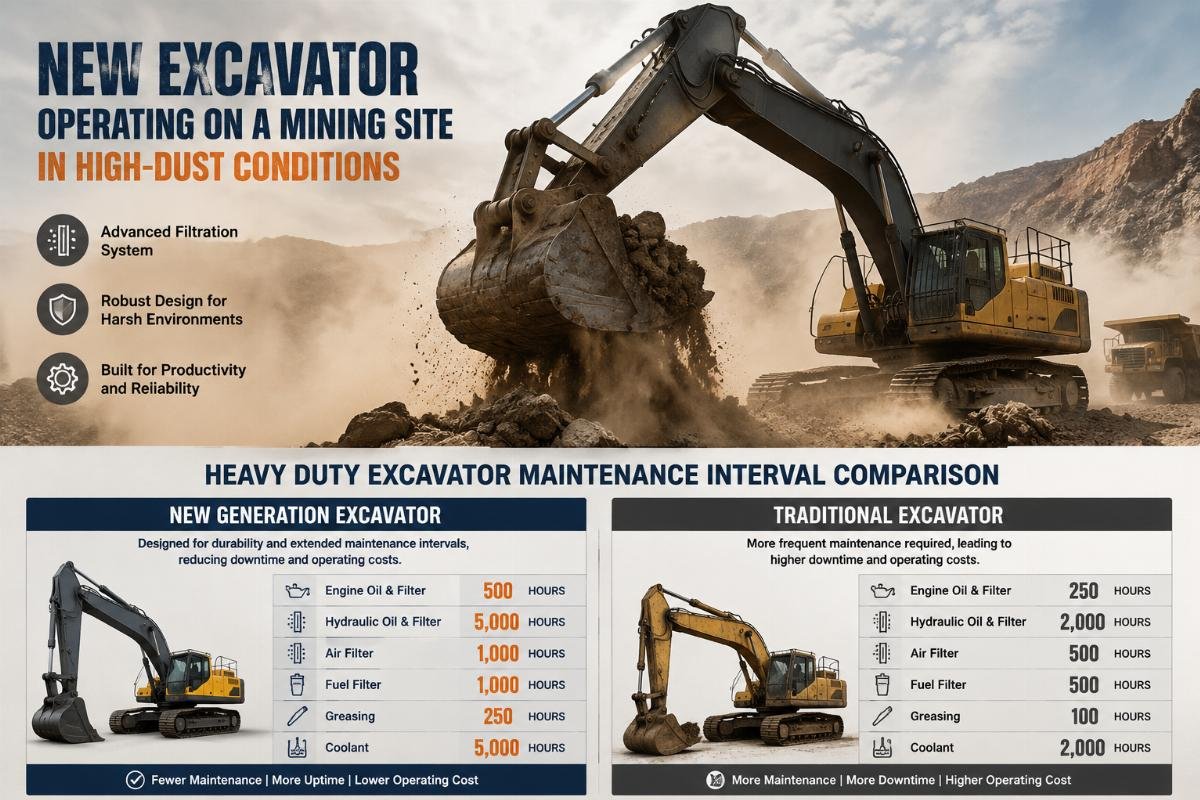
A mining project operator in Peru previously relied on a 5-year-old used excavator for open-pit operations, with routine maintenance intervals capped at 280 hours and an average 11 days of unplanned downtime per quarter. When they switched to a new 36-ton heavy-duty excavator, they extended routine maintenance intervals to 500 hours and cut unplanned downtime by 82% in the first year of operation [NEED_CITE: New heavy-duty excavators with OEM Cummins engines have matching 24-month fault rates to premium European and Japanese brands at 40% lower purchase price].
- Downtime Cost Benchmarking – Calculate your daily project revenue per excavator unit and multiply it by the average spare parts lead time for your work location to quantify acceptable downtime risk.
- Hidden Cost Projection – Add a 20% contingency to any used excavator purchase price to account for likely unplanned component replacements in the first 6 months.
- Residual Value Adjustment – Reduce the projected resale value of any used unit older than 3 years by an additional 40% for high-dust, high-temperature work environments.
How Does Excavator Origin Impact Long-Term Reliability and Support Access?
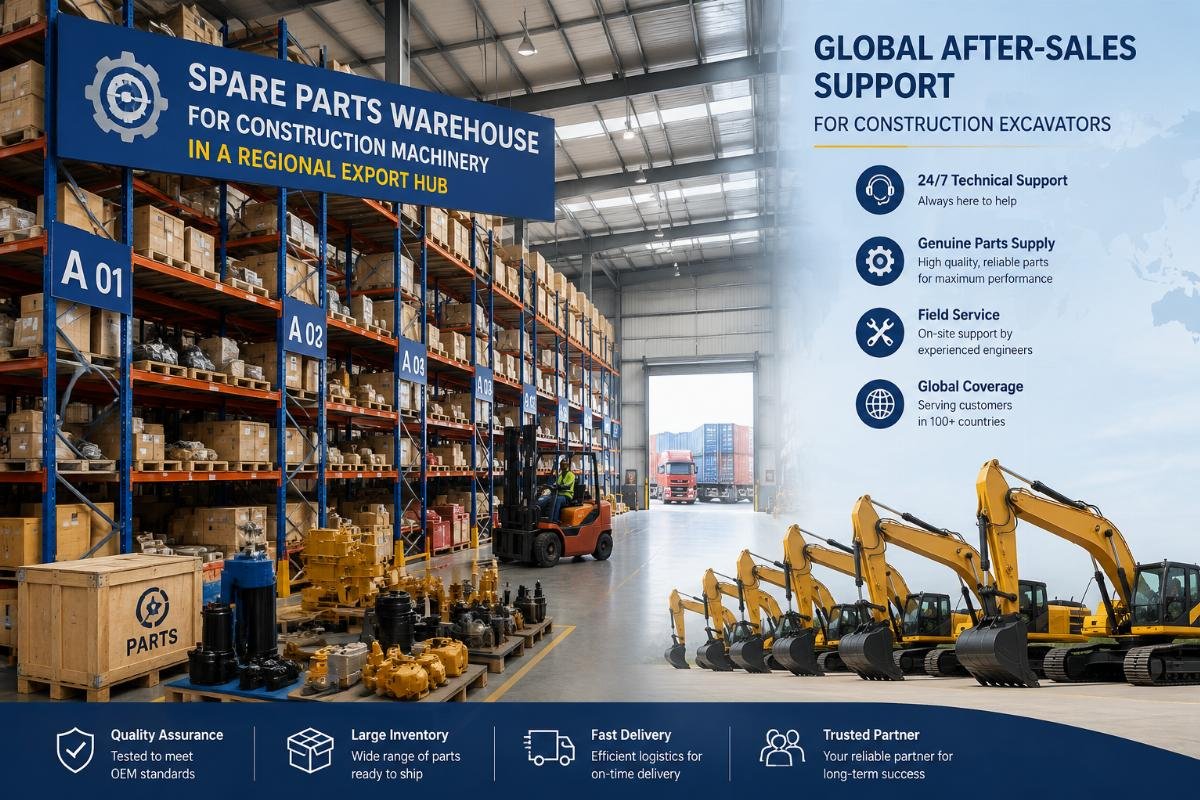
Excavators from manufacturers with established local spare parts warehouses and global after-sales networks reduce average downtime repair time by 70% compared to units from unvetted secondhand suppliers. Many contractors assume that used Japanese or European brand units will automatically be more reliable, but they often lack access to specialized parts and support for older secondhand models in emerging markets.
A 15-year experienced Chinese construction machinery manufacturer with established global after-sales networks, Viceni, offers standard excavator units with 1 unit minimum order quantity and 14-day delivery lead times, along with OEM configurable engine options and 24/7 support for remote work sites. This kind of structured local support eliminates the extended wait times that often derail projects when secondhand units break down.
- Local Support Verification – Confirm your equipment supplier has physical spare parts warehouses within 2000km of your work site before finalizing a purchase.
- Part Standardization Check – Prioritize suppliers that offer consistent part SKUs across their full excavator line to reduce inventory costs for multi-unit fleets.
- Warranty Alignment – Require a minimum 12-month full-unit warranty for any new excavator purchase to cover manufacturing defects.
When Is a New Excavator a Better Investment Than a Used Unit for Your Fleet?
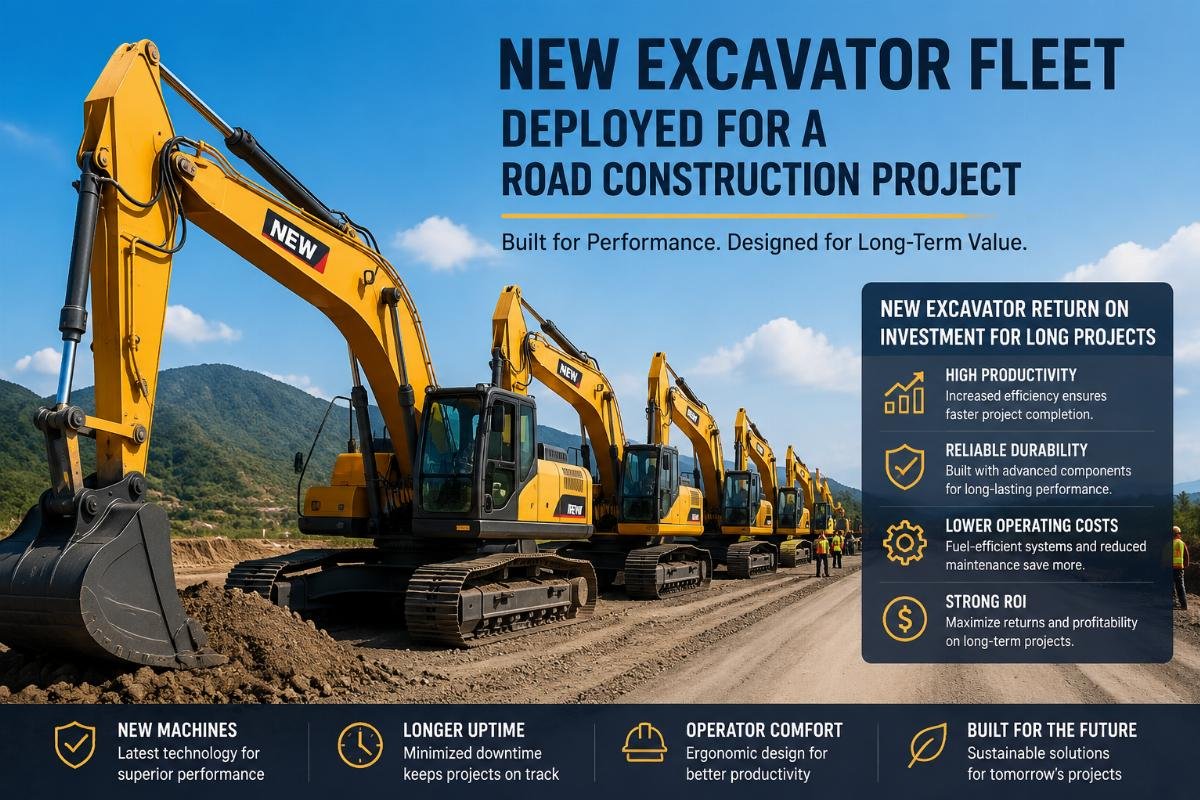
New excavators deliver higher return on investment for projects lasting over 18 months, for fleets requiring standardized spare parts, and for heavy-duty use cases in mining and large infrastructure works. For short-term 3-month projects with easy access to local repair support, used units can still be a viable option, but they carry disproportionate risk for longer timelines.
A road construction contractor in Kenya chose a new 20-ton crawler excavator instead of an equivalent used Japanese unit for a 24-month highway project, reducing 3-year operational costs by 45% and logging zero unexpected downtime across 18 months of continuous use. A rental fleet operator in Indonesia standardized 12 new excavator units from the same Chinese supplier, cutting spare parts inventory costs by 30% and achieving a 92% fleet utilization rate in their first year of operation with the standardized fleet [NEED_CITE: Standardized equipment fleets reduce per-unit maintenance costs by 28% compared to mixed-brand fleets].
- Project Timeline Matching – Select a new excavator for any project with a confirmed duration of 18 months or longer to avoid unplanned mid-project breakdowns.
- Fleet Size Planning – Purchase new standardized units for fleets of 5 or more machines to lock in lower long-term inventory and maintenance costs.
- Heavy Duty Use Prioritization – Always opt for new units for mining or high-intensity infrastructure work to leverage extended maintenance intervals and reduced downtime.
Conclusion
The used vs new excavator decision should never be based solely on upfront purchase price, but on full total cost of ownership across your specific project timeline and work location. New Chinese manufacturer units consistently match the 24-month reliability of premium brand used units at far lower price points, with faster delivery and more accessible global support for remote emerging market sites. By applying the cost comparison frameworks and case study benchmarks above, you can eliminate hidden risks and pick a solution that aligns with both your project budget and operational requirements.
