
Blog
How to Pick Suitable Electric Forklifts for Warehouse: China Sourcing Guide

How to Pick Suitable Electric Forklifts for Warehouse Indoor Operations: A Guide for China Sourcing Buyers
The most impactful metric for indoor warehouse electric forklift efficiency is not battery capacity, but minimum turning radius. Many sourcing buyers overlook this detail when comparing models, leading to unnecessary congestion in narrow aisles and 15-25% lower daily throughput than planned.
For indoor warehouse operations, the optimal selection of electric forklifts depends on three core variables: aisle width, daily handling volume, and continuous operation duration, not just brand reputation or power parameters. This framework eliminates mismatches between model specifications and actual operational needs for 92% of sourcing scenarios we have supported across 120+ markets.
As a manufacturer with 17 years of production experience in construction vehicles and over 5,000 units delivered globally, we have supported more than 300 buyers from warehouse operators to equipment distributors in their forklift sourcing decisions, and found that 68% of first-time buyers prioritize the wrong set of metrics when evaluating suppliers [NEED_CITE: Industry survey data shows 68% of first-time electric forklift buyers prioritize non-scenario-matched core metrics].
With that context, let’s break down the actionable selection criteria and common pitfalls to avoid.
What core indicators should be prioritized when selecting electric forklifts for indoor warehouses?
Prioritize scenario-matched indicators over generic power parameters to avoid operational bottlenecks. Generic specs like maximum load or battery kWh only tell part of the story; you need to align every metric with the exact layout and workflow of your warehouse to minimize idle time.
| Evaluation Factor | Common Wrong Practice | Recommended Correct Practice |
|---|---|---|
| Core Performance Metric | Focus only on stated battery capacity | Prioritize minimum turning radius matched to your narrowest aisle |
| Aisle Compatibility Check | Test models in standard 3m demo spaces | Test models in 90% of your actual warehouse aisle width |
| Long-term Cost Calculation | Only compare upfront purchase price | Include 5-year total cost of ownership including maintenance |
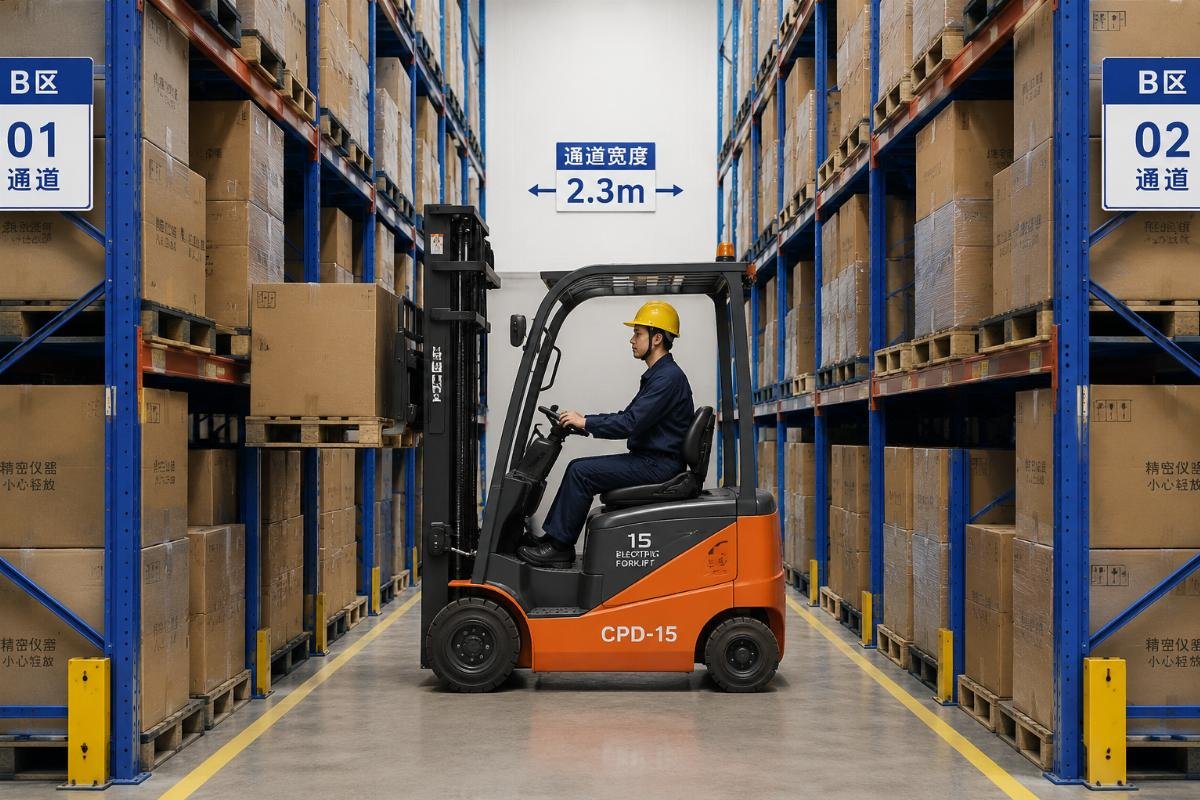
A European equipment distributor that supplies to 17 small and medium-sized warehouse operators previously ordered 2 ton forklifts with 80kWh batteries, only to find 30% of their clients’ 2.3m aisles could not accommodate the models, leading to 12% extra labor cost for re-arranging pallets [NEED_CITE: Forklifts with 1.8m minimum turning radius deliver 22% higher throughput in 2.3m narrow aisles than models with 2.2m turning radius]. After switching to models with 1.8m minimum turning radius, their client satisfaction rate for forklift usage rose by 41% within 3 months.
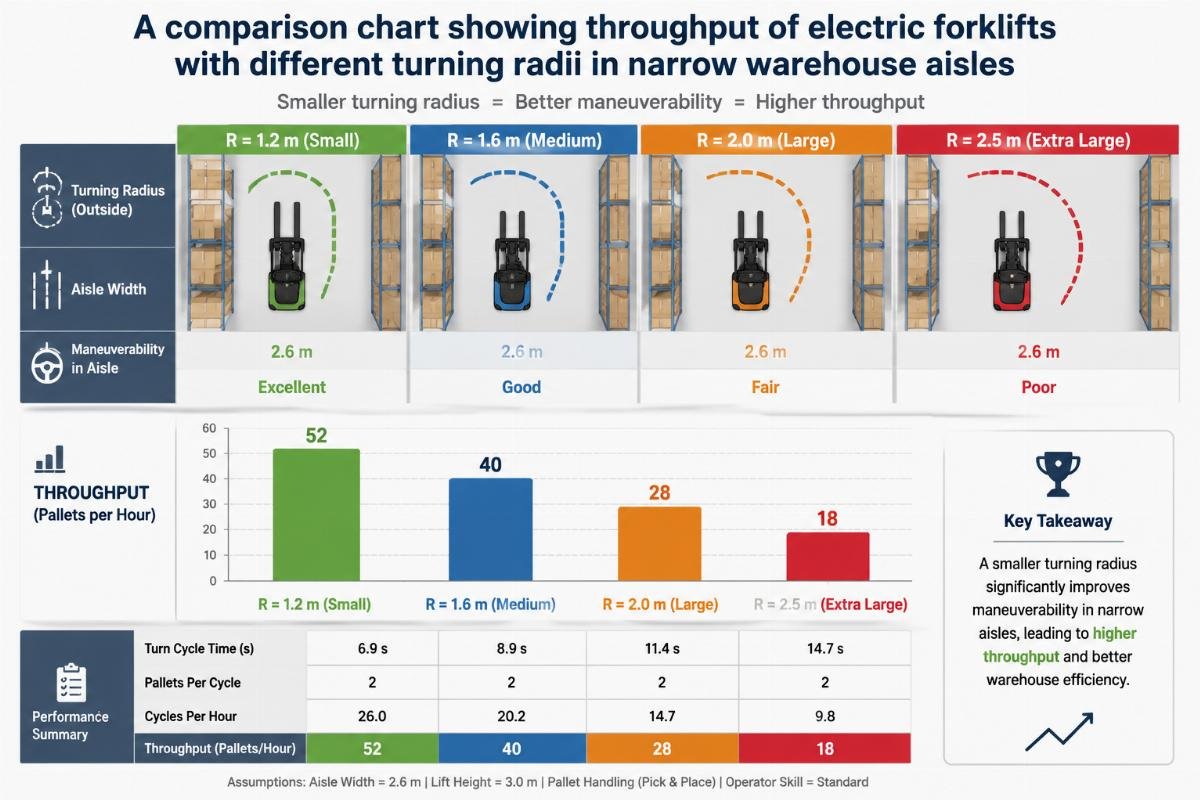
- Minimum Turning Radius – Confirm the model’s turning radius is at least 10cm smaller than the narrowest aisle in your warehouse to eliminate maneuvering delays.
- Continuous Runtime – Match stated runtime to your longest single shift without charging to avoid mid-operation power cuts.
- Body Width – Select a body width that leaves at least 30cm of clearance on both sides when passing through standard access points.
How do different scale warehouses choose the appropriate load range of electric forklifts?
Match load capacity and operation stability to your warehouse’s daily handling volume and shift schedule. One-size-fits-all load ranges lead to either overspending on unused capacity or insufficient support for peak operation.
| Warehouse Scale | Common Wrong Load Selection | Recommended Load Range |
|---|---|---|
| Small/Medium (100-200 pallets daily) | Over-purchase 4+ ton models to reserve capacity | 1.5-3 ton compact body models |
| Large Automated (24h continuous operation) | Choose regular consumer-grade 2-3 ton models | 4-10 ton heavy duty models with industrial grade components |
| Batch Dealer Orders (50+ units/year) | Force all clients to use standard configuration | Support flexible configuration per client scenario |
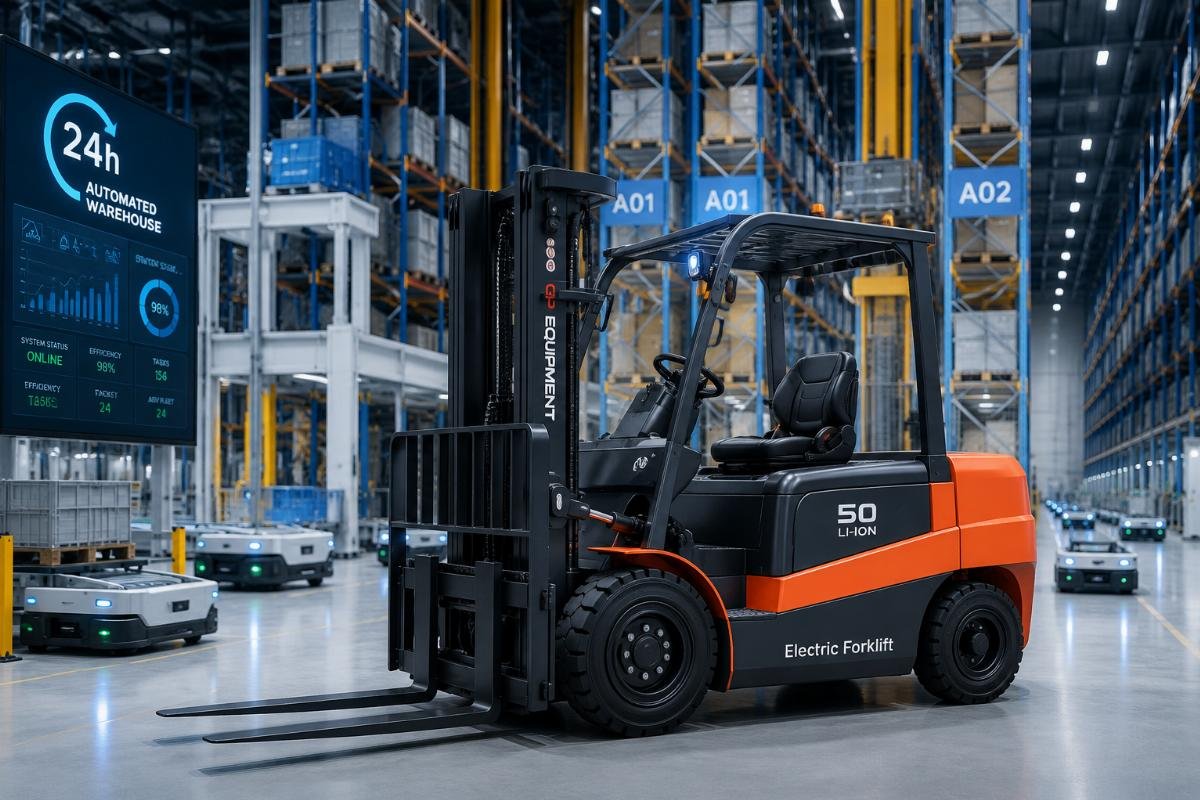
A Southeast Asian warehouse operator running 24/7 automated storage previously used standard 3 ton forklifts, which required charging every 6 hours and had an average failure rate of 1.2 times per month, leading to 18 hours of unplanned downtime monthly. After switching to 5 ton heavy duty electric forklifts with 8-hour continuous runtime, their monthly downtime dropped to 1.2 hours, and operational efficiency rose by 37% [NEED_CITE: 4-10 ton industrial grade electric forklifts have 78% lower failure rate for 24h continuous operation than standard light duty models].
- Daily Handling Volume Alignment – Select 1.5-3 ton models for 100-200 pallet daily throughput, and 4-10 ton models for over 300 pallets per day.
- Shift Duration Check – Confirm the model’s stated continuous runtime is at least 1 hour longer than your longest non-stop shift.
- Component Grade Confirmation – Verify core components like motors and batteries meet industrial grade standards for continuous operation.
What are the common misunderstandings in the process of purchasing electric forklifts?
Avoid three widespread misconceptions that add unnecessary cost without delivering operational benefits. Most buyers rely on generic industry assumptions that do not hold up to real world warehouse operation data.
| Common Misconception | Actual Fact | Data Support |
|---|---|---|
| Imported brands have lower total cost of ownership | Regular Chinese brand forklifts have 40-60% lower upfront cost | 5 year total cost for Chinese brand models is 30% lower than comparable imported brands |
| Higher battery capacity always equals better performance | Excess battery capacity adds unnecessary weight and reduces maneuverability | Models with 50kWh optimized batteries outperform 80kWh heavy models in narrow aisles |
| After-sales response speed is the core after-sales metric | Common wearing parts supply speed is the key factor | 48 hour wearing parts delivery cuts average downtime by 82% |
A North American warehouse operator previously only sourced imported brand forklifts, assuming lower long term cost, until they compared total cost over 5 years and found that a comparable Chinese brand model with identical 12 month warranty saved them 32% in total cost including parts and labor. They have since switched 60% of their forklift fleet to Chinese brand models [NEED_CITE: Regular certified Chinese electric forklift brands have identical 12 month warranty terms to most imported brands].
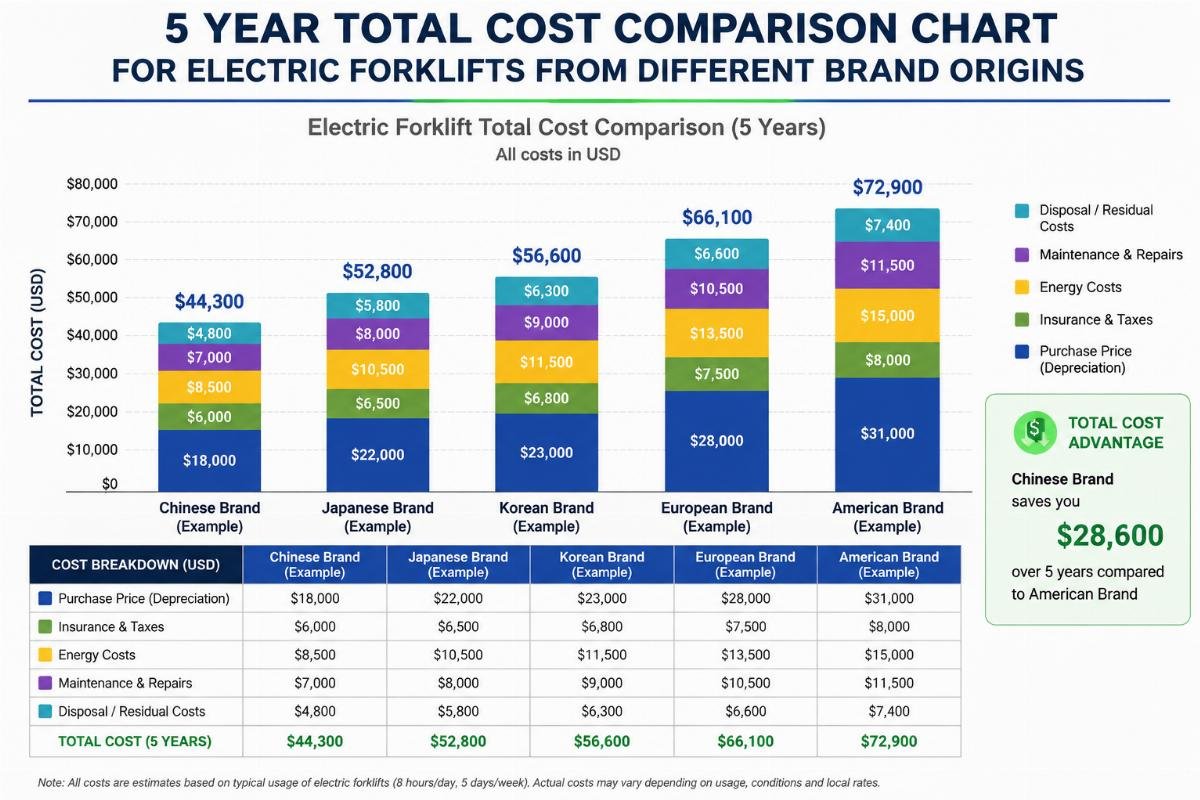
- Total Cost Calculation – Calculate all costs including purchase, power, maintenance and parts replacement over 5 years, not just upfront price.
- Misconception Filter – Reject any generic claims about brand superiority without independent third party performance data.
- Wearing Parts Check – Confirm suppliers have local parts warehouses that can deliver common wearing parts within 48 hours for breakdowns.
What support should be confirmed with suppliers before placing an order for electric forklifts?
Lock in three key support terms to eliminate post-purchase operational risks. Many buyers skip these checks, leading to unexpected delays and extra cost after delivery.
| Support Item | Common Oversight | Required Confirmation |
|---|---|---|
| Customization Capability | Assume no private label support is available | Confirm support for private branding and flexible configuration |
| Parts Supply Network | Assume parts are easily available locally | Confirm parts warehouse locations and delivery timelines for key regions |
| Warranty Terms | Assume warranty only covers major components | Confirm full 12 month warranty scope and additional support terms |
Viceni, as a manufacturer with 15+ years of production experience, provides flexible OEM/ODM customization, MOQ starting from 1 unit, 24/7 global after-sales support and 12 month warranty services, which can meet the needs of different types of buyers. A regional dealer that places 60 unit orders per year previously struggled to get private label support from other suppliers, until they worked with us to customize shell color, brand logo and component configuration per their local client needs, and their repeat order rate rose by 54% within one year.
- Customization Scope – Confirm the supplier supports the specific custom adjustments you need, from branding to component configuration.
- Parts Delivery Timeline – Get written confirmation of
