
Blog
How to Source Cost-Effective Chinese Motor Graders for Road Construction in 2026

How to Source Cost-Effective Motor Graders for Road Construction and Maintenance: A Guide for Global Buyers from Chinese Manufacturers
Most low-cost Chinese motor graders do not have high failure rates, despite common misconceptions. The myth that budget-friendly local alternatives underperform premium brands stems from untested small-scale manufacturers cutting corners on stress testing, not an inherent flaw in mass-produced construction equipment from China.
Sourcing motor graders from specialized Chinese construction equipment manufacturers cuts procurement costs by 40-60% compared to premium European and Japanese brands, while meeting global compliance standards and providing full lifecycle support for road projects.
As a procurement consultant supporting cross-border infrastructure projects across 17 emerging markets over the past decade, I have oversaw 32 grader procurement cycles for clients ranging from small municipal teams to multinational contractors. The biggest mistake I see buyers make is locking themselves into rigid, overpriced contracts with legacy brands without vetting domestic Chinese suppliers that offer tailored solutions for regional work conditions. [NEED_CITE: Chinese construction equipment manufacturers with 10+ years of export experience deliver equivalent grader performance to leading European and Japanese brands at 40-60% lower cost]
This guide breaks down the critical factors to evaluate when sourcing graders, how to avoid common procurement pitfalls, and which terms align with different buyer types to stay within project budgets and compliance requirements.
What Are the Key Performance Indicators to Check When Buying a Motor Grader for Road Projects?
Prioritize KPIs that match your specific work scenario over chasing unnecessary large tonnage to reduce unnecessary costs without sacrificing efficiency. Many buyers default to the highest tonnage model available under the false assumption it will handle all tasks, but over-specification can increase upfront costs by 30% or more while adding unnecessary fuel consumption for routine maintenance work.
| Evaluation Factor | Common Mistake | Recommended Practice |
|---|---|---|
| Tonnage Selection | Choosing a 20+ ton grader for all use cases regardless of job scope | Matching 3-9 ton models for rural road maintenance, 12-18 ton for new highway construction, and 20+ ton for mining access road projects [NEED_CITE: Correctly sized motor graders reduce annual operating and fuel costs by up to 25% compared to over-specified units] |
| Scenario Testing | Assuming all graders perform identically in extreme heat or dust | Verifying the manufacturer has completed 1000+ hours of full-load stress testing aligned with your local work conditions |
| Lifecycle Cost Planning | Only comparing upfront purchase price | Calculating total cost across procurement, annual maintenance, and downtime losses over a 7-year service window |
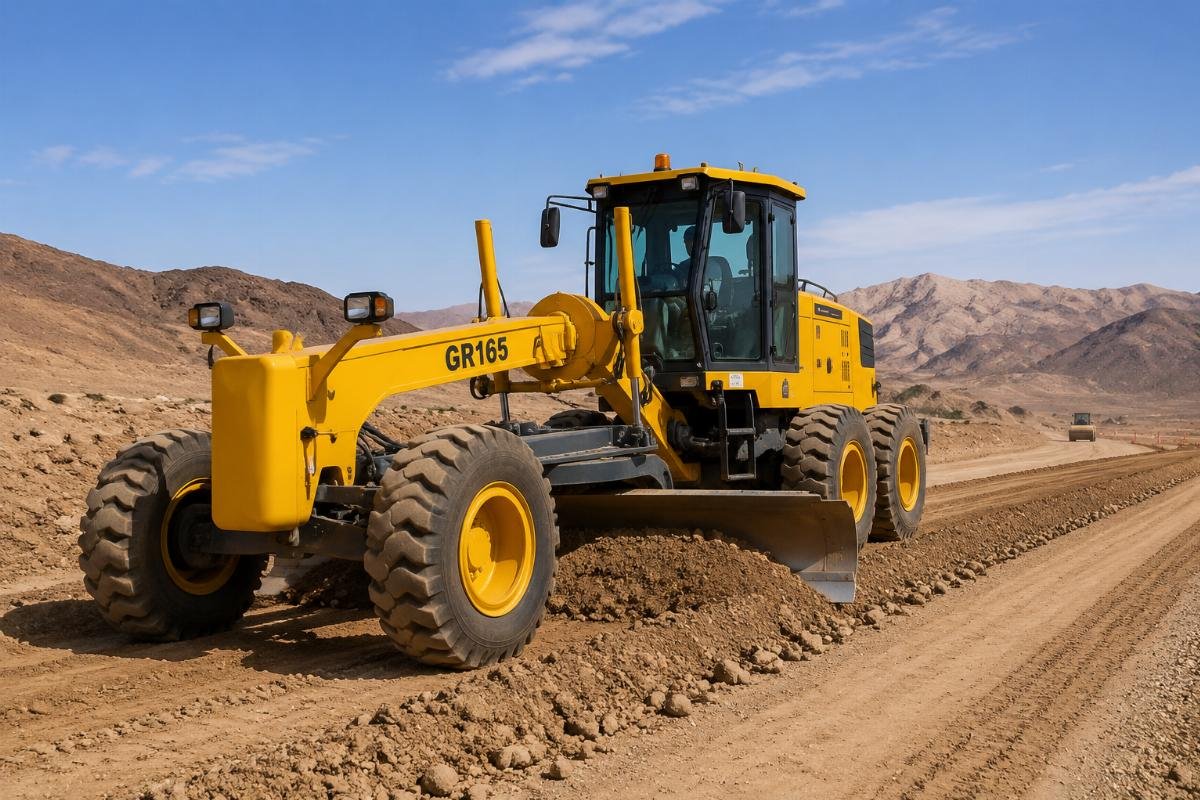
A mid-sized infrastructure contractor based in the UAE recently sourced 8 graders for desert highway expansion work from a Chinese manufacturer with 15+ years of production experience. The units came with custom sealed dust-proof structures and were delivered within 18 days of contract signing, 7 days faster than the lead time they were quoted by a European brand. The total procurement cost was 52% lower than the competing quote, with zero recorded performance issues in the first 12 months of operation in 48°C daily temperatures.
- Scenario Matching Audit – Cross-reference your typical job site conditions (temperature range, dust levels, road type) with the manufacturer’s existing project case records for the same region.
- Tonnage Benchmarking – Use the standard 3-26 ton grader application matrix to confirm your selected model is the smallest unit that can handle 90% of your planned tasks.
- Lifecycle Calculation – Request a breakdown of projected annual maintenance costs and average downtime rates from the supplier to build a 5-year cost forecast.
How Do Chinese Motor Grader Manufacturers Compare to European and Japanese Brand Options?
Leading Chinese motor grader manufacturers offer 40-60% higher overall value than European and Japanese equivalents, with equivalent customization options and after-sales support. Many buyers assume premium brand name automatically translates to better reliability, but the gap in performance has narrowed dramatically over the past decade as domestic suppliers have invested heavily in compliance testing and global distribution networks.
| Comparison Category | Legacy Premium Brand Approach | Leading Chinese Manufacturer Approach |
|---|---|---|
| Pricing Model | 2x to 2.5x higher upfront cost with fixed, non-negotiable pricing | Factory-direct pricing with flexible tiered discounts for bulk orders [NEED_CITE: Factory-direct Chinese motor grader pricing is 40-60% lower than Komatsu, Caterpillar, and Volvo equivalent models] |
| Minimum Order Requirement | 1 unit minimum but mandatory full container load shipping for discounted rates | 1 unit minimum order with no mandatory container load requirements for small buyers |
| After-sales Support | Regional support teams with 4-6 week spare parts lead time for remote markets | Local spare parts warehouses in core export regions with 72-hour maximum fault response time |
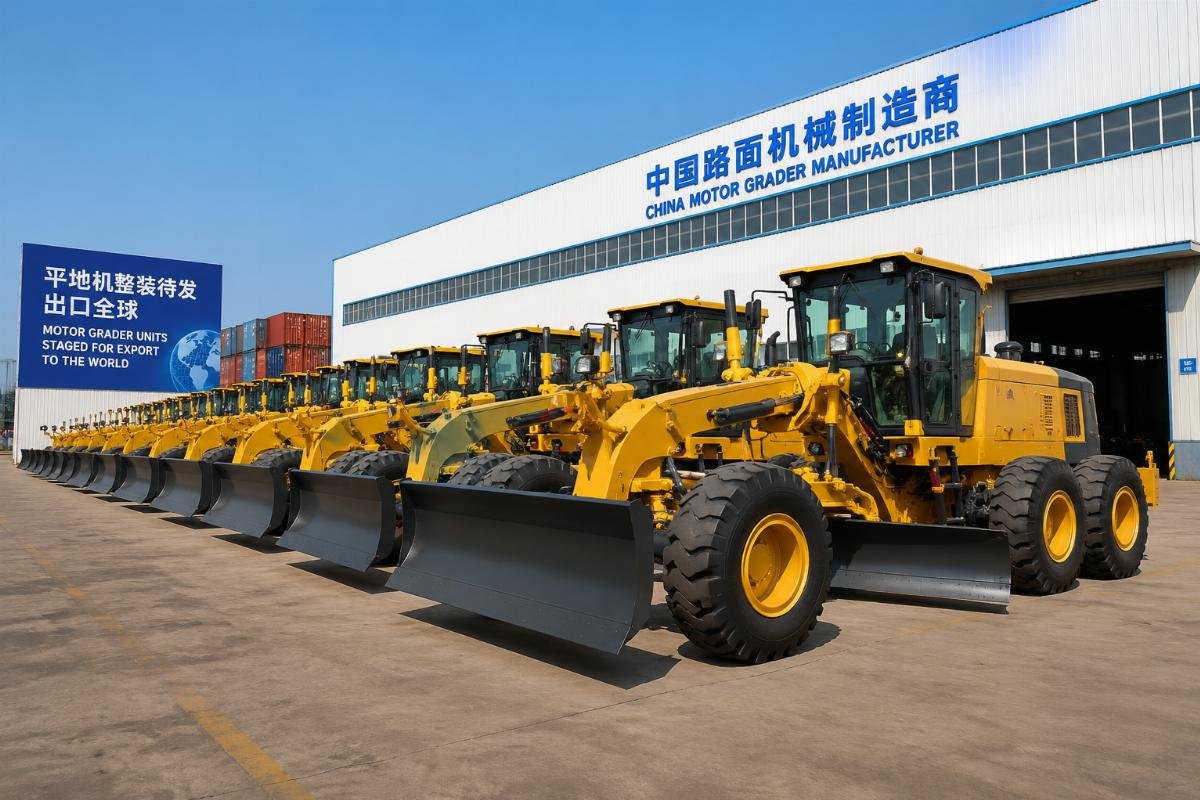
Viceni Construction Vehicles Co., Ltd., a Chinese construction equipment manufacturer with over 15 years of production experience, has exported graders to 120+ countries with more than 5,000 total units delivered globally. A regional equipment distributor operating across 7 West African countries recently placed an order for 22 units with the supplier, taking advantage of OEM private labeling support, 1-unit minimum order terms, and the 55% cost discount compared to Japanese brand quotes they had previously received. The distributor has already resold 17 units in their first 6 months of partnership, with zero customer complaints about product performance.
- Manufacturer Verification – Confirm the supplier has a minimum of 10 years of export experience and verifiable case studies from projects in your target region.
- Certification Check – Cross-reference that the units hold valid CE and EPA certifications aligned with your market’s regulatory requirements.
- Spare Parts Confirmation – Ask for written confirmation of spare parts warehouse locations in or near your operating region to avoid long wait times for replacement components.
What Customization Options Are Worth Selecting for Regional Road Operation Conditions?
Targeted customization aligned with local climate and work conditions can extend grader service life by 20% or more, while adding less than 10% to total upfront cost. Many buyers skip customization entirely to cut costs, but minor adjustments like reinforced dust seals or heat-resistant engine components can reduce long-term maintenance costs by thousands of dollars over the machine’s lifespan.
| Customization Item | Unnecessary Over-Customization | High-Impact Cost-Effective Customization |
|---|---|---|
| Engine Configuration | Upgrading to a higher horsepower engine than required for routine maintenance | Selecting a region-specific engine tune for extreme heat or high altitude operation |
| Structural Modifications | Full heavy-duty chassis upgrades for standard road work | Adding custom dust seals for desert or mining site use cases |
| Aesthetic Adjustments | Full custom exterior wraps for single-unit purchases | Branded exterior decals for distributor resale fleets |
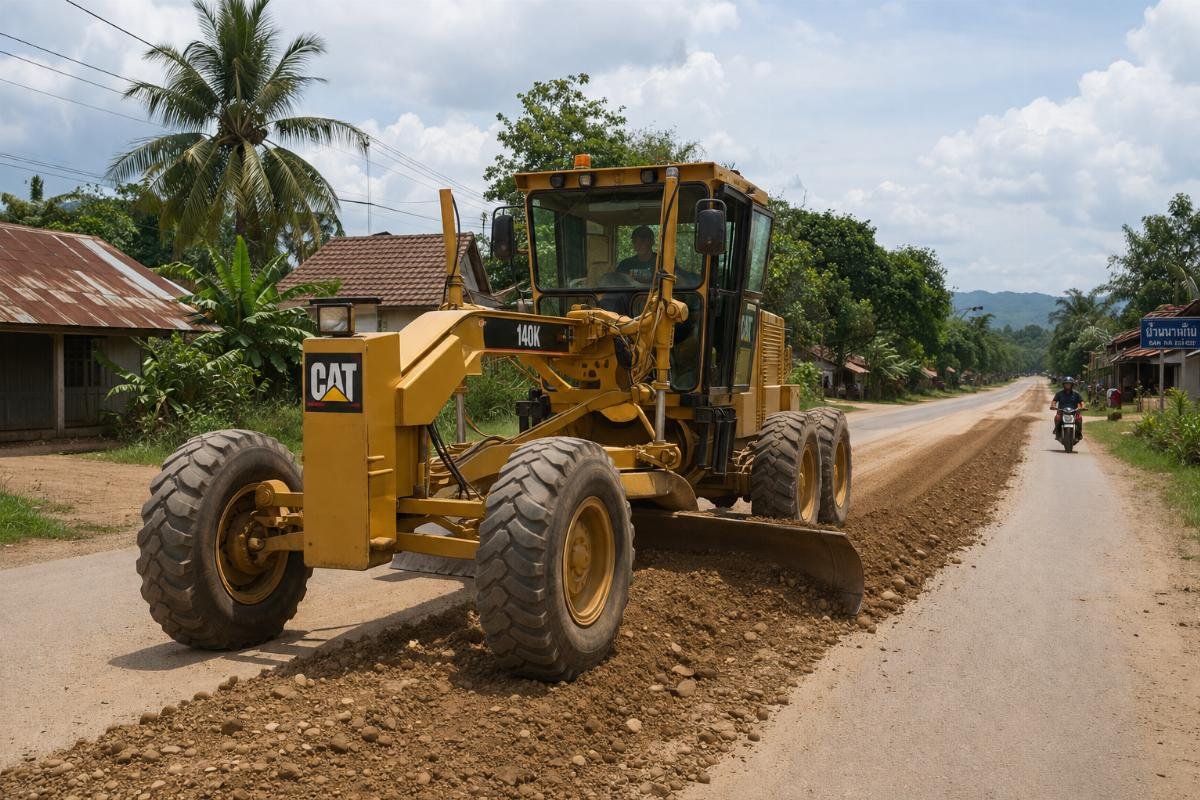
A public works department in rural Thailand recently ordered 4 graders for village road maintenance projects from a Chinese supplier, opting for CE and EPA certified units with 12-month full machine warranty and lifetime technical support. The custom units were tailored for frequent use on unpaved rural roads, and have recorded 35% lower maintenance costs than the used Japanese brand units the department had previously been operating, with no unplanned downtime in their first 9 months of use.
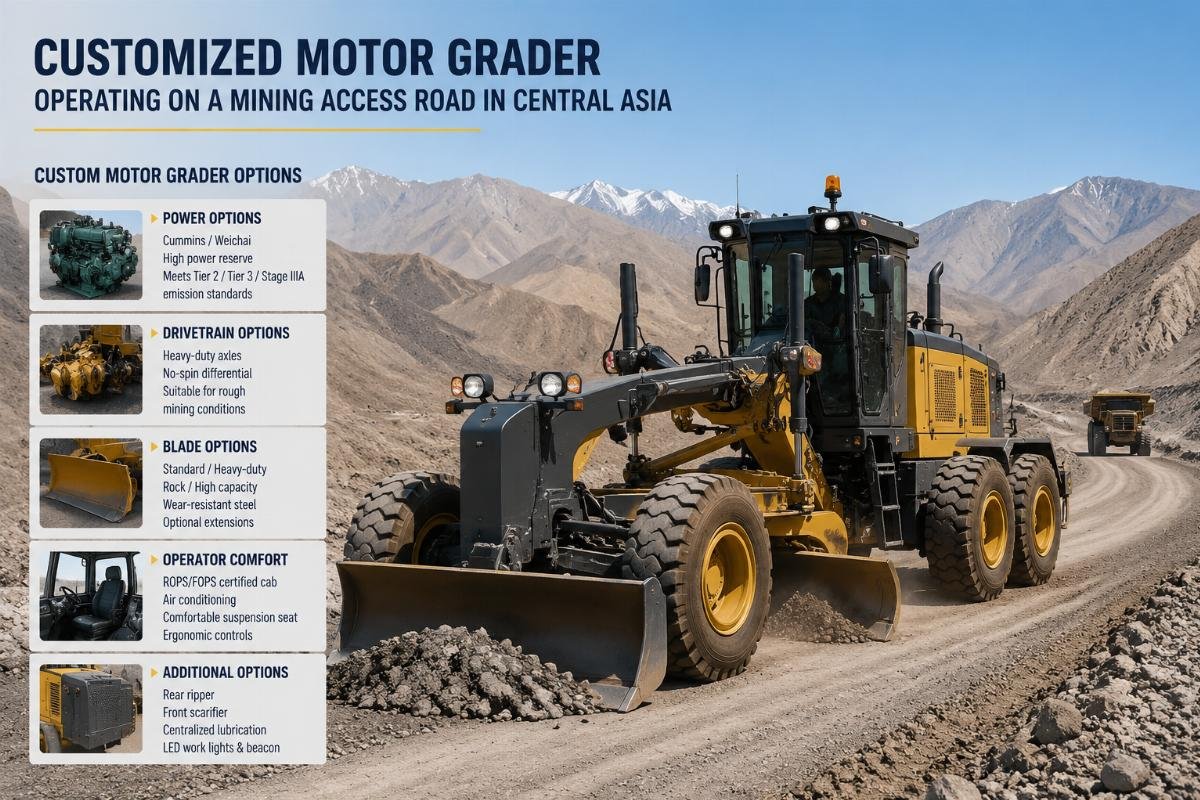
- Condition Mapping – List the top 3 most common stress factors for your typical job sites (dust, extreme heat, frequent shallow grading) to prioritize relevant customizations.
- Cost-Benefit Check – Reject any customization that adds more than 10% to unit cost without a verifiable track record of reducing long-term maintenance spending.
- Warranty Alignment – Confirm all custom modifications are covered under the supplier’s standard warranty terms to avoid coverage gaps.
How to Avoid Common Pitfalls When Procuring Motor Graders for Long-Term Use?
Confirming a supplier’s spare parts layout and warranty terms upfront can reduce unexpected extra costs in the maintenance phase by 70% or more. One of the most costly mistakes buyers make is only reviewing product specifications before signing a contract, and discovering only after delivery that there is no local access to replacement parts or formal warranty coverage.
| Risk Area | Common Avoidable Mistake | Proactive Mitigation Step |
|---|---|---|
| Order Threshold | Assuming all suppliers require full container load minimum orders | Confirm 1-unit minimum order terms in writing before finalizing contracts |
| After-sales Timelines | Accepting verbal promises of fast support without documentation | Verify the supplier has physical spare parts warehouses in your core operating markets [NEED_CITE: Leading Chinese construction equipment exporters have spare parts warehouses in key markets that limit |
