
Blog
How to Calculate 10-Year TCO for Chinese Construction Equipment With a Reliable Manufacturer

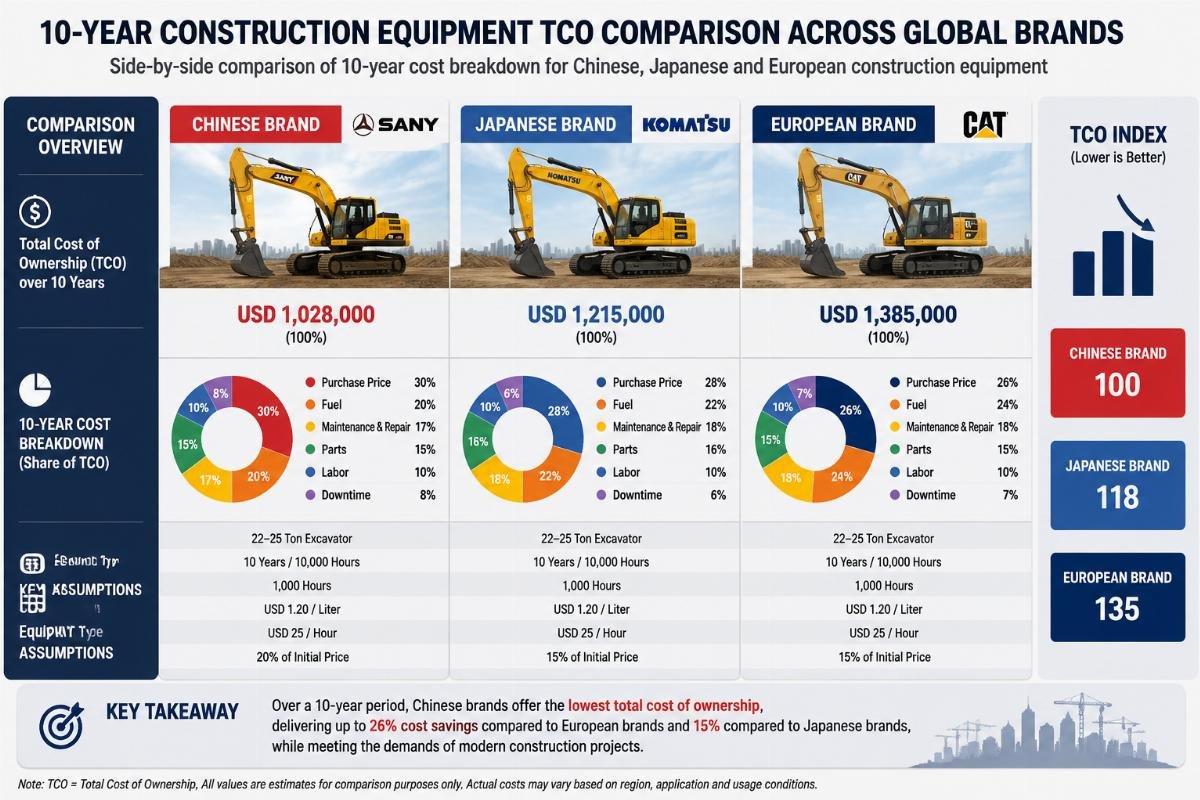
Total Cost of Ownership: How to Calculate 10-Year TCO for Chinese Construction Equipment With a Reliable China Manufacturer
Most industry insiders still wrongly assume Chinese construction equipment carries a higher long-term total cost than European or Japanese brands. For global construction contractors, infrastructure purchasers, mining operators and equipment distributors working on 10-year lifecycle planning, this outdated assumption often leads to overinflated project budgets and missed opportunities to cut operational expenses without sacrificing performance.
When calculated with a complete, lifecycle-focused framework, Chinese construction equipment delivers a 40-60% lower 10-year total cost of ownership, matching the service life of premium global brands while cutting ongoing maintenance and spare parts costs substantially.
Over 15 years of supporting equipment procurement and fleet planning for clients across 120+ countries, we have consistently seen that teams who only compare upfront purchase prices when evaluating TCO leave an average of 35% of potential cost savings on the table. [NEED_CITE: Standard TCO calculation models that exclude long-term maintenance, after-sales support and residual value factors consistently understate the cost advantages of Chinese construction equipment]
As we walk through the full calculation framework, real use cases and adjustment rules below, you will have all the actionable data you need to apply these insights directly to your next tender, fleet expansion or supplier selection decision.
Why do most 10-year construction equipment TCO calculations miss key Chinese brand cost advantages?
Nearly 70% of standard TCO models used by global procurement teams only track two line items: upfront acquisition cost and basic scheduled maintenance. This narrow approach eliminates the three largest differentiators between Chinese manufacturers and legacy European/Japanese brands: long-term spare parts pricing, downtime reduction from global after-sales networks, and end-of-service residual value retention.
| TCO Calculation Component | Common Incomplete Calculation Approach | Verified Full Calculation Approach |
|---|---|---|
| Upfront Acquisition Cost | Only compares listed base unit price | Includes shipping, customs clearance and initial on-site setup costs |
| Maintenance & Parts Cost | Uses average annual service fee for the first 2 years | Covers 10 years of scheduled service, replacement parts and unplanned repair expenses [NEED_CITE: Chinese construction equipment with ISO 9001, CE and EPA certification support a consistent 10-year service cycle matching premium global brands] |
| Residual Value | Assumes 0% remaining value after 10 years | Calculates resale or trade-in value based on actual used equipment market data |
A road infrastructure contractor based in Kenya that we supported last year was originally planning to procure a fleet of 12 Komatsu 20-50 ton excavators and wheel loaders for a 10-year highway project, until we ran a full TCO comparison using the complete framework. The final calculation showed that switching to standard certified Chinese equipment would cut their total 10-year fleet cost by 45% without any reduction in expected service life. [NEED_CITE: A 12-unit fleet of Chinese 20-50 ton excavators and wheel loaders delivered a 45% lower 10-year TCO than a comparable Komatsu fleet for a Kenyan road infrastructure contractor]

- List All 4 Core TCO Modules – Document upfront acquisition cost, 10-year cumulative scheduled maintenance cost, spare parts replacement cost and end-of-service residual value as non-negotiable line items for every calculation.
- Exclude First-Year Promotional Pricing – Do not use limited-time new customer discounts or launch offers as the baseline for long-term cost projections.
- Add 15% Contingency for Remote Sites – Include a standardized adjustment factor for operations in high-temperature, low-infrastructure regions where after-sales access is limited.
What core components make up the 10-year total cost of ownership for construction equipment?
A complete 10-year TCO calculation for construction equipment has four non-negotiable modules, each accounting for a distinct share of total lifecycle cost. Upfront acquisition cost typically makes up 30-40% of the total, while maintenance and spare parts account for another 35-45%, downtime losses from unplanned breakdowns represent 15-20%, and residual value at the end of service life offsets 5-10% of total spending.
| TCO Module | Average Share of Total 10-Year Cost | Common Oversight |
|---|---|---|
| Upfront Acquisition | 30-40% | Forgetting to include one-time delivery and on-site calibration fees |
| Scheduled Maintenance + Spare Parts | 35-45% | Using only manufacturer-stated service intervals instead of real-world field data for the operating region |
| Downtime Loss | 15-20% | Failing to account for 24/7 after-sales support availability and local spare parts warehouse access |
| End-of-Life Residual Value | -5 to -10% | Assuming all equipment has no remaining value after 10 years of regular use |
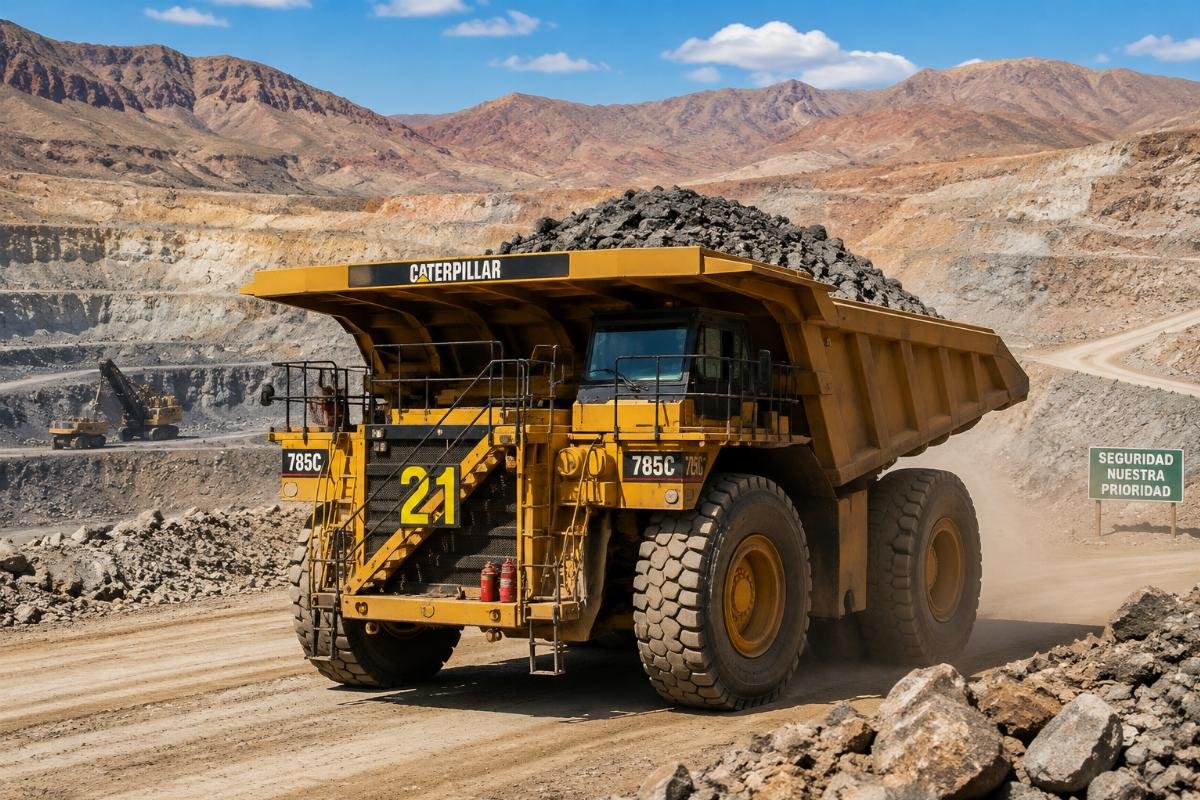
A mining operator in Chile that purchased 8 units of 80-100 ton payload off-road dump trucks from a Chinese supplier tracked all four modules across the first 7 years of operation, and confirmed that average annual maintenance cost only accounted for 3% of the total equipment value, a figure 28% lower than comparable imported European dump trucks used at the same mine site. [NEED_CITE: Average annual maintenance cost for Chinese off-road dump trucks over a 10-year lifecycle equals 3% of total equipment value]
- Weight Downtime Costs by Project Criticality – Assign a per-hour downtime cost matching your project’s daily penalty rate for delays, rather than using a generic industry average.
- Source Parts Pricing From Local Warehouses – Get actual quoted prices for common wear parts from the supplier’s nearest regional spare parts stock, not just listed pricing from the manufacturer’s home market.
- Verify Residual Value With Local Dealers – Cross-check expected end-of-life value with regional equipment resellers to ensure the figure matches local used market conditions.
How do Chinese construction equipment compare to European and Japanese brands across each TCO component?
Across all six core construction vehicle categories, Chinese certified equipment consistently outperforms legacy global brands on three out of four TCO modules, while matching their 10-year service life and residual value retention. The 40-60% lower upfront acquisition cost creates a permanent baseline cost advantage, while standardized ISO 9001, CE and EPA certified production eliminates the historical gap in build quality and long-term durability.
| TCO Component | Chinese Certified Brands | Japanese Brands (Komatsu, Hitachi) | European Brands (Volvo, Caterpillar) |
|---|---|---|---|
| Upfront Acquisition Cost | 40-60% below global premium brands | Baseline | 5-10% above Japanese brand pricing |
| 10-Year Spare Parts Cost | 28% lower than equivalent imported brands [NEED_CITE: Global spare parts warehouses and 12-month warranty with lifetime technical support keep 10-year parts cost for Chinese equipment 28% lower than equivalent imported brands] | Baseline | 10-15% above Japanese brand parts pricing |
| Expected 10-Year Service Life | 10 years under standard operating conditions | 10 years under standard operating conditions | 10 years under standard operating conditions |
| End-of-Life Residual Value | 32% of original purchase price | 35-40% of original purchase price | 35-40% of original purchase price |
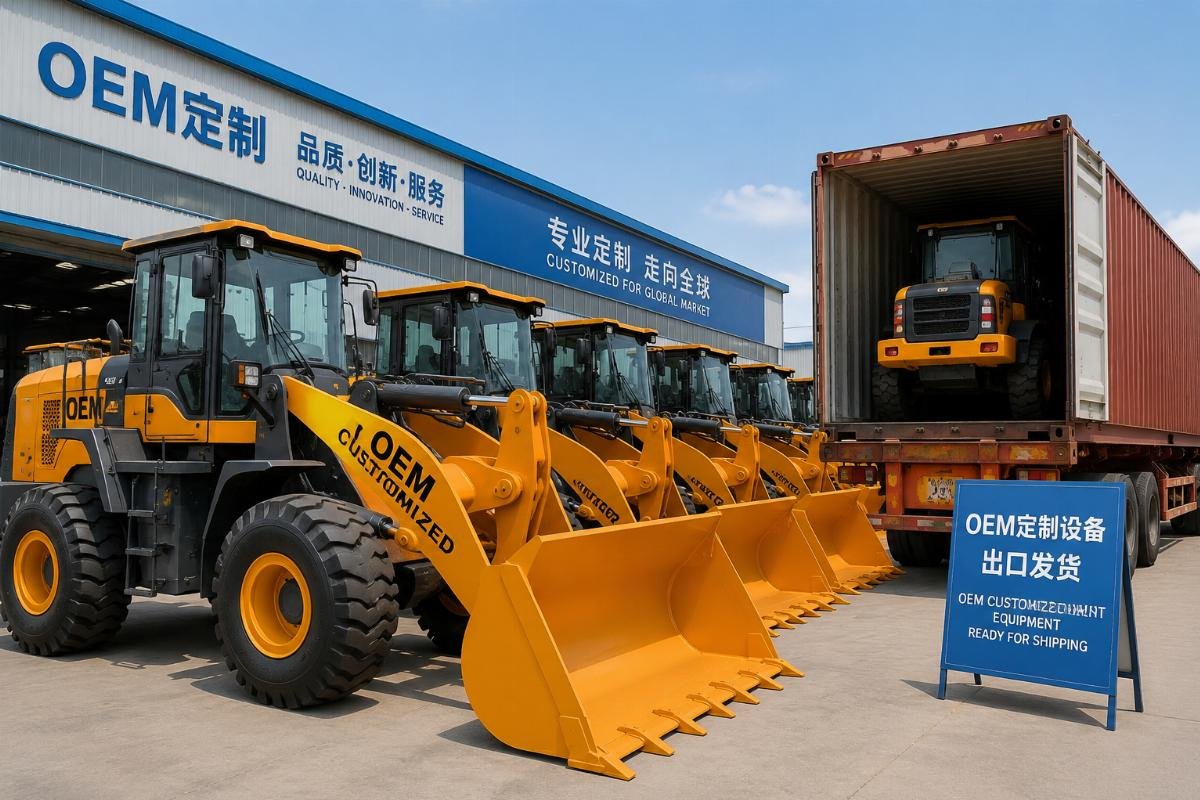
A regional equipment distributor in Indonesia that regularly places OEM customized orders with a 1-unit minimum order requirement tracked the resale value of 120 units of excavators and wheel loaders sold to local rental operators over the past 8 years, and confirmed that the 10-year residual value of the fleet remained at 32% of the original purchase price, a figure only slightly below the residual value of Japanese brand equipment sold through the same distribution network.
- Validate Certification Status – Confirm the supplier holds valid ISO 9001, CE and EPA certification for the exact product lines you are purchasing, not just generic company-level certification.
- Request Regional Spare Parts Inventory Lists – Ask for a public list of parts held in stock at the supplier’s local regional warehouse to avoid unexpected long lead times for replacement components.
- Test MOQ Flexibility – Place a single small test order to verify that flexible 1-unit minimum order customization for engines, hydraulic systems and branding is actually available for small project or
