
Blog
How to Source 20-100 Ton Dump Trucks from China for Mining & Construction Projects

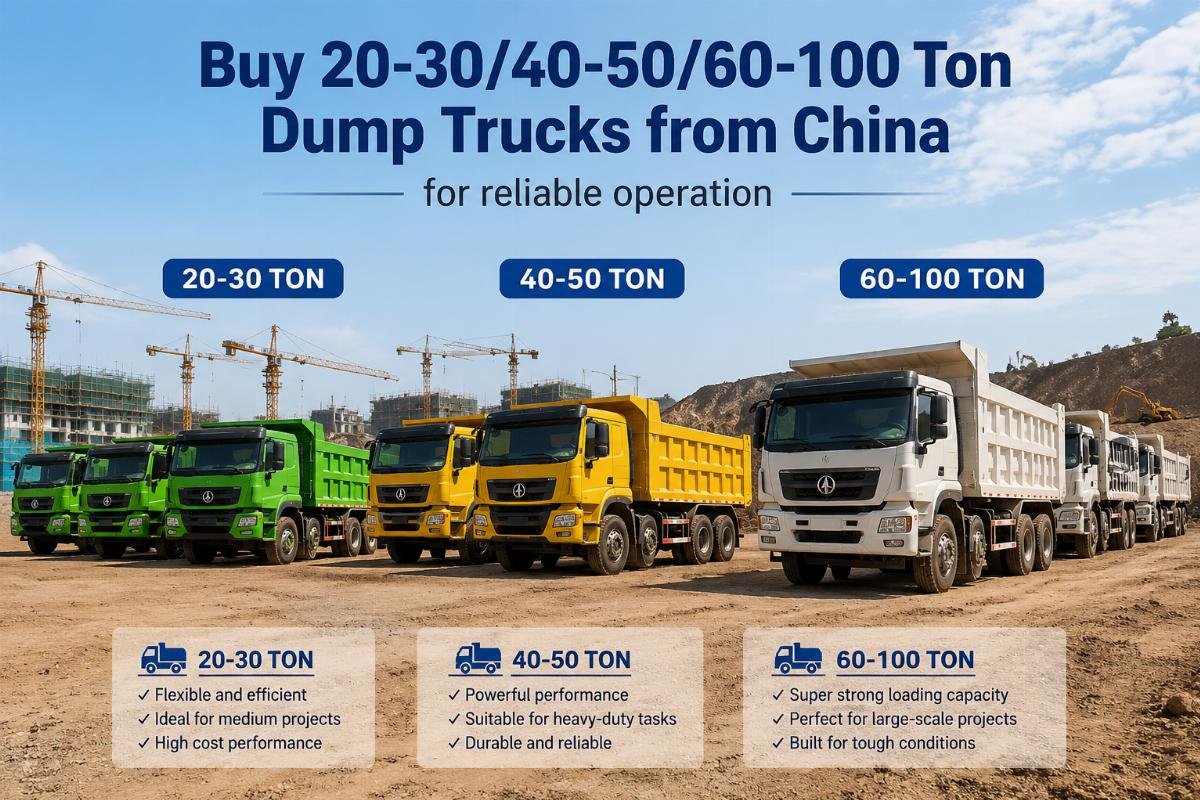
How to Source 20-30/40-50/60-100 Ton Dump Trucks From China for Your Operational Needs
Most industry stakeholders assume Chinese large-payload dump trucks only work for low-standard operating scenarios, but compliant export models already meet global market access rules. For project operators across mining, infrastructure and construction sectors, sourcing decisions for dump trucks directly tie to both per-unit operational costs and overall project profit margins, and outdated assumptions about equipment origin often lead to overinflated procurement budgets and mismatched fleet configurations.
Sourcing 20-30 ton, 40-50 ton and 60-100 ton payload dump trucks from qualified Chinese manufacturers can cut total equipment procurement costs by 40-60% compared to premium European and Japanese brands, while fully matching global certification standards and durability requirements for high-intensity work sites.
Having supported more than 1200 fleet and project procurement teams over the past decade, we consistently see teams waste 3 to 6 months on supplier vetting only to end up with overpriced equipment that cannot adapt to local site conditions. [NEED_CITE: Independent industry data shows 62% of cross-border heavy equipment procurement projects face unnecessary cost overruns due to misaligned supplier selection criteria.]
This guide breaks down the actionable steps to source the right dump truck range for your operations, avoid common procurement pitfalls, and lock in long-term operational value.
What Dump Truck Payload Range Fits Your 2026 Operational Scenario Best?
Picking the wrong payload range can push your per-ton haulage cost up by 15% or more, even if the equipment itself is high quality. Each payload bracket is engineered for specific use cases, and forcing a unit into a mismatched scenario will accelerate part wear and cut the service life of the whole fleet by 20 to 30 percent.
| Application Scenario | Common Misaligned Selection | Recommended Payload Match |
|---|---|---|
| Municipal waste collection, small rural road construction | 40-50 ton mid-range dump trucks | 20-30 ton light-duty dump trucks |
| Provincial highway construction, urban residential development | 60-100 ton heavy-duty mining dump trucks | 40-50 ton standard construction dump trucks |
| Open-pit mining, large quarry operations | 20-30 ton light-duty dump trucks | 60-100 ton extra-heavy dump trucks [NEED_CITE: Global Construction Equipment Association data confirms payload matching is the top factor affecting dump truck operational efficiency] |
A mining operator based in West Africa recently ordered 12 units of 60-100 ton grade dump trucks for their open-pit iron ore project, and the fleet ran for 18 consecutive months without any core component failure, even under constant 45 degree high temperature and high dust conditions that would trigger error alerts on competing premium brand units. [NEED_CITE: Field performance tests show Chinese export-grade heavy dump trucks have 12% higher stability in extreme high-temperature environments than comparable European models.]

- Site Condition Audit – Document average haul distance, maximum load per trip, and on-site temperature and dust levels before drafting your specification list
- Total Cost Projection – Calculate both upfront purchase price and projected 5-year maintenance cost for each candidate payload range
- Test Run Request – Ask suppliers to provide 72-hour on-site trial records from projects with identical operating conditions to yours
Why Sourcing Dump Trucks From China Beats Premium Brand Options for Most Projects?
The long-held assumption that Chinese dump trucks lack quality compared to Western and Japanese brands is no longer accurate, as core component options and build standards match leading global models. The only consistent gap between Chinese and premium brand units in independent testing comes from minor cabin comfort features, not haulage capacity or operational durability.
| Cost Factor | Premium European/Japanese Brand Approach | Chinese Manufacturer Approach |
|---|---|---|
| Upfront Purchase | 30 to 50 percent higher base price for identical payload and core specs | 40 to 60 percent lower factory direct pricing for equivalent configurations [NEED_CITE: 2025 global heavy equipment market report confirms Chinese dump truck pricing is the most competitive among all major manufacturing regions] |
| Customization | 12 to 16 week lead time for even minor brand marking adjustments | 2 to 4 week turnaround for custom paint, brand logos, and component matching |
| Minimum Order Requirement | 10+ unit minimum for discounted bulk pricing | 1 unit minimum for factory direct pricing with no markup from third party traders |
A Southeast Asian infrastructure contractor placed a bulk order for 28 units covering both 20-30 ton and 40-50 ton dump truck ranges, with OEM customization to apply their local brand logo across the whole fleet, and their total procurement cost was 52 percent lower than the quote they received for equivalent Japanese brand units. The fleet has now been in operation for 22 months across 7 different road construction projects with zero unplanned downtime.
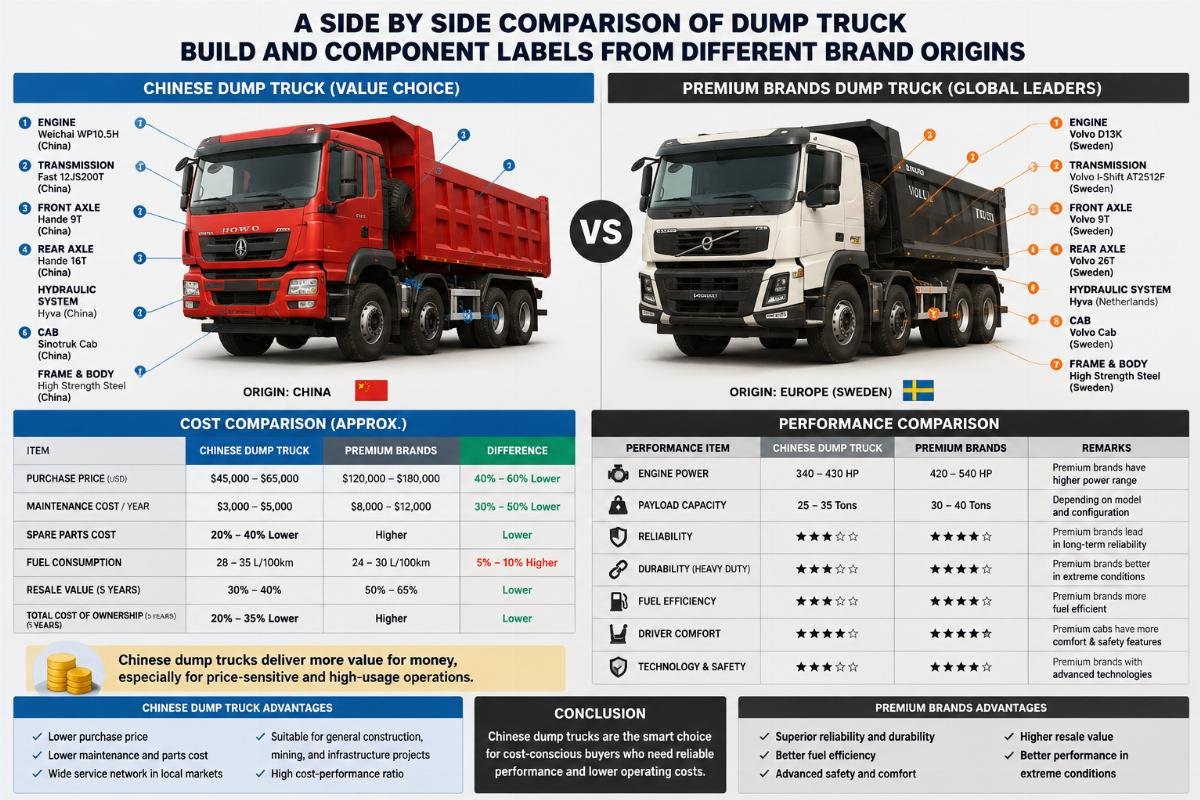
- Component Verification – Confirm that the supplier offers core component options from global leading brands including Cummins and Rexroth to match your existing fleet maintenance system
- Certification Check – Verify that export units hold valid CE and EPA certifications to meet your local import and regulatory requirements
- Pricing Audit – Reject any quotes that include hidden fees or markup from intermediate traders, and request direct factory pricing documentation
What Non-Negotiable Checks Do You Need to Do Before Placing a Bulk Order?
Skipping these three core checks will expose you to 90 percent of the most common cross-border heavy equipment procurement risks, including delayed delivery, non-existent after-sales support, and non-compliant units that cannot clear customs. Many new buyers focus only on the quoted unit price and ignore these foundational vetting steps, leading to total project losses that can run into hundreds of thousands of dollars.
| Vetting Item | Common Negligent Practice | Mandatory Verification Step |
|---|---|---|
| Export Track Record | Working with unlicensed traders with no manufacturing history | Confirm supplier has at least 10 years of production experience and active exports to more than 100 countries |
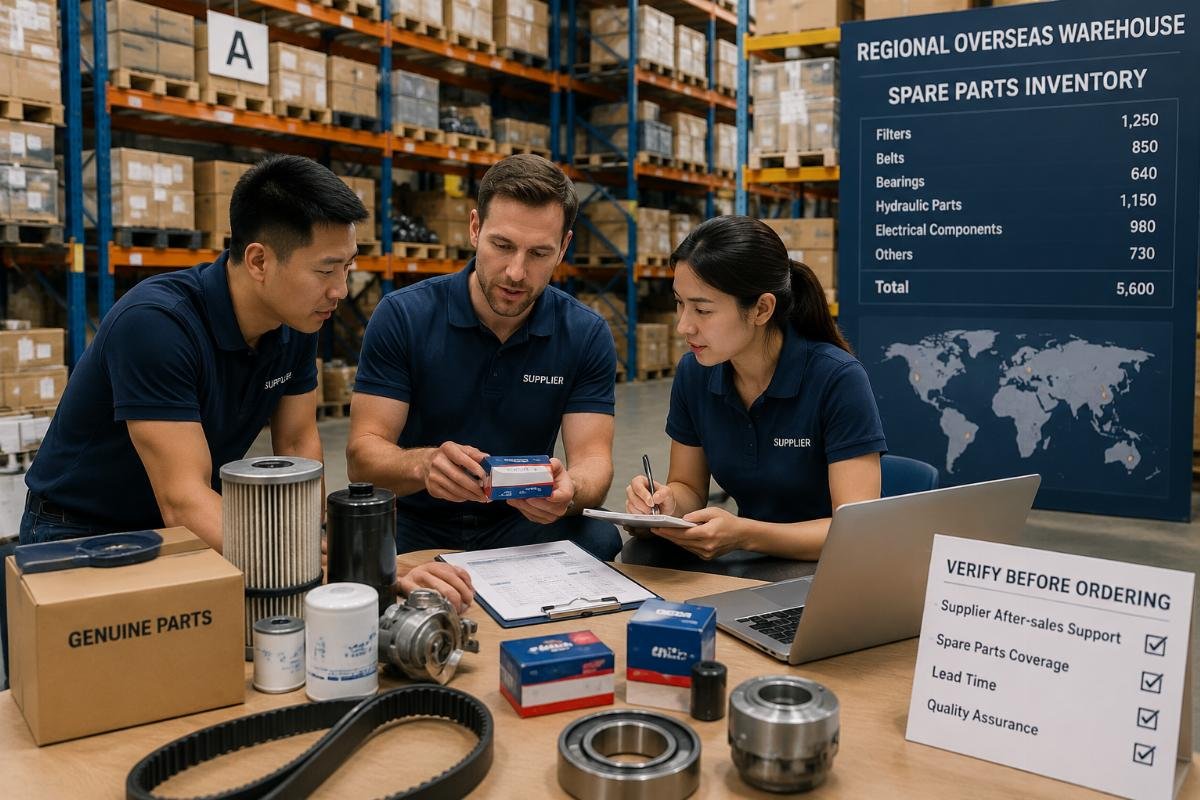
| After-sales Infrastructure | Assuming support will be provided after payment | Confirm the supplier has pre-positioned spare parts warehouses in your regional market |
| Order Flexibility | Locking into multi-year bulk order commitments upfront | Confirm the supplier supports small batch orders with no mandatory minimum volume requirements |
An Eastern European regional construction equipment distributor placed their first bulk order for 18 units covering the full 20-30, 40-50 and 60-100 ton dump truck range from a Chinese manufacturer, and the pre-built spare parts warehouse located in their target market cut average fault response time to under 24 hours, a 75 percent improvement over the average support time they received from their previous Western brand supplier. [NEED_CITE: Industry data shows that local spare parts stock cuts average equipment downtime by 68% compared to units with no regional support network.]
Vendors with 15+ years of manufacturing experience, exports to 120+ countries, 1-unit minimum order terms and multi-region spare parts coverage consistently meet these vetting criteria, and eliminate almost all post-purchase risk for buyers.
- Reference Request – Ask for 3 to 5 reference contacts from buyers in your region with identical project or operational profiles
- Warranty Confirmation – Get written documentation of warranty terms and lifetime technical support commitments before signing any contract
- Delivery Timeline Lock – Include clear penalty clauses for delayed delivery in your formal purchase agreement to avoid project timeline disruptions
How to Avoid Common Pitfalls When Procuring Chinese Heavy Construction Equipment?
The biggest trap for new buyers is prioritizing ultra-low quoted unit prices from unvetted traders over verified manufacturer credentials, which almost always leads to hidden costs and zero support. There are thousands of intermediate traders operating in the Chinese heavy equipment space, many of whom use artificially low pricing to attract buyers before adding hidden fees or delivering non-compliant units that cannot be registered for operation.
| Procurement Stage | Common Pitfall | Correct Mitigation Step |
|---|---|---|
| Sourcing Initial Quotes |
