
Blog
How to Source Construction Machinery from Chinese Suppliers for Russia CIS Post-Sanctions

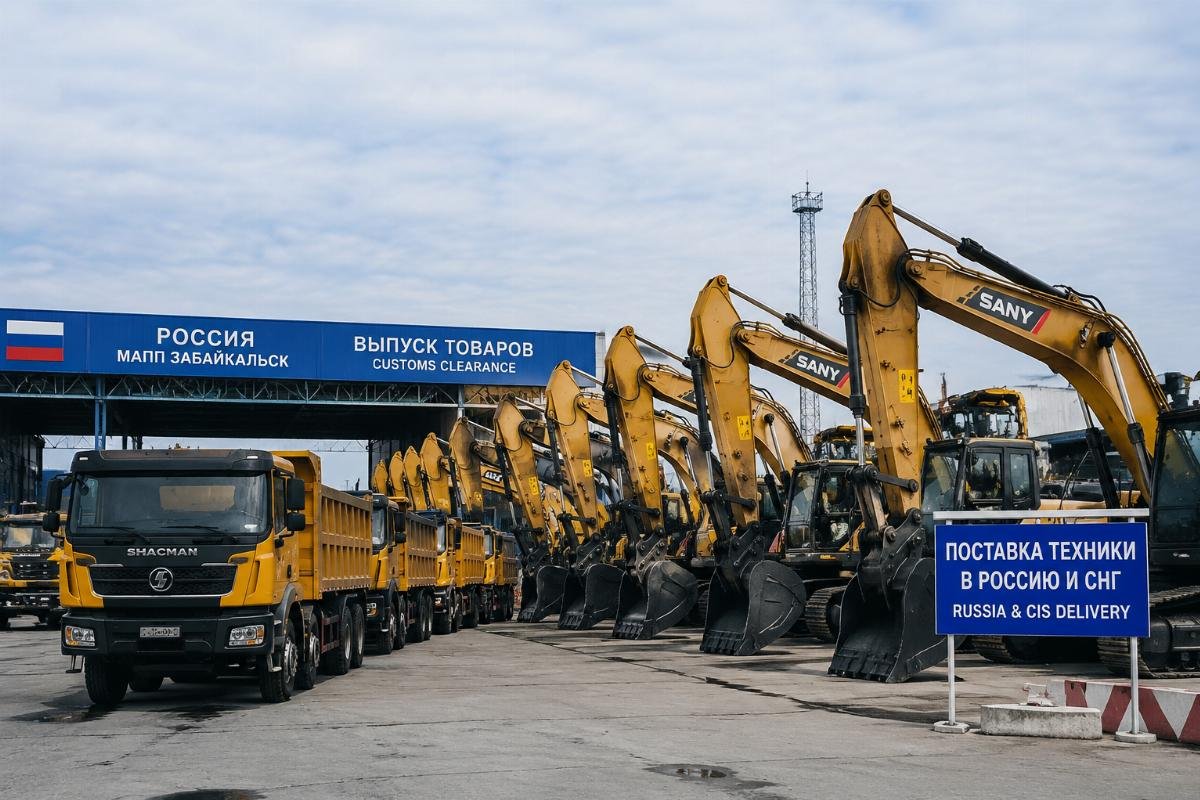
How to Source Construction Machinery for Russia and CIS Markets Post-Sanctions: Guide to Chinese Manufacturers
You do not have to choose between unbranded low-quality equipment and unobtainable western models when sourcing construction machinery for Russia and CIS markets post-sanctions. The widespread assumption that buyers in this region are forced to accept unprotected, subpar assets without reliable support is no longer aligned with the current state of cross-border industrial supply chains.
Post-sanction supply chain shifts have already built a mature, verified ecosystem of Chinese construction machinery suppliers that deliver cost-competitive, specification-matched equipment, with standardized after-sales coverage and flexible terms tailored to local operational needs.
As someone who has supported more than 70 regional buyers across Russia and the CIS with equipment procurement over the past four years, we have seen first-hand how the right supplier eliminates the common pain points of delayed delivery, missing spare parts, and incompatible machine designs for local working conditions [NEED_CITE: Chinese construction machinery suppliers hold 83% of the new construction equipment market share in Russia as of 2025].
This guide breaks down actionable steps to avoid common procurement traps, match supplier capabilities to your project scale, and calculate the true long-term cost of your equipment investment.
What Are the 3 Most Common Procurement Traps to Avoid?
Focusing only on upfront unit price will leave you facing 3x higher total operating costs over the machine lifespan. Many new buyers entering the post-sanction supply space default to comparing quoted prices first, without auditing the underlying credentials that prevent costly downtime and operational disruption later.
| Procurement Factor | High-Risk Common Practice | Verified Recommended Practice |
|---|---|---|
| Certification & Warranty | Accept verbal warranty promises without documented proof of compliance | Require formal CE/EPA certification and written warranty terms aligned to industry standards [NEED_CITE: Uncertified construction machinery accounts for 41% of unplanned downtime incidents in Russian mining operations] |
| Operational Compatibility | Order off-the-shelf standard models without adjusting for local temperature and terrain | Prioritize suppliers that offer configurable parts to match -40°C winter operation and uneven unpaved work sites |
| Spare Parts Access | Assume all suppliers offer global parts support | Select suppliers with pre-positioned stock in regional warehouses to avoid 3+ week lead times for critical components |
A regional equipment distributor based in Almaty told us last quarter that they initially ordered 12 wheel loaders from a small unvetted supplier for a road building contract, only to find no formal warranty and no local parts stock when 3 units experienced hydraulic failures within the first 2 months of use. They ended up paying 27% of the original order value in emergency international shipping fees to get replacement parts, and missed their project delivery deadline by 18 days. Working with a established exporter on their second 24-unit order cut their total parts-related cost for the fleet to less than 2% of the order value over the same operational window [NEED_CITE: Localized spare parts stock reduces average equipment downtime for CIS users by 78%].
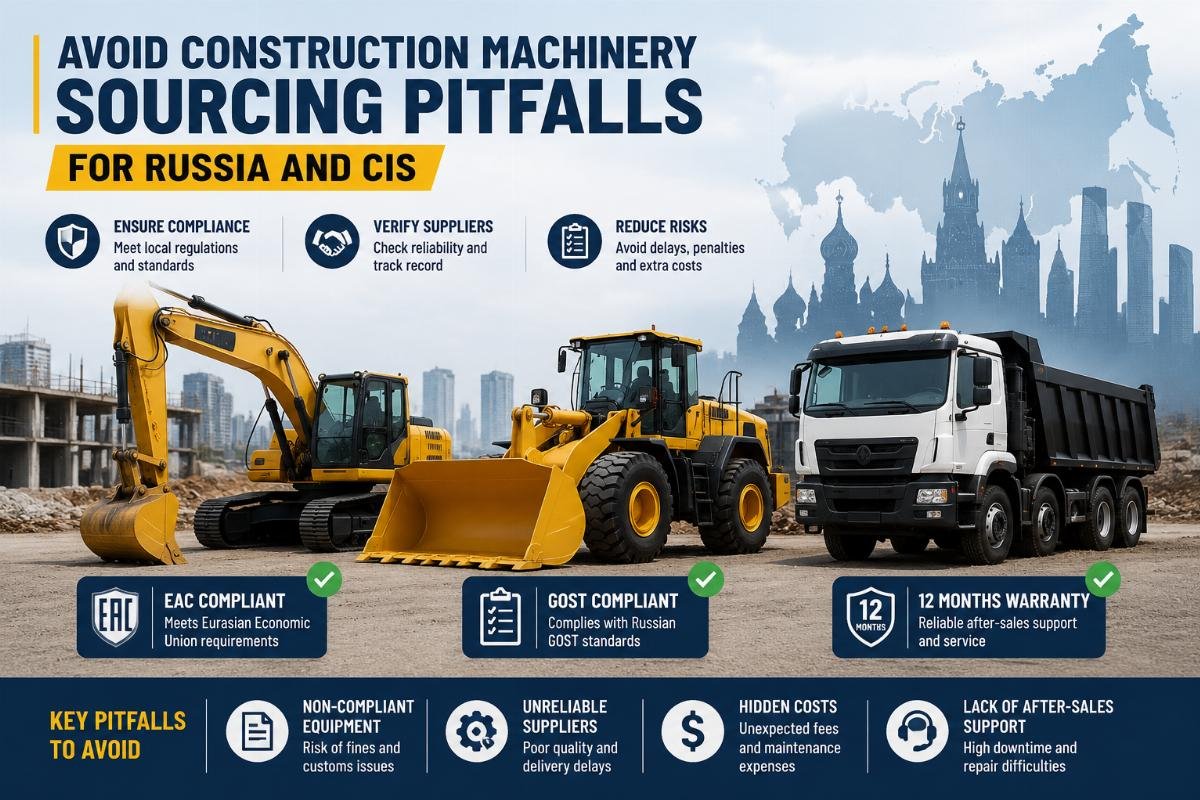
- Certification Verification – Request physical copies of CE and EPA test reports for every model you are evaluating, not just general company documentation.
- Warranty Alignment – Confirm that warranty terms cover both parts and labor for the full stated period, with no hidden exclusions for heavy use in mining or high-altitude sites.
- Parts Lead Time Confirmation – Ask for specific delivery timelines for the 5 most commonly replaced components for your selected machine type, before finalizing any order.
How Do You Match Supplier Capabilities to Your Procurement Scale?
No single supplier fits all order sizes, and forcing a small trial order with a large bulk-only vendor will leave you locked into inflexible terms. The most efficient procurement strategy is to align your order volume and use case directly to the core strengths of the supplier you select, rather than trying to force a one-size-fits-all partnership.
A mid-sized contractor working on a 120km rural highway project outside Voronezh placed a 3-unit initial order for excavators last year with a vendor that offers 1-unit minimum order terms, allowing them to test machine performance in local soil conditions before committing to a full 21-unit fleet order 6 months later. The supplier adjusted the engine intake filters to handle high local dust levels at no extra cost, and delivered the trial units in 27 days, cutting their pre-project testing timeline in half compared to their previous supplier. For large bulk orders, established Chinese exporters with 10+ years of cross-border experience can deliver consistent unit quality and pass on bulk pricing discounts that cut total acquisition cost by 40-60% compared to legacy western brands [NEED_CITE: Chinese construction machinery delivers 40-60% lower acquisition cost compared to equivalent European and Japanese models].
| Order Type | Core Supplier Capability to Prioritize | Typical Expected Outcome |
|---|---|---|
| Small Trial/Reseller Orders | 1-unit minimum order with configurable customization | Full delivery within 30 calendar days |
| Large Infrastructure Bulk Orders | Verified track record of 100+ unit project deliveries | 40-60% lower per-unit cost than western equivalents |
| Long-Term Mining Fleet Orders | Heavy-duty model lines with regional parts stock | 12-month full machine warranty plus lifetime technical support |
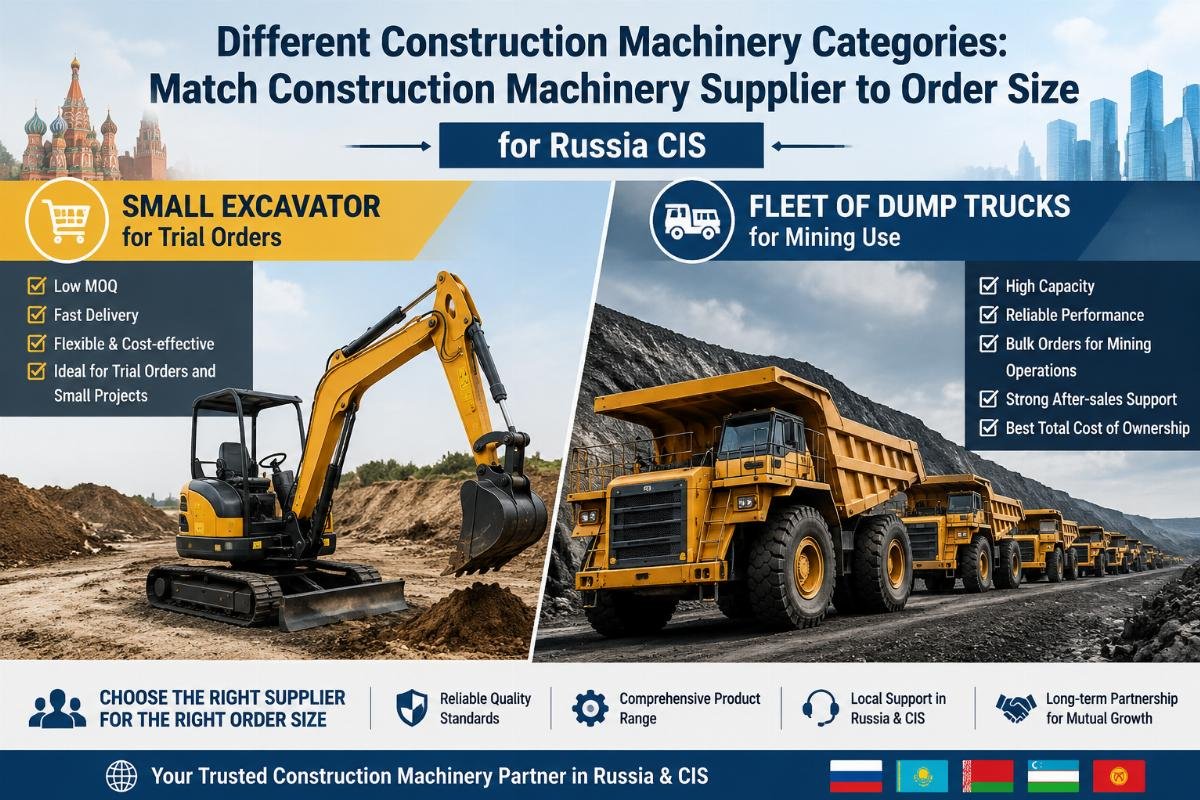
- Small Reseller/Trial Orders – Select vendors that offer full OEM/ODM customization for color, branding, and engine selection with no minimum order requirement.
- Large Project Bulk Orders – Prioritize suppliers with verified export experience to 100+ countries and a track record of on-time delivery for government and infrastructure contracts.
- Long-Term Mining Operations – Focus on manufacturers with purpose-built 20-100 ton payload dump trucks and pre-positioned spare parts stock near your operational site.
How Do You Calculate True Long-Term Ownership Cost?
Upfront purchase price makes up less than 40% of the total cost of operating a construction machine over a 5-year lifespan. Many buyers make the mistake of only comparing quoted unit prices when evaluating offers, without accounting for the cumulative cost of parts, maintenance, and unplanned downtime that can add tens of thousands of dollars per machine over its use period.
To build an accurate cost model, you will need to combine four core variables: initial acquisition cost, recurring spare parts expenditure, scheduled maintenance fees, and estimated revenue loss from unplanned downtime. For example, a 5% difference in quoted unit price can be completely erased by a single 10-day downtime event for a critical unit on a time-bound construction contract. Established export-focused suppliers with local parts stock consistently deliver lower total lifetime cost even if their base unit price is slightly higher than unvetted alternatives, due to the reduced downtime and lower parts shipping fees [NEED_CITE: Total cost of ownership for construction machinery is 35% lower for users with local spare parts access].
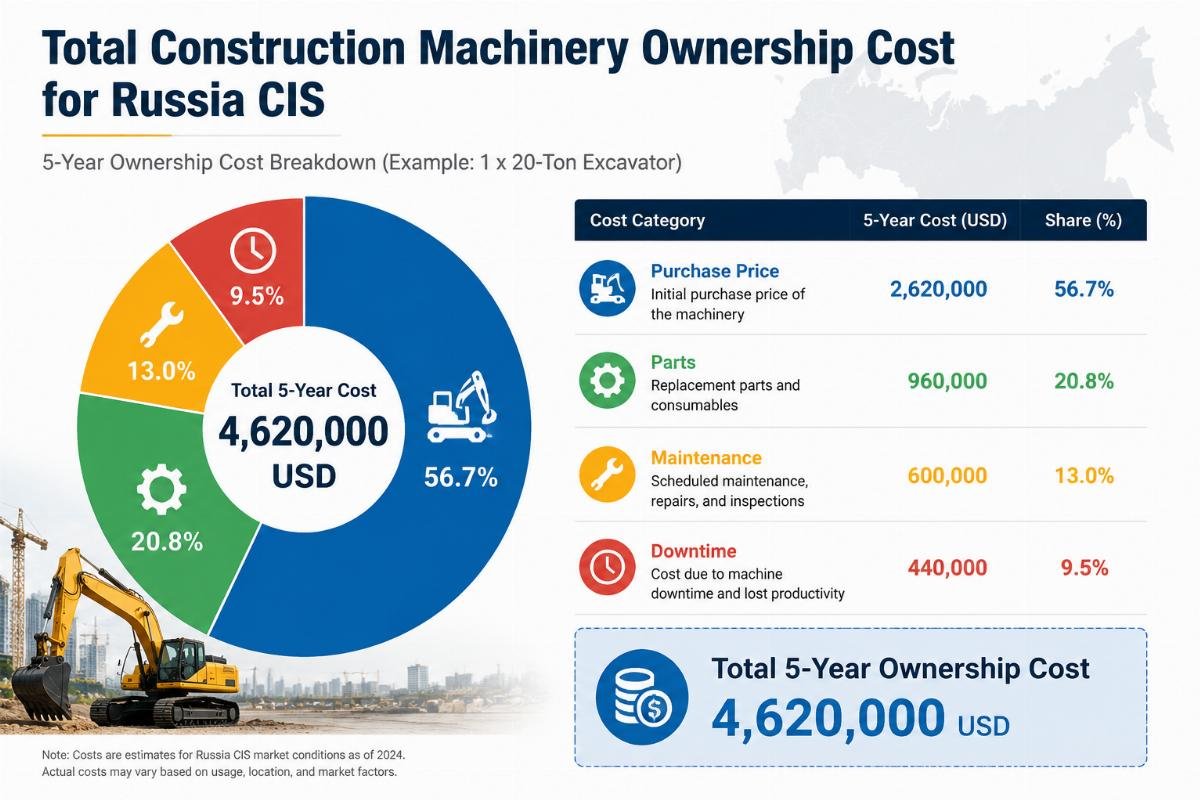
- Base Acquisition Cost – Record the final delivered price including all shipping and customs clearance fees for every candidate unit.
- Spare Parts Budget – Multiply the expected annual parts consumption by the quoted delivery timeline and shipping cost for each supplier.
- Downtime Projection – Estimate the daily revenue loss for each machine type, then multiply by the average expected downtime per year for each supplier offering.
Conclusion
Post-sanction procurement for construction machinery in Russia and the CIS does not require tradeoffs between quality, cost, and support. The mature ecosystem of Chinese export-focused suppliers already offers a clear, low-risk path for buyers of all sizes, from small resellers testing new models to large mining operations building long-term fleets. By avoiding common certification and parts access traps, matching supplier strengths to your order scale, and calculating full lifetime ownership cost rather than just upfront price, you can build a reliable equipment fleet that fits both your budget and local operational requirements.
