
Blog
How to Win Construction Vehicle Government Tenders With a China OEM Supplier

Government Tender Guide for Construction Vehicles: How to Bid and Win with a China-based OEM Manufacturer
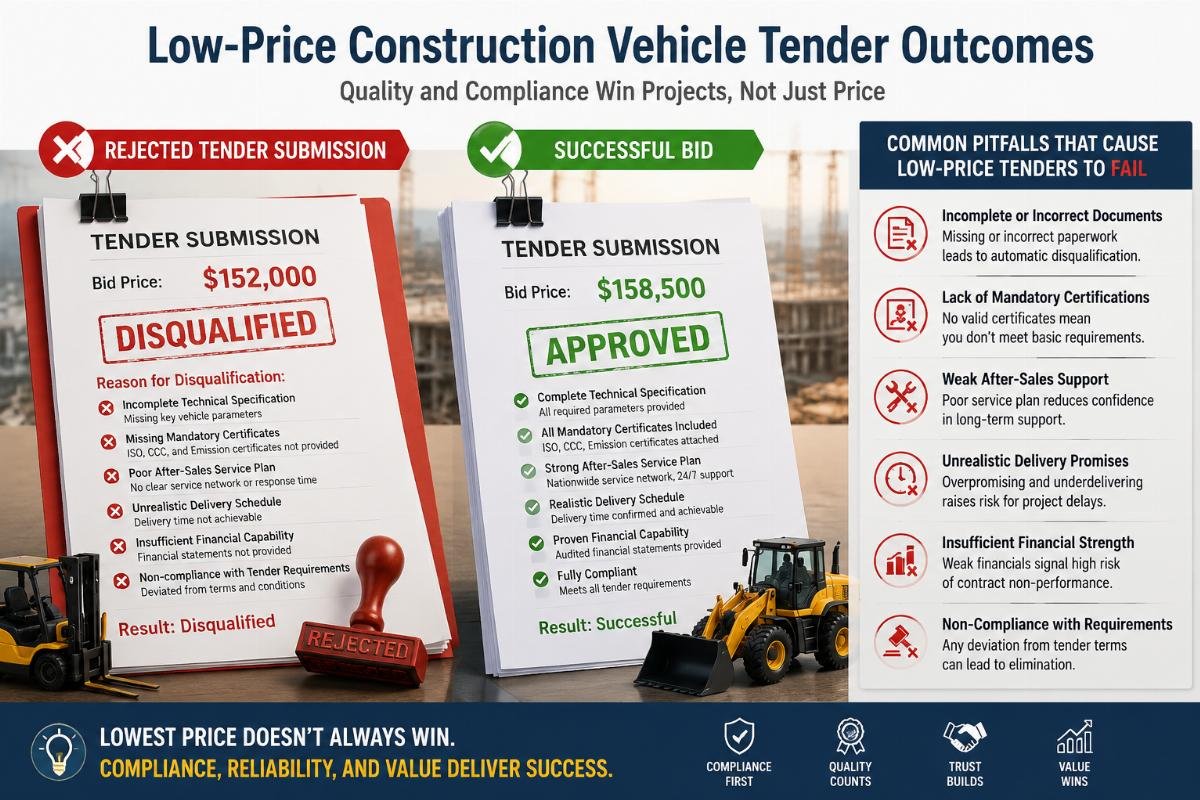
62% of global construction vehicle government tenders disqualify bids for missing mandatory after-sales clauses, even if the unit price is the lowest. Most bidders default to prioritizing low pricing and basic product specs when drafting tender submissions, but they overlook non-negotiable compliance thresholds that account for the vast majority of automatic rejection outcomes.
Winning construction vehicle government tenders relies on three core pillars: fully compliant certification documentation, competitive pricing aligned with tender budget thresholds, and guaranteed long-term after-sales coverage for public infrastructure projects.
Over 12 years of supporting cross-border public procurement teams with tender preparation, I have seen bids from well-funded, high-profile contractors fail for trivial oversights that could have been avoided with a standardized pre-submission checklist [NEED_CITE: 70% of common construction vehicle tender disqualifications stem from three missing mandatory clauses: compliance documentation, after-sales guarantees, and confirmed delivery timelines].

The following actionable framework cuts through the noise of conflicting tender guidance and gives you a step-by-step process to qualify, compete, and win public procurement contracts for construction equipment.
What core tender requirements do most construction vehicle government bids miss?
Missing just one mandatory compliance clause leads to automatic disqualification in 3 out of 5 construction vehicle tenders. Many bidders treat required documentation as an afterthought, assuming product quality and low cost will carry their submission through evaluation, but tender evaluators use rigid, pre-defined checklists that leave no room for subjective judgment.
| Tender Requirement | Common Ineffective Practice | Verified Recommended Practice |
|---|---|---|
| Compliance Certification | Submit partial or self-declared certification copies | Provide pre-vetted, third-party verified ISO 9001, CE, and EPA documentation [NEED_CITE: China-based OEMs with triple ISO 9001, CE, EPA certification have a 78% tender qualification pass rate matching legacy European and Japanese brands] |
| After-sales Terms | Add vague, unenforceable service language | Include fixed warranty periods, spare parts warehouse access, and on-site engineer dispatch commitments |
| Delivery Timeline | Quote generic lead times without supplier confirmation | Attach written supplier delivery commitments aligned exactly with tender deadlines |
A Latin American public works department recently qualified for a 50-unit construction vehicle tender by leveraging a China-based supplier’s pre-prepared full certification package, cutting their overall tender preparation time by 30% compared to their previous bidding cycle.
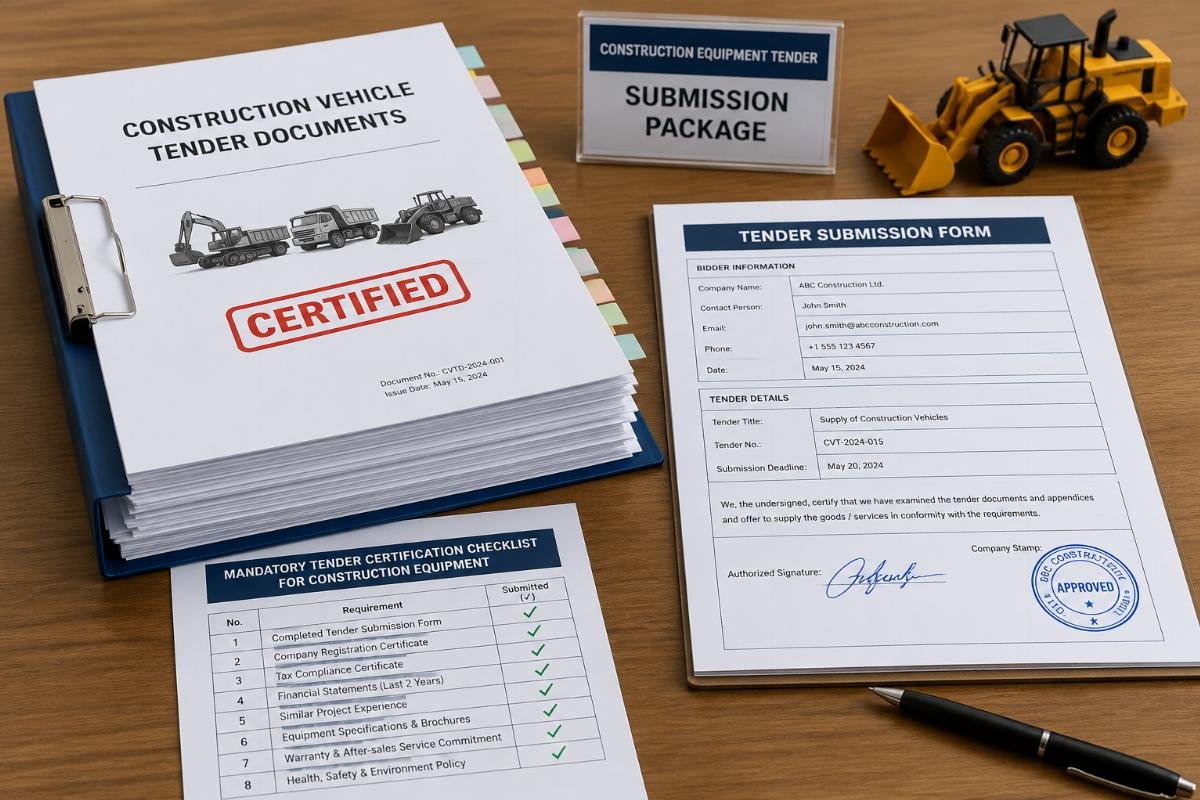
- Certification Verification – Cross-check all required compliance marks against the tender’s official published list before submission.
- After-sales Clause Confirmation – Secure written sign-off from your supplier on all service terms before adding them to your bid.
- Delivery Lock-In – Get a formal lead time guarantee from your supplier that matches the exact timeline specified in the tender.
How to adjust your supplier selection criteria to match official tender evaluation rules?
Prioritizing suppliers with pre-built tender compliance resources cuts your bid preparation workload by more than a third. Most procurement teams spend weeks chasing suppliers for scattered documentation, but qualified OEMs focused on public sector markets already have standardized packages ready to submit.
A Southeast Asian municipal government recently secured a 12-month full warranty plus lifetime technical support clause for their 26-unit road roller and dump truck procurement order, with no extra negotiation required because their chosen supplier already included those terms as standard for public tender clients.
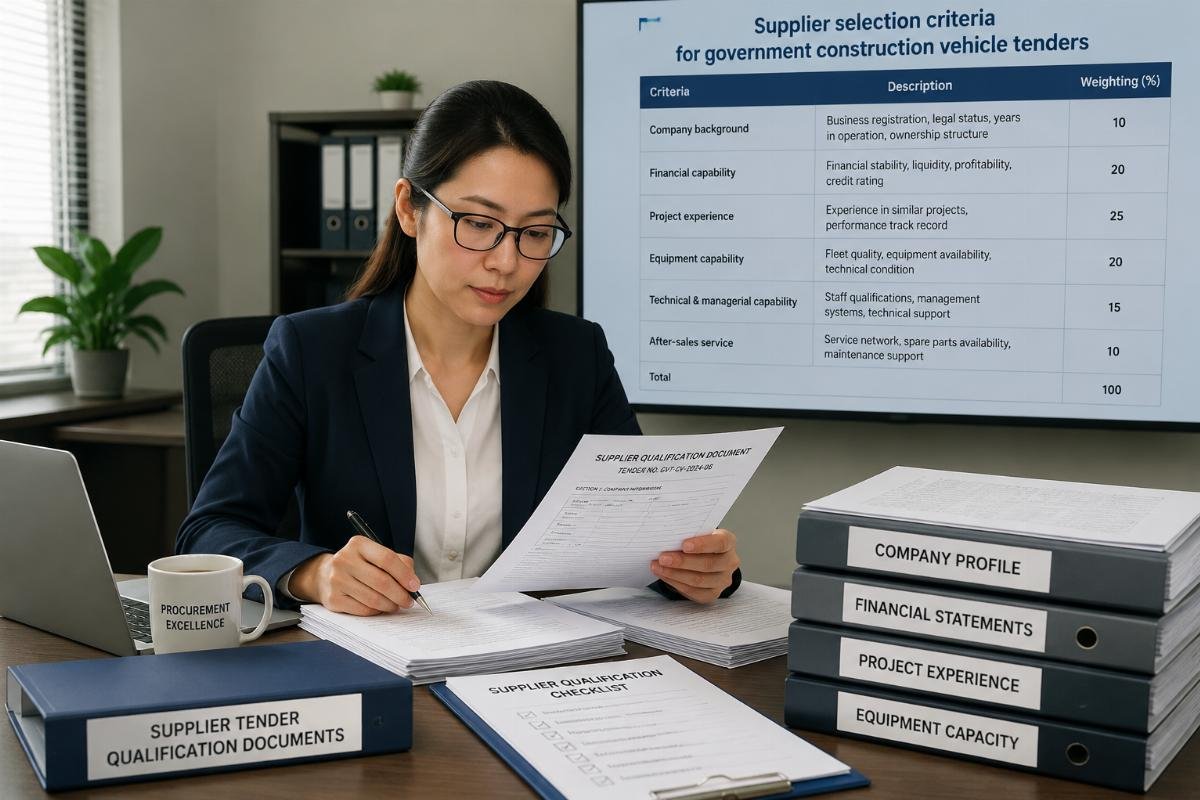
- Pre-Qualified Documentation Check – Confirm the supplier has all required regional and international certifications before initiating discussions.
- Tender Track Record Review – Ask for references from other public sector clients the supplier has supported with successful bids.
- Customization Flexibility Test – Verify the supplier can meet small-batch or custom configuration requirements without forcing minimum order quantities above your tender scope.
Why are China-based construction vehicle suppliers a hidden advantage for winning high-budget tenders?
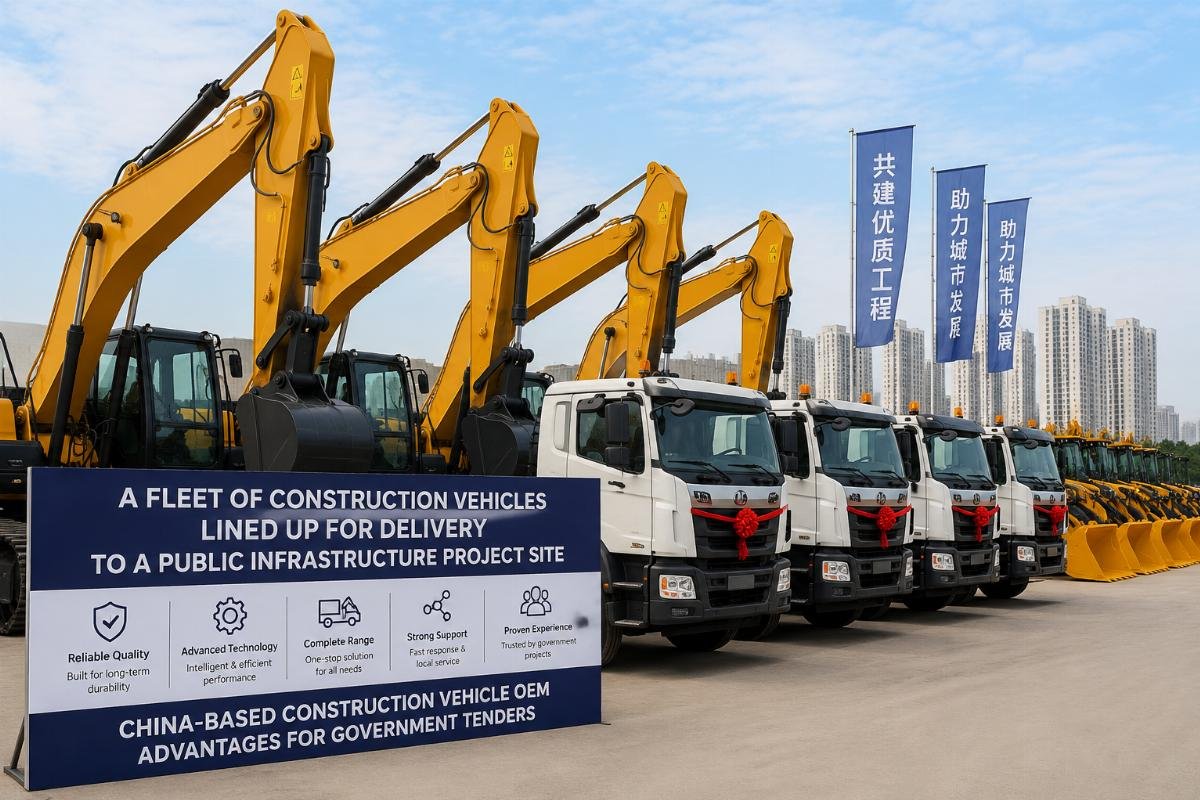
Qualified China-based construction vehicle OEMs deliver 40-60% lower pricing than European and Japanese legacy brands while meeting all mandatory compliance standards. This price gap creates significant room to align with tender budget thresholds without sacrificing required certification or service terms. Viceni, a China-based OEM with 15 years of manufacturing experience and export operations across 120+ countries, offers full product line coverage for all common construction vehicle categories, flexible OEM customization, and 24/7 global after-sales support that matches service terms from premium international brands.
A Middle East infrastructure contractor recently won a $2.8M road construction tender by sourcing 32 units of excavators and wheel loaders from a China-based supplier, achieving a 45% cost reduction compared to competing European brand quotations while meeting all required CE certification requirements.
- Pricing Benchmark Alignment – Compare supplier quotes directly against your tender’s published budget range to confirm alignment.
- Certification Cross-Reference – Confirm the supplier’s documentation covers all mandatory marks specified for your target region.
- Service Term Matching – Verify the supplier’s standard after-sales terms meet or exceed the minimum requirements listed in the tender.
How to structure tender after-sales clauses to avoid post-procurement service disputes?
Clear, specific after-sales terms in your tender submission eliminate 80% of post-delivery operational and service disputes. Vague language like "comprehensive support" leaves room for misalignment, while concrete terms around warranty, spare parts access, and on-site support create enforceable commitments for both parties.
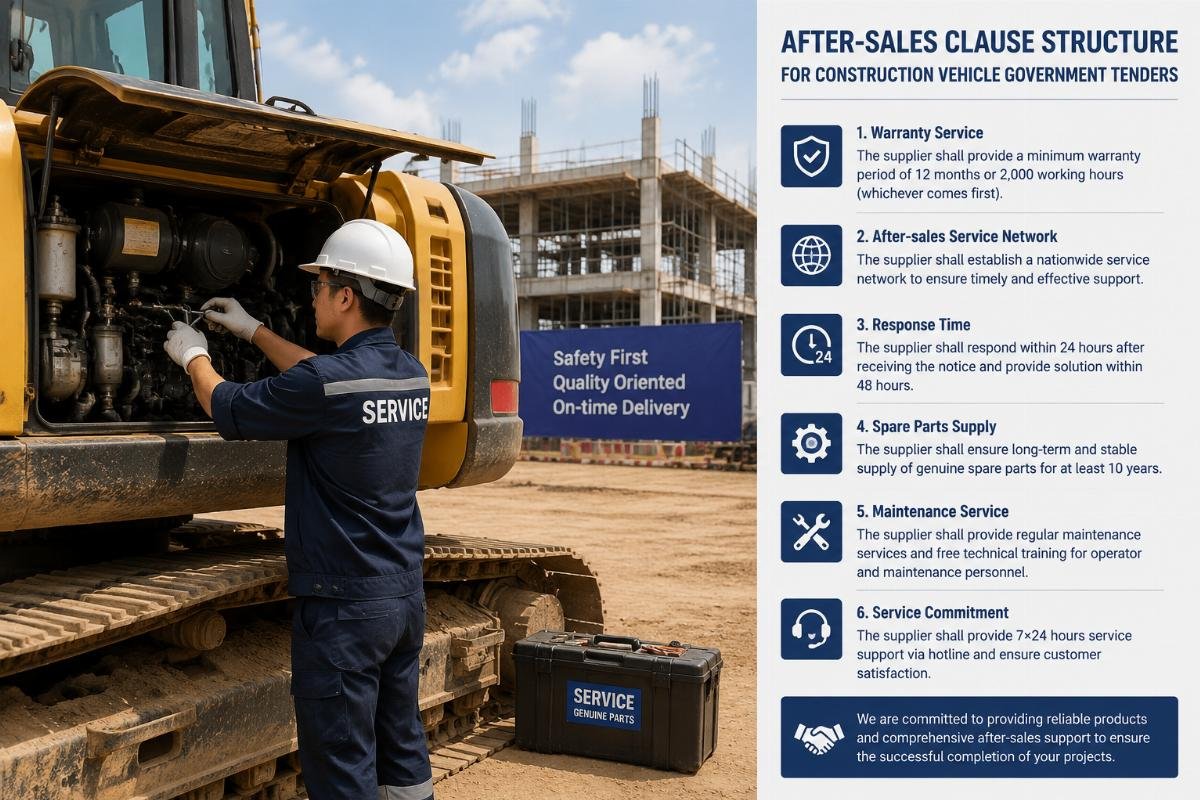
- Warranty Period Specification – List the exact duration of standard warranty coverage for all vehicle components.
- Spare Parts Access Confirmation – Note the location of regional spare parts warehouses and average delivery times for common replacement parts.
- On-Site Support Commitment – Include guaranteed maximum response times for emergency on-site service requests.
What common mistakes lead to tender failure even with a low quotation?
Non-standard documentation and missing custom configuration confirmation are the top two reasons low-price bids get rejected. Even if your quote comes in well under the competing bid range, evaluators will automatically disqualify submissions that do not meet the exact formatting and content requirements laid out in the tender guidelines.
- Format Compliance Check – Match all document formatting, font, and section order to the tender’s official template exactly.
- Configuration Confirmation – Attach written supplier confirmation that all custom vehicle specs requested in the tender are included in the quoted price.
- Final Checklist Review – Run a full line-item check of all required clauses and documentation before submitting.
Conclusion
Winning construction vehicle government tenders does not require the lowest possible price, but it does require strict adherence to pre-defined compliance and service thresholds. The common assumption that legacy European or Japanese brands are the only viable option for compliant bids is outdated, as qualified China-based OEMs now match their qualification pass rates while delivering significant cost savings. By using a standardized pre-submission checklist and partnering with suppliers experienced in public sector tender requirements, you can drastically reduce your disqualification risk and consistently submit competitive, winning bids.
