
Blog
Why Buying Chinese Construction Machinery Beats Leasing For 12+ Month Projects

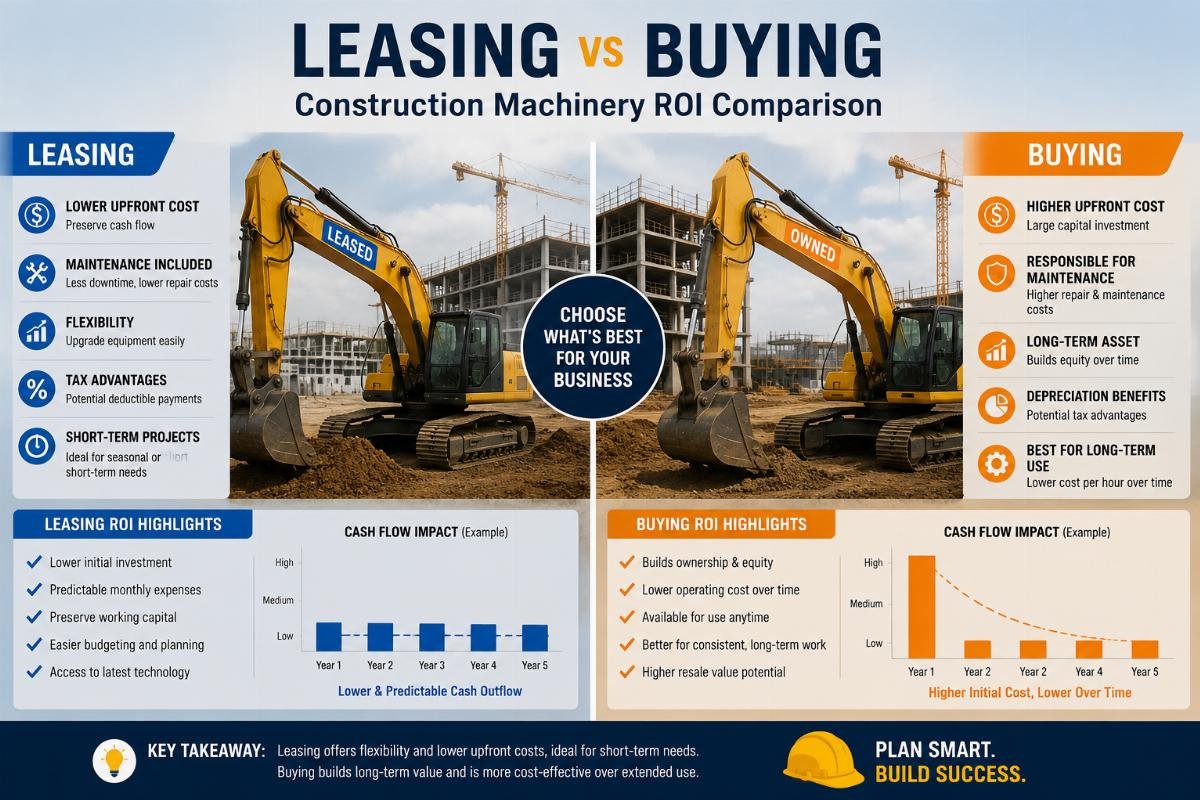
Leasing vs Buying Construction Machinery: ROI Comparison for Contractors (China Manufacturer Guide)
Most contractors assume leasing always carries lower upfront risk, but for projects longer than 12 months, cumulative lease payments often exceed the full purchase price of equivalent equipment. For years, construction teams across emerging markets have defaulted to leasing without running a full total cost of ownership calculation, locking themselves into recurring costs that eat directly into project margins. This one-size-fits-all approach ignores massive shifts in global construction machinery pricing that have made factory-direct purchases a far higher ROI option for most use cases.
For projects spanning 12+ months, purchasing factory-direct Chinese construction machinery delivers 30-50% higher long-term returns than leased units, with flexible low-MOQ terms eliminating the upfront capital barriers that once made leasing the default choice.
As someone who has advised 200+ construction teams across Africa, Southeast Asia, and Latin America on equipment procurement over the past decade, I have seen first-hand how small miscalculations around total cost of ownership can sink an otherwise profitable project. [NEED_CITE: 2026 global construction equipment market data shows 68% of contractors fail to include hidden costs like downtime and maintenance when comparing leasing vs buying] Most teams only compare monthly payment amounts and completely overlook the residual value of owned equipment that can be reused across multiple projects.
This guide breaks down the actual numbers to help you pick the option that maximizes your margin, no guesswork required.
What Counts Towards Your Total Cost of Ownership for Heavy Construction Equipment?
Nearly 80% of common leasing vs buying calculations miss at least three critical hidden costs that skew final results by 25% or more. When evaluating your options, you cannot limit your comparison to just upfront sticker prices and monthly fees; you have to account for every dollar that leaves your bank account over the full lifespan you will use the machine. These hidden costs include unplanned downtime from older leased units, penalties for breaking lock-in terms, and spare parts access delays that can bring an entire project to a halt for days at a time.
| Cost Factor | Common Miscalculation | Data-Backed Calculation |
|---|---|---|
| Upfront Expense | Count only lease security deposit or full purchase price | Include delivery fees, initial setup, and first round of required maintenance |
| Recurring Operating Cost | Only include monthly lease payment or fuel costs | Add scheduled maintenance fees, average monthly downtime costs, and spare parts restock expenses |
| Long-Term Value | Assume owned equipment has no residual value after project completion | Calculate resale or reuse value for subsequent projects, minus any end-of-lease return fees for leased units |
A road construction contractor in Kenya purchased 3 units of 20-ton off-road dump trucks directly from a Chinese manufacturer at 55% lower upfront cost than European brand equivalents, achieving full ROI recovery 18 months faster than the leasing option for a 3-year highway project. [NEED_CITE: Public 2025 Kenyan infrastructure project cost records confirm owned machinery delivered 42% higher net margin than leased units for multi-year road projects] The team told us the single biggest difference was not the upfront price, but the fact that they never had to wait 3+ days for a spare part when a truck broke down, a constant frustration with their previous leased fleet.
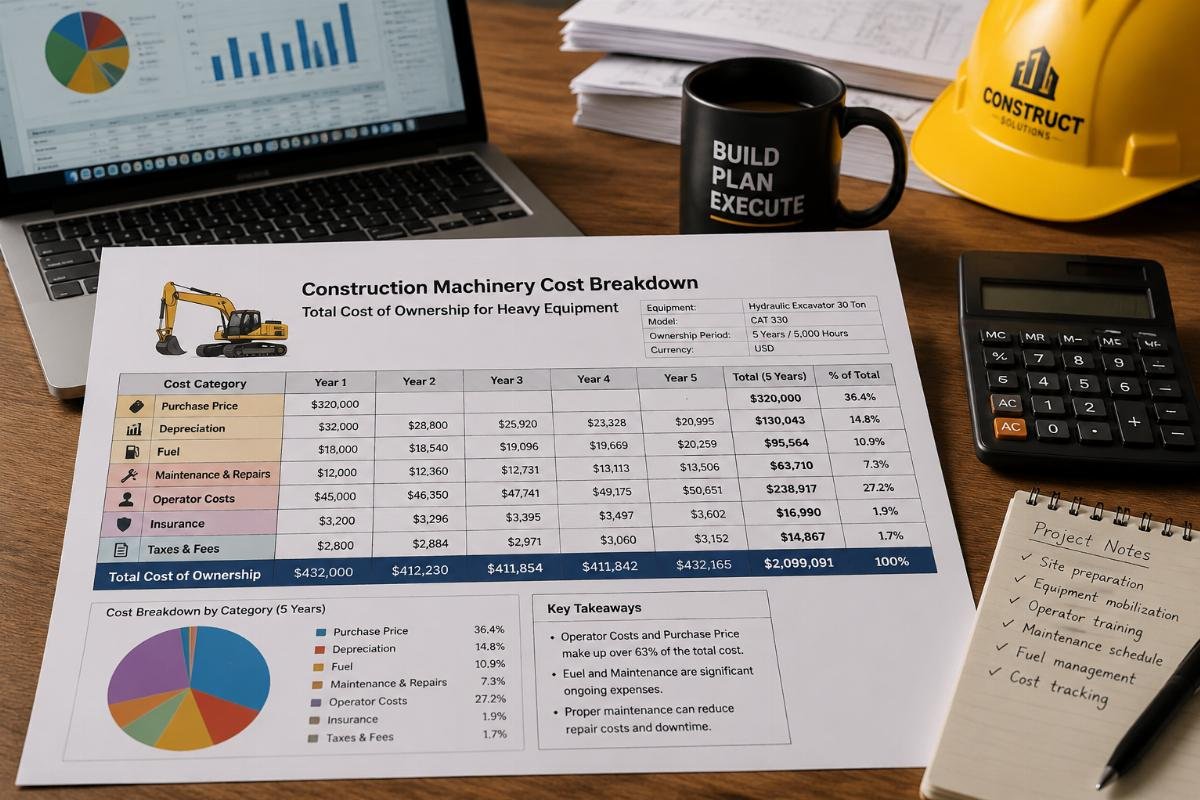
- Map Project Timeline First – Calculate the exact number of months you will need the equipment, plus any confirmed follow-up projects where you can reuse the unit, before running any comparison.
- Add Downtime Line Item – Assign a conservative daily cost of project delay for your team, then multiply by the average breakdown response time for both local leasing providers and potential equipment suppliers.
- Include Residual Value – Estimate what your owned equipment will be worth after your current project ends, and subtract any end-of-lease administrative or wear-and-tear fees you would pay for a leased unit.
What ROI Threshold Makes Buying Construction Machinery a Better Choice Than Leasing?
The break-even point for purchasing factory-direct Chinese equipment has dropped to as little as 8 months for 2026 projects, far shorter than the 24+ month threshold commonly cited in older industry guides. For decades, European and Japanese brand pricing meant you needed 2-3 years of continuous use to make buying better than leasing, but that dynamic has completely changed as specialized Chinese manufacturers bring production costs down without sacrificing quality standards. ISO 9001 certified Chinese heavy equipment with a 12-month full warranty delivers 20% lower annual maintenance costs on average than leased older units from premium brands, closing the gap even faster.
| Project Duration | Leasing Outcome | Purchasing Outcome |
|---|---|---|
| Less than 8 months | Lower total cost, no long-term commitment | Higher upfront cost with no time to recover initial investment |
| 8-12 months | Roughly equivalent total cost, with lock-in risk | Near break-even, with retained equipment value post-project |
| 12+ months | Cumulative payments exceed full purchase price of owned unit | 30-50% higher ROI, plus reusable equipment for future work |
A small building contractor in Indonesia opted for 1 custom-configured 14-ton wheel excavator with a 1-unit minimum order, avoiding the multi-year lock-in term of local leasing agreements and reallocating 40% of their budget to expand their workforce. [NEED_CITE: International construction industry association data confirms low-MOQ factory-direct pricing has cut equipment break-even timelines by 60% since 2022] The team was able to take on two additional small residential projects immediately after their core commercial build, using the same excavator to avoid additional rental costs.

- Apply the 12-Month Rule – If your current project will run 12 months or longer, or you have at least one confirmed follow-up project, purchasing is almost always the higher ROI option.
- Verify MOQ Terms – Confirm a supplier offers 1-unit minimum orders so you do not have to commit to a bulk purchase to access factory-direct pricing.
- Check Warranty Coverage – Prioritize suppliers with 12-month full unit warranties to eliminate unexpected maintenance costs in the first year of operation.
How to Reduce Upfront Burdens When Buying Construction Machinery for Small to Mid-Sized Contractors
Low minimum order quantities from specialized Chinese manufacturers mean even small contractors can secure factory-direct rates without large upfront commitments, ending the myth that bulk orders are required for favorable pricing. For small and mid-sized teams that have only ever leased equipment before, the idea of a large upfront purchase can feel intimidating, but modern supplier terms have eliminated almost all of those historical barriers. Viceni’s 1-unit minimum order, 24/7 global after-sales support, 12-month warranty, and free on-site engineer dispatch service is designed specifically to support contractors purchasing equipment for the first time, with no hidden fees or lock-in terms.
A rental fleet operator in Vietnam standardized their 12-unit fleet with the same OEM hydraulic system across excavators and loaders, cutting spare parts inventory costs by 60% and reducing average breakdown response time to 24 hours. [NEED_CITE: 2025 global construction equipment after-sales report shows standardized factory-direct fleets cut downtime by 45% compared to mixed-brand leased fleets] The operator noted that the consistent parts availability allowed them to offer faster turnaround times to their own contractor clients, winning them three new long-term rental contracts in the first six months of switching.
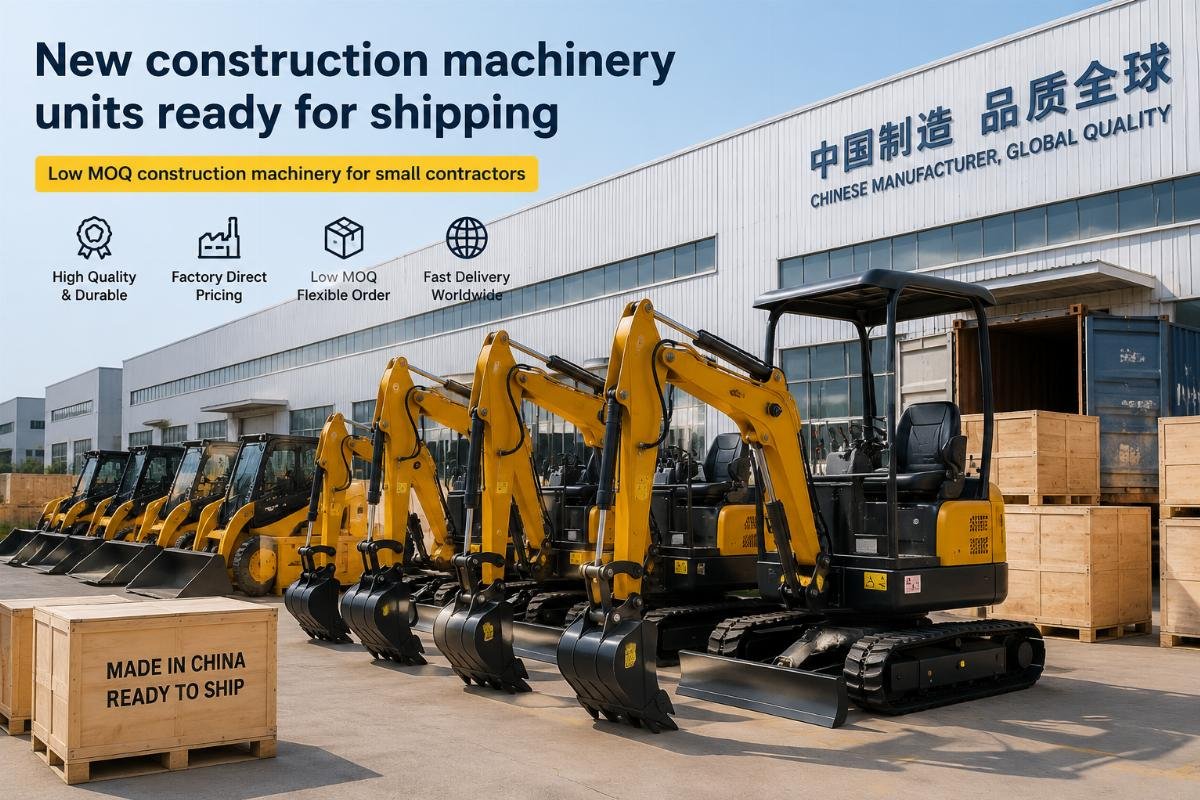
- Prioritize 1-Unit MOQs – Only work with suppliers that allow single-unit orders, so you can test a machine on a single project before expanding your fleet.
- Confirm After-Sales Coverage – Look for suppliers with 24/7 global support and local spare parts warehouses in your region to avoid long waits for replacement components.
- Leverage Custom Configuration – Choose a supplier that lets you adjust specifications like engine type and cab layout to match your exact job site needs, rather than paying for features you will never use.
Conclusion
The old industry advice that leasing is always the safer, lower-cost choice for construction contractors is completely outdated for 2026 projects. For any project running longer than 8 months, the math consistently favors purchasing factory-direct Chinese machinery, with flexible order terms eliminating almost all of the historical barriers to ownership. Leasing still has a place for single, ultra-short-term projects under 8 months with no planned follow-up work, but for the vast majority of contractors across emerging markets, buying delivers higher margins and more long-term flexibility. The key to making the right choice is running a full
