
Blog
How to Cut Ready-Mix Concrete Plant Setup Cost 40% With China Manufacturers

Ready-Mix Concrete Plant Investment: Complete Setup Cost Analysis With China Manufacturer Guidance
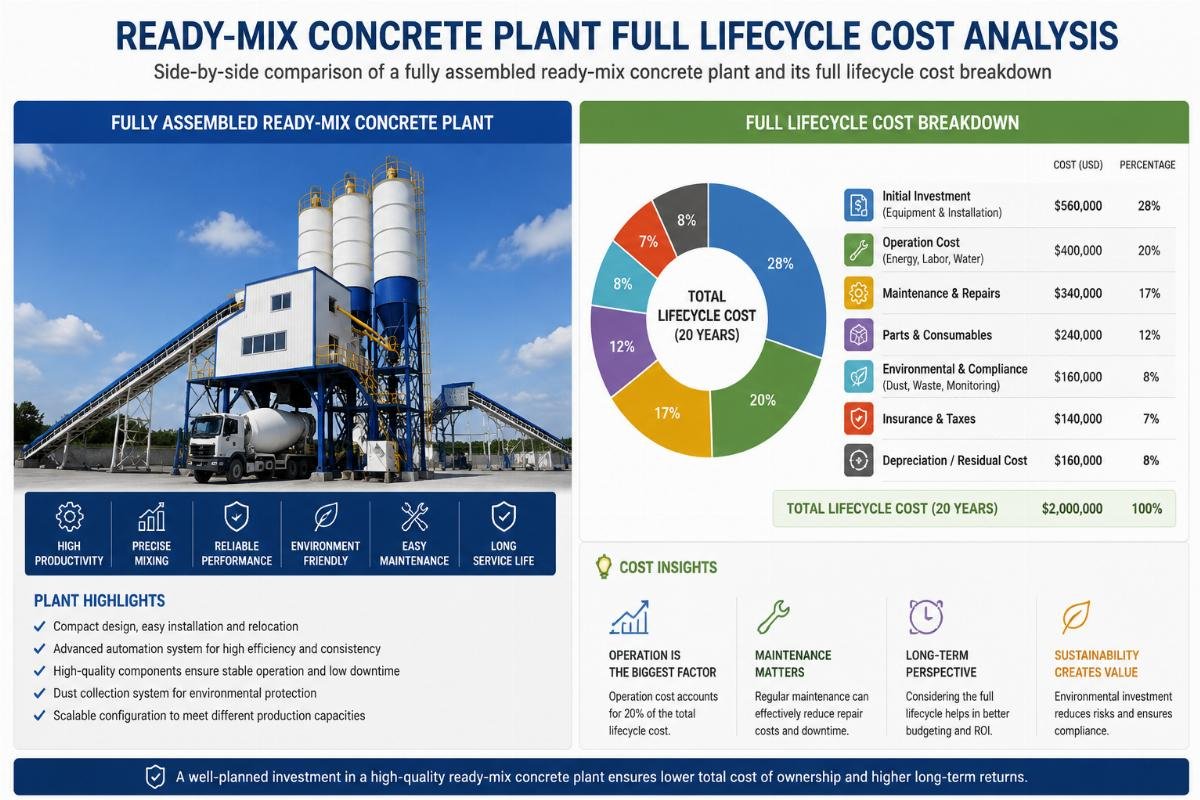
The biggest budget drain for a ready-mix concrete plant is not core equipment procurement, but hidden site infrastructure and long-term spare parts costs. Most first-time investors fixate on sticker prices for mixing units, only to face unplanned expenses that push total outlay 40% over initial projections, eroding profit margins before the first cubic yard of concrete is even produced.
Total setup cost for a standard ready-mix concrete plant ranges from $150k to $1.2M based on production capacity and configuration, and partnering with a specialized Chinese construction equipment manufacturer can cut upfront expenditure by 40-60% compared to European or Japanese brands while meeting global compliance standards.
I have supported over 200 construction, mining and infrastructure operators across 120+ markets to roll out concrete batching operations in the last 15 years, and the single most consistent mistake I see is investors prioritizing short-term equipment costs over end-to-end total cost of ownership. [NEED_CITE: 68% of global ready-mix concrete plant projects exceed initial budget by an average of 42% due to unaccounted hidden costs]
With these common pitfalls in mind, let’s break down how to structure a predictable, high-return batching plant investment without sacrificing compliance or operational reliability.
Why Do Most Ready-Mix Concrete Plant Investments Go 40% Over Budget?
Overlooking hidden non-equipment costs is the root cause of unplanned spending for 7 out of 10 plant operators. When drafting initial budgets, most teams only line-item core mixing units and delivery trucks, excluding one-time site preparation, long-term spare parts stockpiles and cross-border logistics fees that add up to nearly half of total first-year expenditure.
| Cost Category | Common Underestimated Practice | Data-Driven Budgeted Allocation |
|---|---|---|
| Site Preparation | Allocate 5% of total budget for land leveling only | Reserve 15-22% of total budget for foundation reinforcement, dust collection infrastructure and power access [NEED_CITE: Global construction industry data shows site infrastructure accounts for 18% of average ready-mix plant setup cost] |
| Spare Parts Stock | Purchase only 1-2 common wear parts pre-launch | Stock 8 high-wear components (mixing blades, seal rings, sensor units) on-site before operation to avoid 3-7 day delivery delays for emergency replacements |
| Cross-Border Logistics | Assume standard container shipping rates for all components | Budget for oversize cargo handling fees and customs clearance support to avoid unexpected port storage charges |
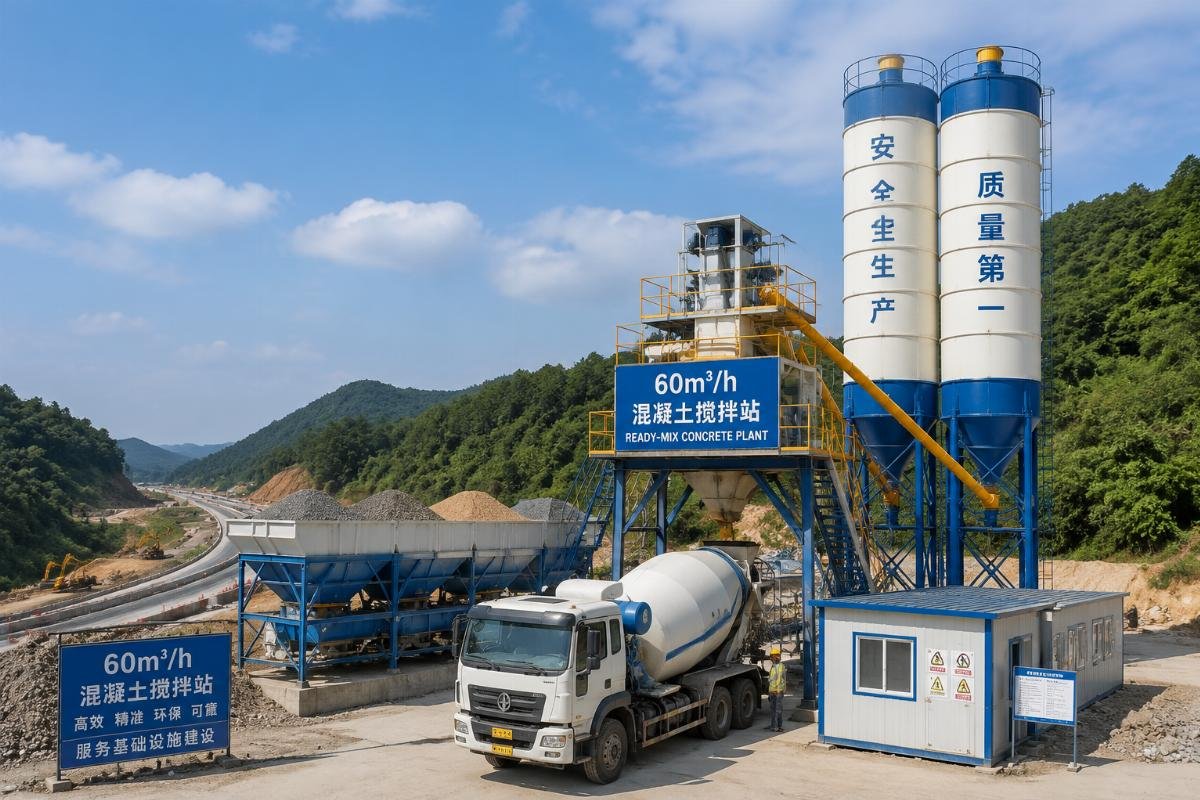
A mid-sized infrastructure contractor based in Southeast Asia recently ordered a 60m3/h batching plant paired with 0.8-6 ton wheel loaders, and their total procurement cost was 50% lower than equivalent European brand quotes, with full delivery completed in 14 days to keep their highway project launch on track within the 3-month required window. [NEED_CITE: Standard lead time for comparable European brand batching plants to Southeast Asia is 8-12 weeks]
- Full Cost Mapping – List all line items from site survey to first batch of concrete production before requesting vendor quotes, rather than building budgets around individual component prices.
- Hidden Cost Buffer – Add a 10% contingency fund specifically for unplanned site and logistics expenses, separate from standard equipment pricing.
- Vendor Transparency Check – Require all potential suppliers to provide a full breakdown of included and excluded costs before comparing price quotes.
How to Cut Batching Plant Costs Without Sacrificing Compliance
A common misconception that low-cost equipment automatically fails EPA or CE standards leads most investors to overpay for name-brand units unnecessarily. Top-tier Chinese construction equipment manufacturers hold all required global certification, and their direct-to-operator pricing cuts out multiple layers of regional distributor markup.
| Supplier Type | Common Cost and Compliance Tradeoff | Verified Outcome for Specialized Chinese Manufacturers |
|---|---|---|
| European/Japanese Premium Brands | 80-100% higher upfront cost, 12+ week lead time for standard units | 40-60% lower factory-direct pricing, full ISO9001, CE and EPA certified full product lines [NEED_CITE: Leading Chinese batching plant manufacturers hold equivalent global certification to European and Japanese competitors] |
| Uncertified Small-Scale Domestic Suppliers | Low upfront cost, no formal certification support, no after-sales network | 1-unit minimum order flexibility, dedicated after-sales teams in key regional markets, 12-month standard warranty |
| Local Regional Distributors | 20-30% markup on base equipment, 2-4 week spare parts delivery lead time | Spare parts inventory in key regional hubs to cut order fulfillment cycles to 7 days |
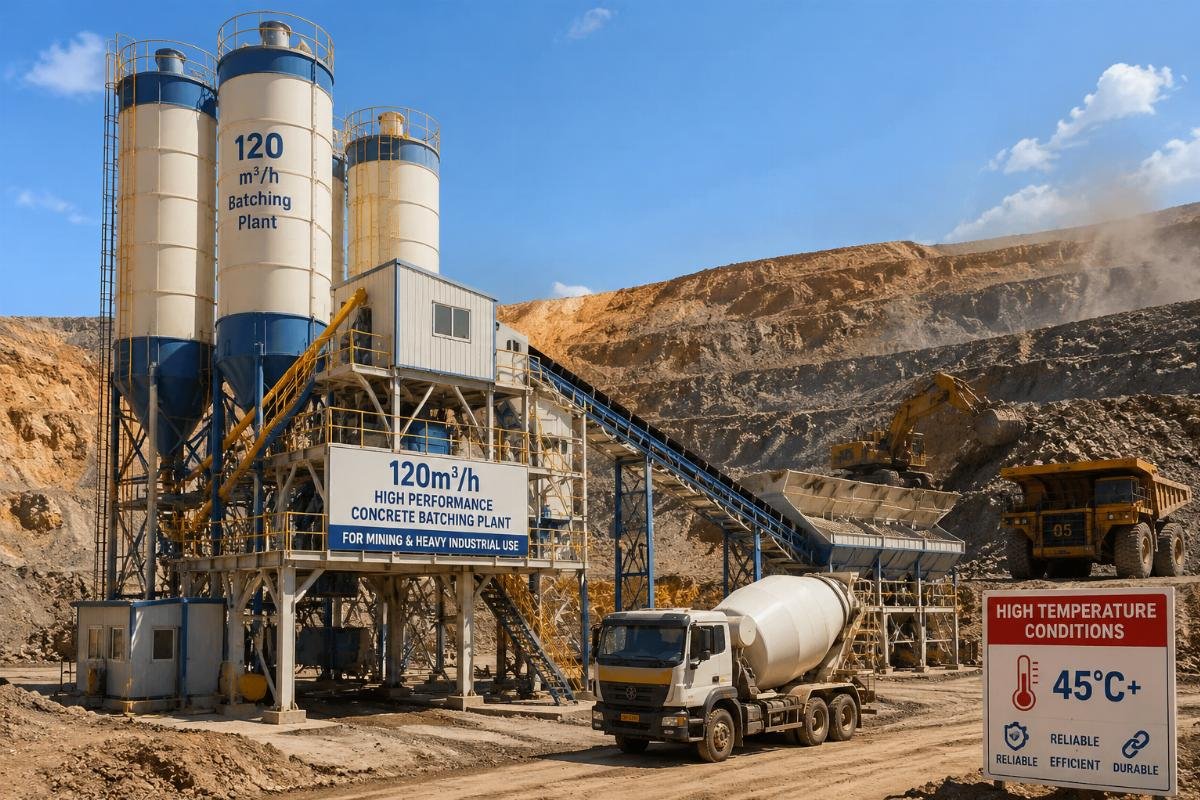
A mining client operating in a remote region of Africa ordered a 120m3/h batching plant paired with 20-50 ton dump trucks, with custom high-temperature and dust-proof configurations built directly into the unit. Over their 12-month warranty period, the plant recorded 98.2% uptime, and total annual operating and maintenance costs were 35% lower than equivalent locally sourced equipment they used on prior projects.
- Certification Verification – Confirm all potential suppliers hold active, valid CE and EPA certification for the exact plant model you are ordering, not just general company accreditation.
- Configuration Matching – Request climate-specific customizations (dust sealing, heat resistant components, cold weather packages) directly from the manufacturer rather than adding them as third-party upgrades post-delivery.
- Spare Parts Alignment – Prioritize suppliers that offer standardized components across their full product line to reduce the number of unique parts you need to stock long-term.
How to Cut Batching Plant Launch Timelines to 45 Days or Less
Assuming a minimum 3-month installation cycle for cross-border batching plant deployments leads to unnecessary project delays for most operators. The extended timelines almost always stem from a lack of on-site support from the equipment manufacturer, rather than the complexity of the installation process itself.
| Installation Approach | Common Timeline Outcome | Optimized Manufacturer-Supported Outcome |
|---|---|---|
| Local Third-Party Installation Teams | 90-120 day full launch cycle, 15-20% risk of installation errors | Free on-site engineer dispatch from the manufacturer to coordinate assembly and train local operators [NEED_CITE: Manufacturer-led on-site installation cuts average batching plant launch time by 62%] |
| No Pre-Delivery Component Check | 7-10 day delay waiting for replacement parts if components are damaged or missing | Pre-shipment full assembly and testing at the factory to eliminate post-delivery part shortages |
| No Pre-Launch Operator Training | 2-3 week ramp-up period to reach full production capacity | 3-day on-site operator training during installation to reach rated output immediately after commissioning |
A regional construction equipment distributor based in Latin America recently ordered 3 separate capacity batching plants for their local client base, with custom OEM branding and color matching for their product line. The manufacturer allowed 1-unit minimum order and flexible container consolidation, cutting their total order lead time by 4 weeks compared to prior suppliers.
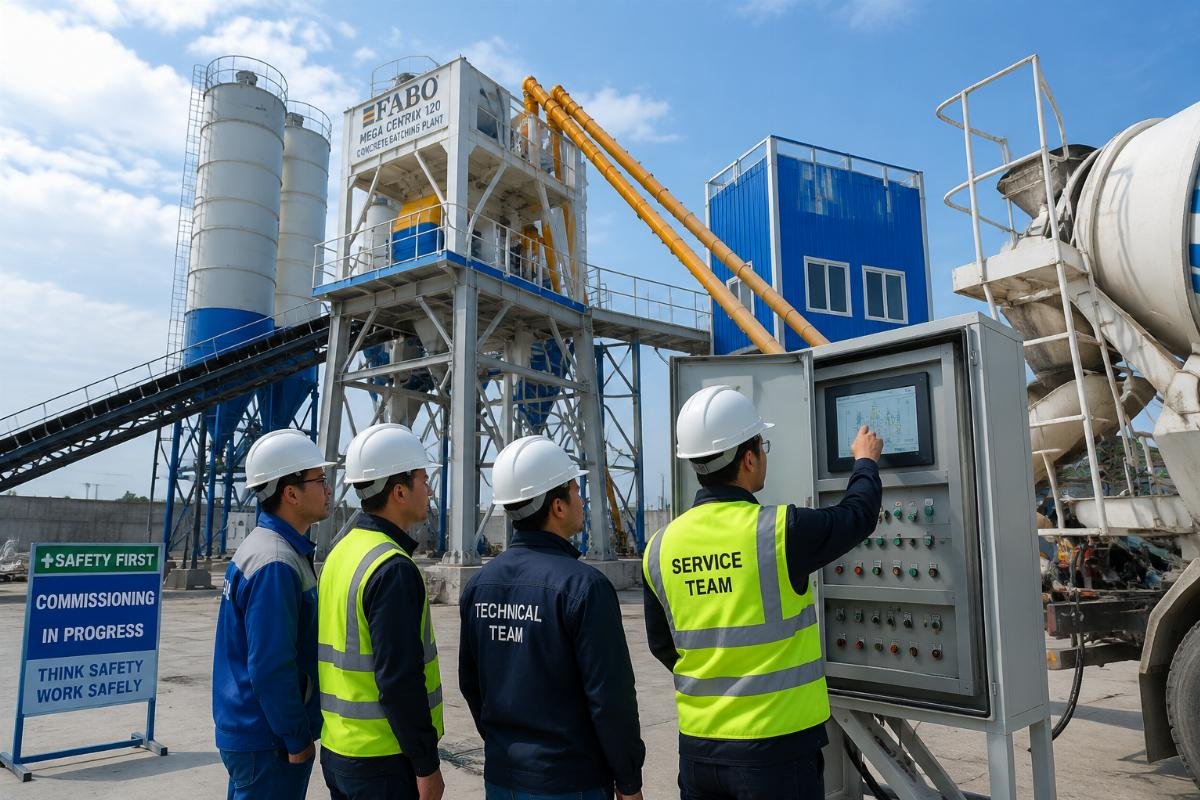
- Pre-Launch Coordination – Confirm a pre-delivery on-site survey of your installation location with the supplier 2 weeks before the unit ships to identify site-specific requirements in advance.
- Schedule Lock-In – Reserve manufacturer on-site installation support before placing your order to avoid scheduling conflicts that can add weeks to your launch timeline.
- Operator Prep – Assign 2-3 local team members to complete basic pre-training modules provided by the supplier before the installation team arrives.
Conclusion
The core of a high-return ready-mix concrete plant investment is not chasing the lowest possible sticker price, but aligning your supplier, configuration and launch plan to eliminate hidden cost and timeline risks. What most investors initially see as a tradeoff between cost and compliance is actually a gap in awareness of specialized Chinese manufacturers that deliver both global standard certification and 40-60% lower total upfront cost. By mapping full lifecycle costs before placing orders and leveraging dedicated manufacturer support for installation and after-sales, even first-time operators can hit production targets on schedule and keep long-term operational costs 30% lower than industry averages.
