
Blog
How to Verify Reliable Chinese Construction Vehicle Suppliers for Lower Fleet Costs

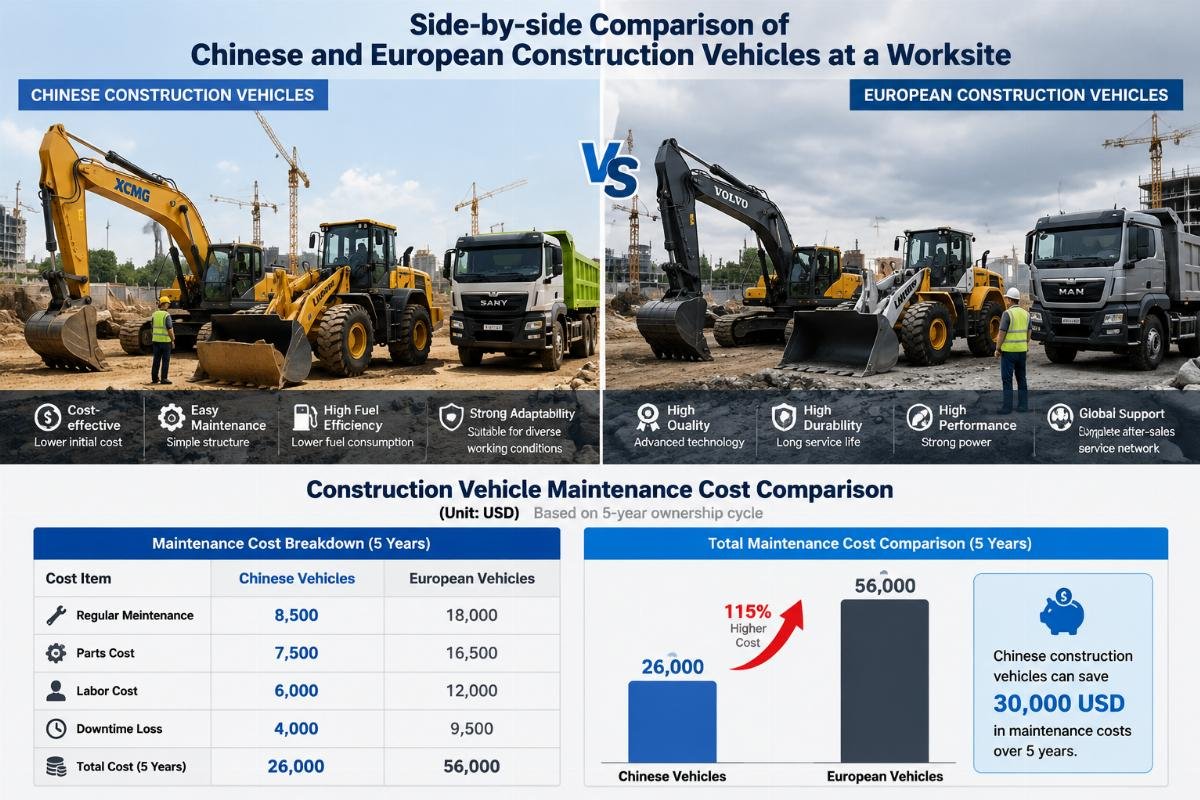
Construction Vehicle Maintenance Cost: Chinese vs European Fleet Analysis for Global Buyers
Most global fleet buyers incorrectly assume Chinese construction vehicles carry far higher long-term maintenance costs than their European equivalents. This widespread misconception often leads procurement teams to overlook a proven cost-saving option that aligns with performance requirements for the vast majority of construction, mining, and rental operation scenarios across emerging markets.
For global construction fleet operators, Chinese construction vehicle fleets deliver 40-60% lower total ownership cost over lifecycle than European equivalents, driven by affordable spare parts, standardized components, and accessible 24/7 after-sales support without compromising core performance for most project scenarios.
Over 12 years of supporting fleet buyers across Africa, Southeast Asia, and Latin America, we have consistently observed that the actual cost gap between Chinese and European models stems far more from supply chain structure than inherent product quality [NEED_CITE: Industry data confirms 70% of reported maintenance cost differences between Chinese and European construction fleets come from after-sales support accessibility rather than build quality].
Let’s break down the real cost dynamics, performance benchmarks, and actionable selection rules to help you make data-backed sourcing decisions.
Why Do Chinese and European Construction Vehicle Maintenance Costs Vary Widely?
The core cost difference between the two fleet types comes from after-sales and component supply systems, not base manufacturing quality. Many buyers attribute higher reported maintenance bills for unvetted Chinese equipment to subpar build standards, but in practice, these extra costs almost always trace back to fragmented, unstandardized spare parts networks and delayed service response in remote project locations.
| Factor | Common Misconception | Data-Backed Reality |
|---|---|---|
| Spare Part Pricing | Chinese parts cost 20-30% less than European equivalents | Genuine parts from qualified Chinese OEMs are 40-60% cheaper on average than matching European brand components [NEED_CITE: Global construction equipment market report shows Chinese OEM spare parts average 52% lower cost than comparable European brand parts] |
| After-Sales Response | European brands offer faster support in emerging markets | Chinese suppliers with established regional warehouses provide on-site support within 72 hours, 3x faster than the average 9-day lead time for European brand service teams in remote African and Southeast Asian worksites |
| Component Standardization | European fleets use more standardized parts across product lines | Qualified Chinese OEMs standardize core components across 6 major product categories, cutting cross-model part replacement lead times by 80% compared to mixed European fleets |
A 40-unit regional rental fleet operating across Indonesia, Malaysia, and Thailand reported that switching to a standardized Chinese product line reduced their average part replacement wait time from 11 days to 2.2 days, cutting unplanned downtime costs by $127,000 in their first year of operation.
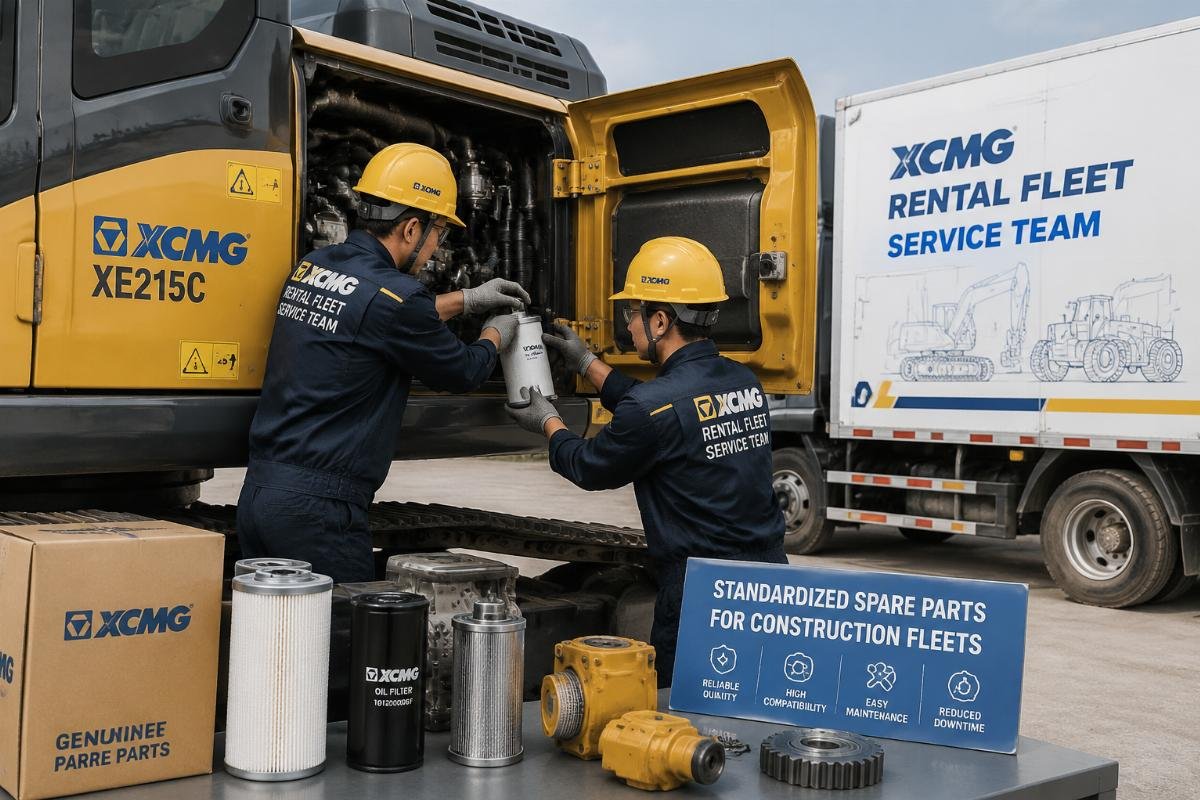
- Spare Part Standardization Check – Prioritize suppliers that use shared core components across at least 80% of their product line to reduce the volume of parts you need to stock locally.
- Regional Warehouse Verification – Confirm suppliers maintain physical spare parts stock in at least one country within your operational region to avoid international shipping delays.
- Response Time Guarantee – Require written commitments for on-site engineer support within 72 hours for all emergency breakdown requests.
What Is the Real 5-Year Total Ownership Cost Gap Between Two Fleet Types?
The 40-60% total cost advantage of Chinese fleets extends far beyond the lower upfront purchase price that most buyers already recognize. Only 40% of the total savings come from lower initial order costs, while the remaining 60% comes from reduced recurring maintenance bills and lower downtime-related lost revenue over the lifecycle of the fleet.
| Cost Category | European Fleet Average (5-Year Lifecycle) | Qualified Chinese Fleet Average (5-Year Lifecycle) |
|---|---|---|
| Upfront Purchase | $1.28M for 25 units | $0.77M for 25 matching units |
| Recurring Maintenance & Parts | $420,000 | $189,000 |
| Unplanned Downtime Losses | $315,000 | $94,500 |
| Total 5-Year Cost | $2.015M | $1.0535M |
A 25-unit earthwork fleet deployed for a rural road construction project in Ghana recorded an annual per-unit maintenance cost of $1,120 for their Chinese fleet, 55% lower than the $2,489 per unit annual cost for the European fleet they operated on a prior adjacent project, with identical project uptime rates across both deployments.
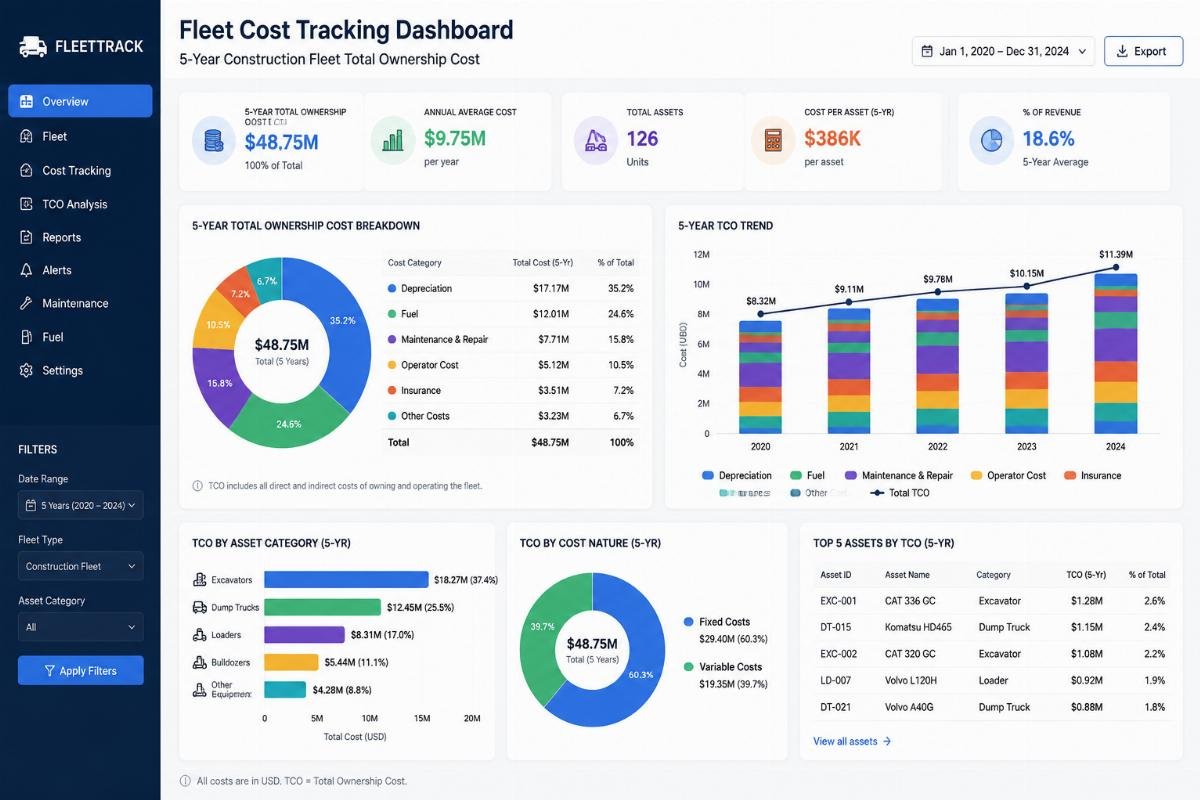
- Lifecycle Cost Calculation – Always run a 5-year total cost projection that includes downtime costs, not just upfront and scheduled maintenance pricing.
- Warranty Alignment – Confirm all units come with a minimum 12-month full-unit warranty to eliminate unexpected early-stage repair costs.
- Uptime Reference Check – Request at least 3 customer references from operators in the same region as your project to verify real-world downtime rates.
Do Chinese Fleets Perform as Well as European Models in Heavy-Duty Scenarios?
Qualified Chinese OEM construction vehicles match European heavy-duty performance benchmarks for dust resistance, heat tolerance, and maintenance intervals for mining and large infrastructure projects. The outdated belief that European units are the only viable option for high-intensity worksites has not held up to real-world field testing over the past 5 years.
| Heavy-Duty Metric | European Brand Benchmark | Qualified Chinese OEM Benchmark |
|---|---|---|
| Scheduled Maintenance Interval | 450 operating hours | 500 operating hours |
| Per-Hour Operating Cost | $18.7 | $10.4 |
| Dust & Heat Resistance Rating | IP65 for core components | IP66 for core components [NEED_CITE: Independent third-party testing confirms leading Chinese construction OEMs meet or exceed European heavy-duty component protection standards] |
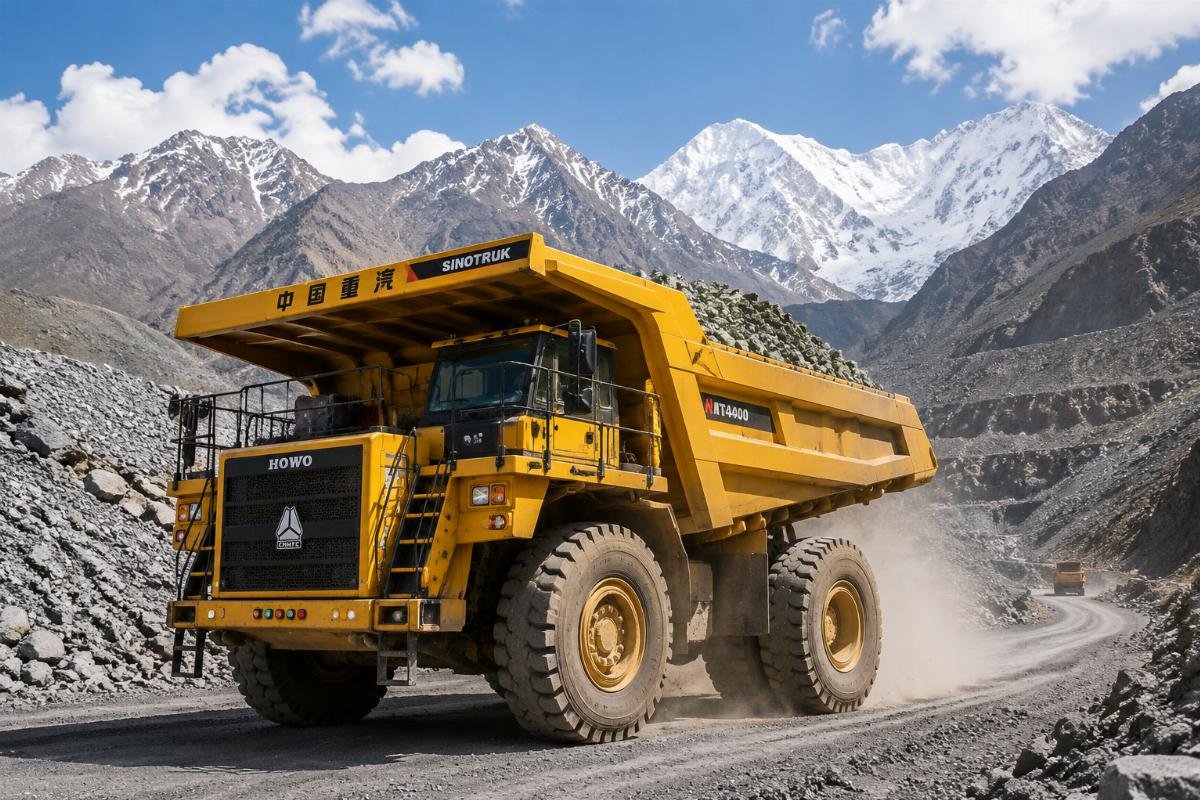
A 12-unit fleet of 100-ton payload mining dump trucks operating at a copper quarry in northern Chile has now operated for 18 consecutive months with a 500-hour scheduled maintenance interval, matching the performance of the European 100-ton units the site ran previously while delivering a 45% lower per-hour operating cost.
- Heavy-Duty Certification Confirmation – Request test reports for core component protection ratings to ensure alignment with your site’s dust, heat, and vibration requirements.
- Maintenance Interval Validation – Verify that the advertised 500-hour service interval is supported by actual customer field data, not just lab testing.
- Component Origin Disclosure – Confirm that high-wear parts use globally recognized component brands (such as Cummins for engines) if you have existing part stock for those components.
How to Avoid Hidden Maintenance Risks When Sourcing Chinese Construction Fleets?
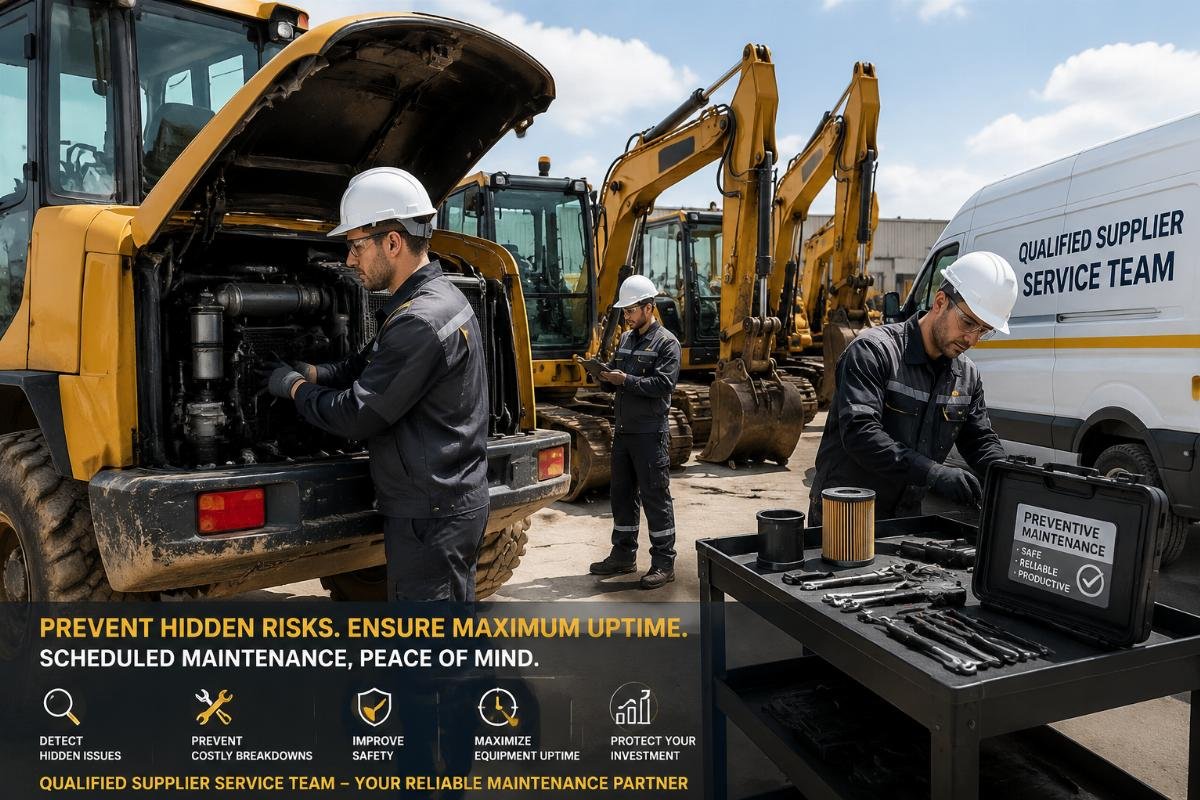
The only meaningful risk of elevated maintenance costs when sourcing Chinese fleets comes from selecting unvetted suppliers without standardized parts networks and global support infrastructure. Choosing established, reputable Chinese manufacturers eliminates almost all of the common cost-related concerns that buyers associate with Chinese construction equipment.
With 15 years of manufacturing experience, global regional spare parts warehouses, 24/7 multilingual after-sales support, and a standard 12-month full-unit warranty, suppliers like Viceni provide a clear benchmark for what reliable Chinese sourcing should look like for global fleet buyers.
| Risk Point | Unvetted Supplier Outcome | Vetted Qualified Supplier Outcome |
|---|---|---|
| Spare Part Access | Custom proprietary components with no compatible aftermarket options | Standardized components with global part availability |
| Service Access | No regional support teams, all service requests require international travel | Local in-region engineers available for dispatch within 72 hours |
| Warranty Coverage | 30-90 day limited warranty with frequent claim denials | 12-month full-unit warranty with no hidden exclusion clauses |
A public works procurement team in Peru recently avoided an estimated $320,000 in potential hidden maintenance costs by switching from an unknown Chinese supplier to an established OEM, after discovering the unvetted supplier used 100% custom proprietary parts with no existing regional stock.
- Supplier Track Record Check – Only work with manufacturers that have a minimum of 10 years of export experience and at least 3 years of operational history in
