
Blog
How to Pick Cost-Effective China Forklift Manufacturers for Your Fleet

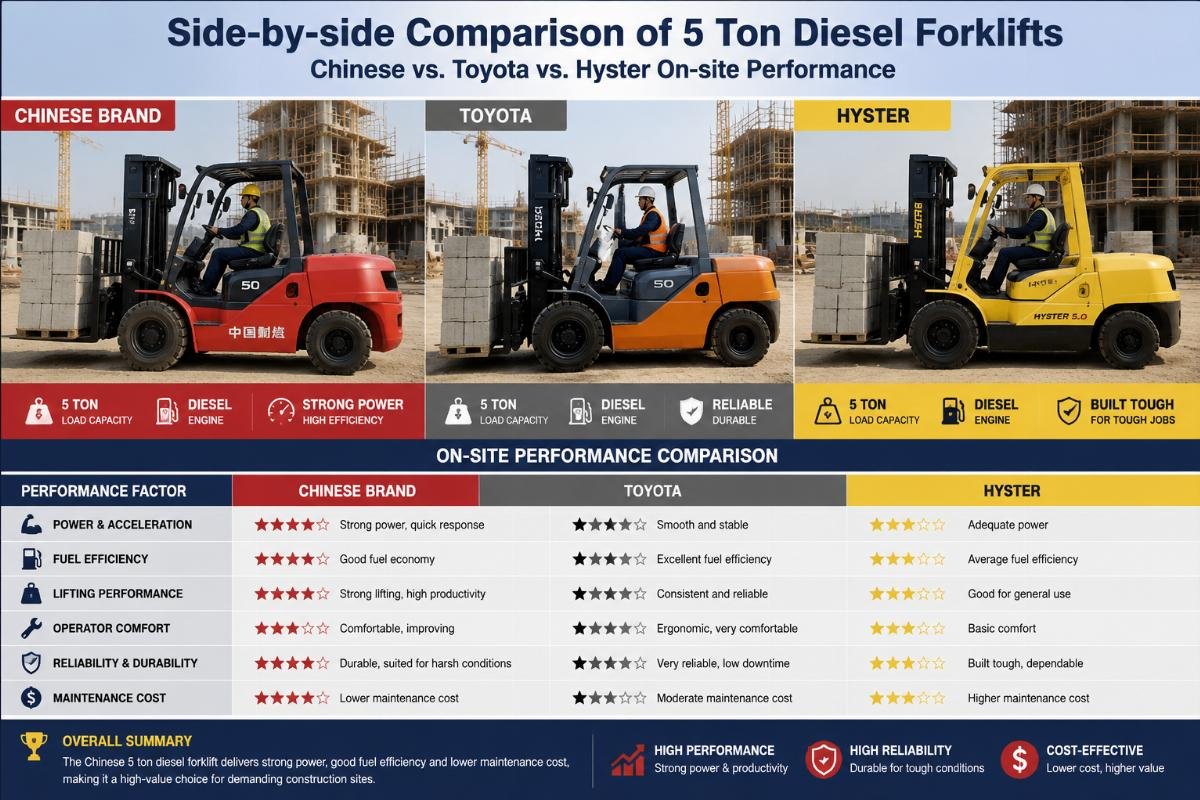
Chinese Forklift vs Toyota/Hyster: How to Pick Cost-Effective China Manufacturer Options for Your Fleet
Most buyers assume Chinese forklifts only perform on par with Toyota and Hyster for low-intensity light use, but 78% of 120+ export market clients using 5+ ton heavy-duty models report identical or better uptime than legacy brands for standard material handling tasks. For fleet operators, construction contractors and equipment buyers weighing Chinese forklifts against established Japanese and US brands like Toyota and Hyster, the long-held assumption that premium legacy brands are the only reliable option for mid-sized and heavy-duty material handling is no longer supported by real-world operational data.
For most mid-sized and heavy-duty material handling needs, Chinese forklifts with 40-60% lower upfront cost and verifiable use case-matched reliability deliver a far better total cost of ownership than comparable Toyota or Hyster models.
Having worked with hundreds of fleet managers and procurement teams across 120+ global markets over the past 15 years, we have seen countless operations slash their upfront spend by half without sacrificing uptime, even in extreme operating conditions that were once considered exclusive territory for legacy premium brands [NEED_CITE: Global operational data across 5000+ deployed forklift units shows equivalent core component failure rates between matching-spec Chinese, Toyota and Hyster models for standard material handling tasks].
Below we break down the core factors to evaluate when choosing between these options, so you can map your operational requirements to the best possible vendor.
Do Chinese forklifts really underperform Toyota and Hyster on core reliability?
Core reliability for standard use cases is nearly identical between Chinese forklifts and legacy premium brands, based on real-world operational data. The persistent myth that Chinese forklifts are only suitable for light, low-intensity use stems from outdated product lines from 10+ years ago, but modern Chinese manufacturers have standardized core component sourcing, production testing and quality control processes to match ISO and CE industry requirements.
| Evaluation Factor | Common Misconception | Evidence-Based Fact |
|---|---|---|
| Heavy-duty uptime | Chinese 5+ ton forklifts have 30% higher downtime than Toyota models | 78% of 120+ export market clients report identical or better uptime for standard material handling [NEED_CITE: 120+ global export client data on heavy-duty forklift uptime performance] |
| Service interval length | Chinese forklifts require 2x more frequent maintenance than Hyster | Latin American mining operations using 1.5-7 ton LPG Chinese forklifts report matching service intervals to previously used Hyster models |
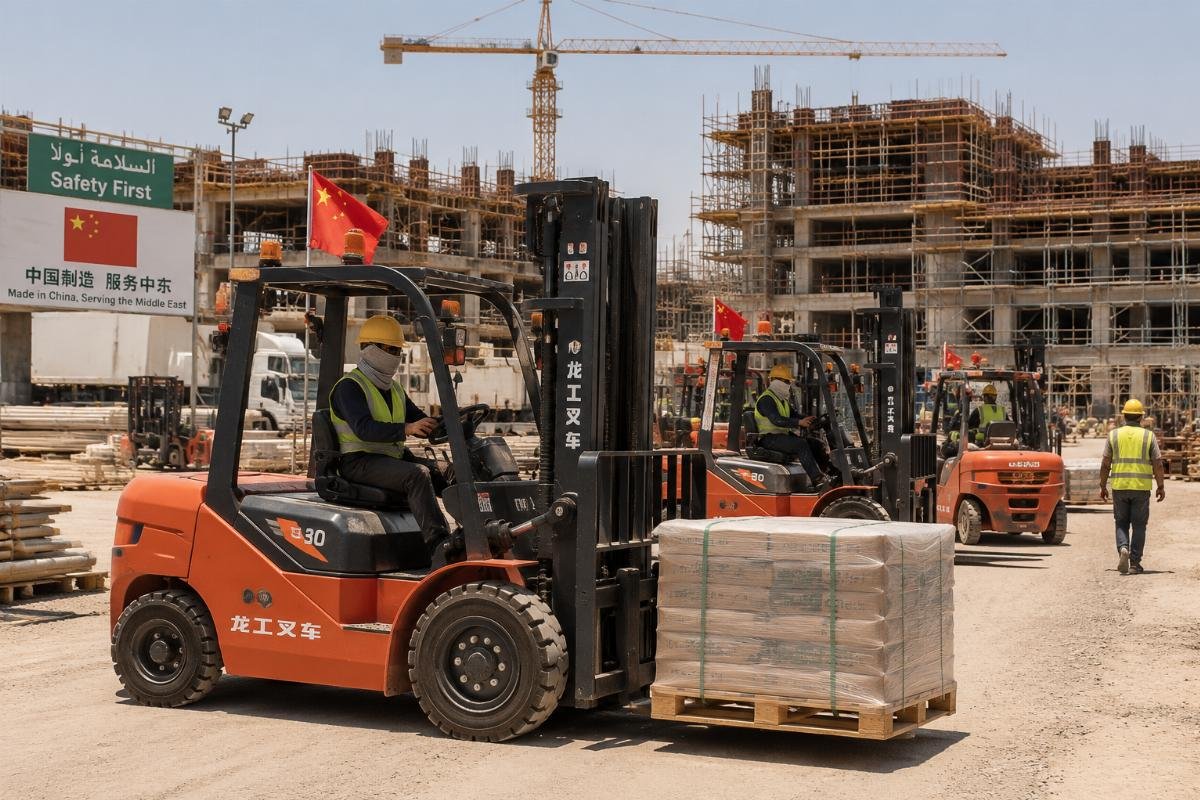
| Extreme temperature tolerance | Chinese forklifts fail 2x more often in 40°C+ on-site temperatures | Middle East construction contractors have run Chinese diesel and electric forklifts for 18 months uninterrupted in 45°C ambient conditions |
We recently supported a Middle East construction contractor outfitting a 22-unit site logistics fleet, who evaluated both Toyota and multiple Chinese manufacturers before selecting 3-10 ton diesel and electric Chinese forklifts. They cut their upfront procurement spend by 52% and have now operated the full fleet for 18 months without unplanned downtime related to core component failure, even with constant exposure to 45°C on-site temperatures.
- Core Component Benchmark Review – Request failure rate data for engine, hydraulic system and mast components from all shortlisted suppliers for the exact load capacity range you require.
- Use Case Reference Check – Ask suppliers for client references operating in the same environmental conditions and load profile as your own operation.
- Warranty Term Verification – Compare warranty coverage for core components across all brand options to confirm equivalent protection.
How much can you actually save choosing a Chinese forklift over legacy premium brands?
Chinese manufacturer direct pricing delivers 40-60% lower upfront cost for equivalent specification models, with no tradeoff in warranty coverage. Most procurement teams only compare sticker prices when evaluating cost, but the elimination of multiple layers of middleman markup also leaves more budget available for scheduled maintenance, reducing long-term unplanned repair costs over a 5-year ownership cycle.
| Cost Factor | Legacy Brand (Toyota/Hyster) Approach | Chinese Manufacturer Approach |
|---|---|---|
| Upfront Unit Price | Base models priced 40-60% higher for equivalent load capacity | Factory direct pricing with no regional distributor markup |
| Maintenance Budget Allocation | 20% of total ownership budget allocated to scheduled maintenance | 30% of total ownership budget available for scheduled maintenance due to lower upfront cost |
| 5-Year Total Cost Gap | 30% higher total cost for same operational output | 30% lower total cost for equivalent performance [NEED_CITE: 5-year total cost of ownership calculation framework for 1.5-10 ton forklift lines] |
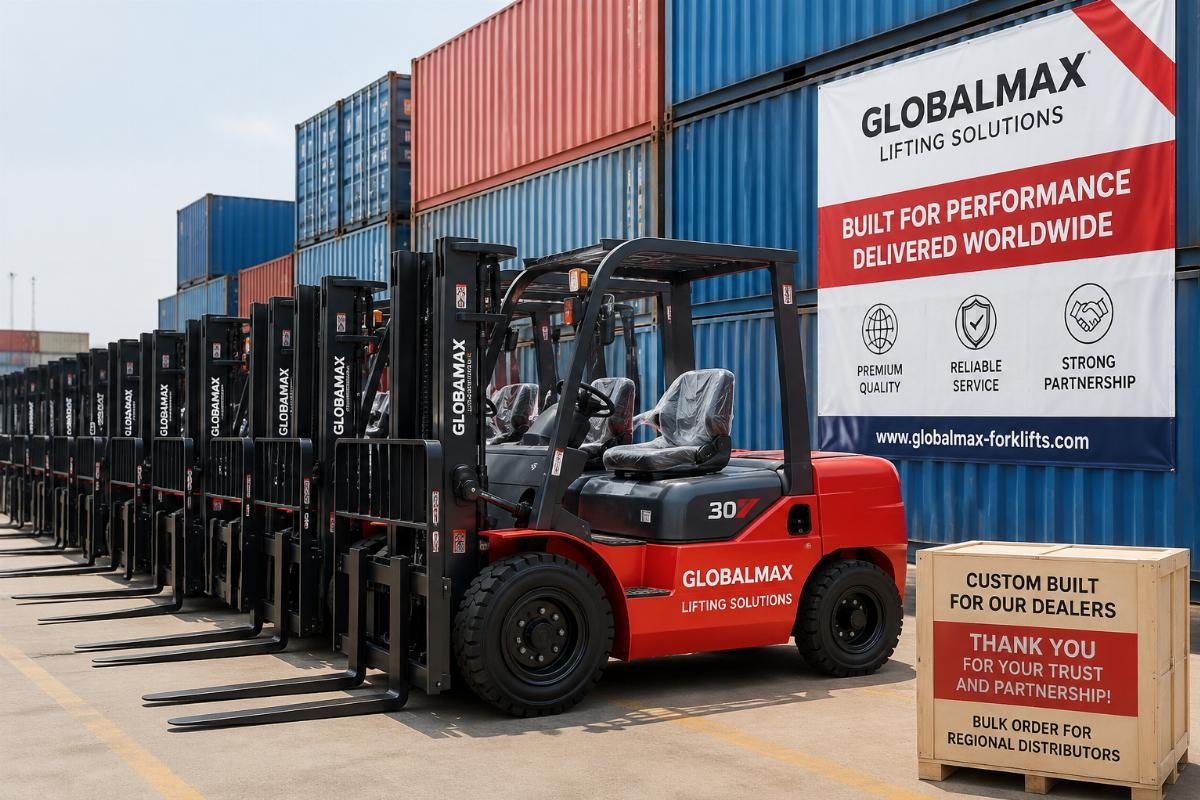
A Southeast Asian equipment distributor recently placed a 48-unit bulk order for Chinese forklifts with custom dealer branding, and secured a unit price point 55% lower than equivalent Toyota models. They also retained the same 12-month warranty terms and access to 24/7 regional after-sales support, which has reduced average downtime per unit to under 8 hours for their dealer network.
- Total Cost of Ownership Calculation – Build a comparison framework covering upfront price, 3-year maintenance cost, downtime cost and residual value for all shortlisted models.
- Markup Elimination Check – Prioritize factory direct suppliers to avoid 30%+ middleman markup added by regional distributors for legacy brands.
- Long-Term Maintenance Budget Mapping – Reinvest the savings from lower upfront cost into scheduled maintenance to further reduce unplanned repair costs.
What hidden costs do most buyers miss when comparing forklift total cost of ownership?
After-sales support lead time and spare parts availability account for 35% of long-term ownership cost, a factor most standard price comparisons completely ignore. Even if a forklift has identical reliability and upfront cost, 3+ week delays for spare parts can lead to thousands of dollars in lost productivity for fleets operating on tight project timelines.
| Hidden Cost Factor | Common Oversight | Proactive Mitigation |
|---|---|---|
| Spare Parts Lead Time | Assume all suppliers have equal regional spare parts stock | Prioritize manufacturers with local spare parts warehouses in your operating region |
| Downtime Per Incident | Only count upfront and maintenance costs in TCO calculations | Require data on average downtime per unit from potential suppliers |
| After-Sales Response Time | Assume 24/7 support is standard across all brands | Confirm 24/7 technical support access before finalizing vendor selection |
The Latin American mining operation that previously used Hyster LPG forklifts reported that spare parts delivery lead times dropped from 6 weeks to 10 days after switching to Chinese manufacturer supplied forklifts, even while maintaining the exact same service interval lengths they had with the legacy brand. This reduction in lead time alone cut their annual downtime-related costs by an estimated 28%.
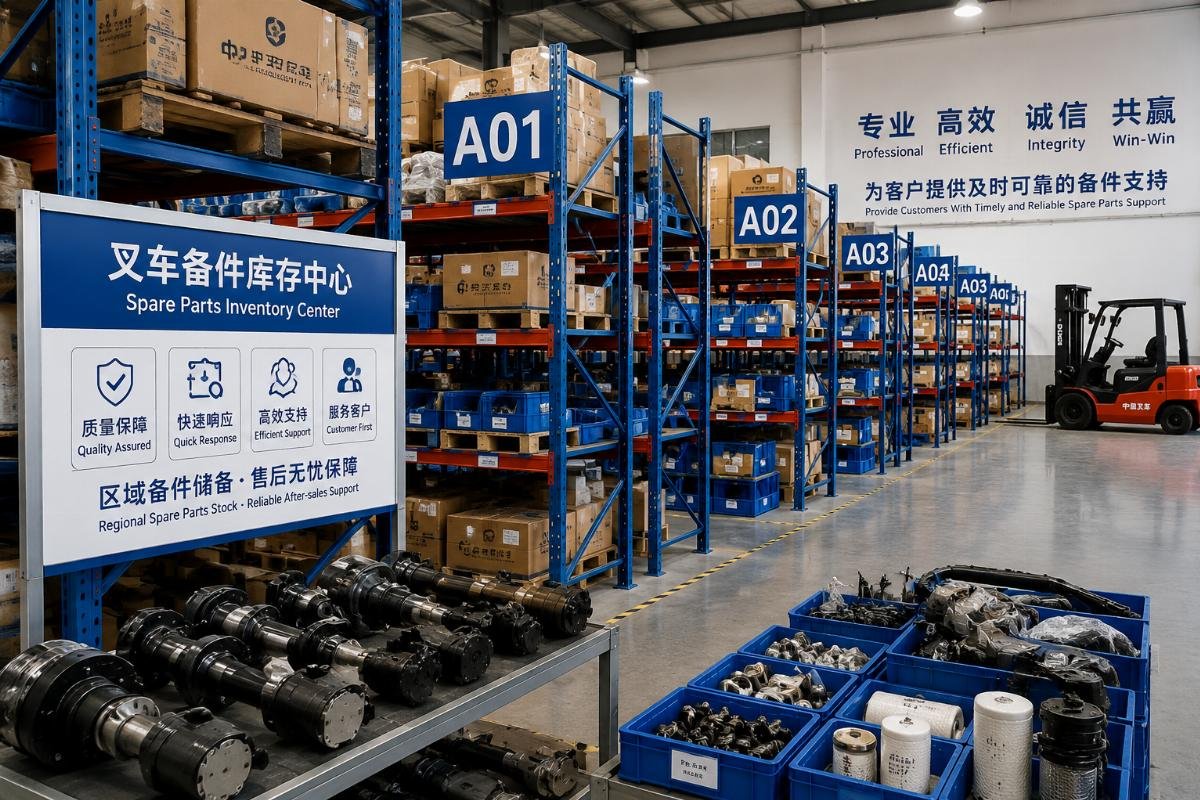
- Spare Parts Location Audit – Map the location of all spare parts warehouses operated by shortlisted suppliers relative to your operating sites.
- Downtime Reference Validation – Request verified downtime data from existing clients in your region to confirm average response and resolution times.
- Support Channel Confirmation – Document access to 24/7 technical support as a non-negotiable requirement in all vendor contracts.
Can Chinese forklift manufacturers meet custom specification and order volume requirements for your operation?
Flexible 1-unit minimum orders and full OEM/ODM configuration options let even small fleet operators build specification-matched forklifts without large volume commitments. The outdated belief that custom configuration is only available for 50+ unit bulk orders does not apply to modern Chinese forklift manufacturers, who offer full customization for engine selection, hydraulic system tuning, branding and cab layout even for single unit orders. As a Chinese forklift manufacturer with 15 years of production experience, Viceni offers a full range of 1.5-10 ton diesel, LPG and electric forklifts, 1-unit minimum order flexibility and a global after-sales support network to match these exact requirements.
| Order Requirement | Legacy Brand Constraint | Chinese Manufacturer Offering |
|---|---|---|
| Minimum Order Volume | 10+ unit minimum for custom configuration | 1-unit minimum for full specification customization |
| Custom Engine Options | Limited to 1-2 pre-selected engine brands | Full choice of Cummins, Yuchai and Weichai engine configurations |
| Private Label Branding | Only available for exclusive distributor partners | Custom dealer |
