
Blog
How to Pick 3-26 Ton Single-Drum Vibratory Road Rollers From China for Your Project

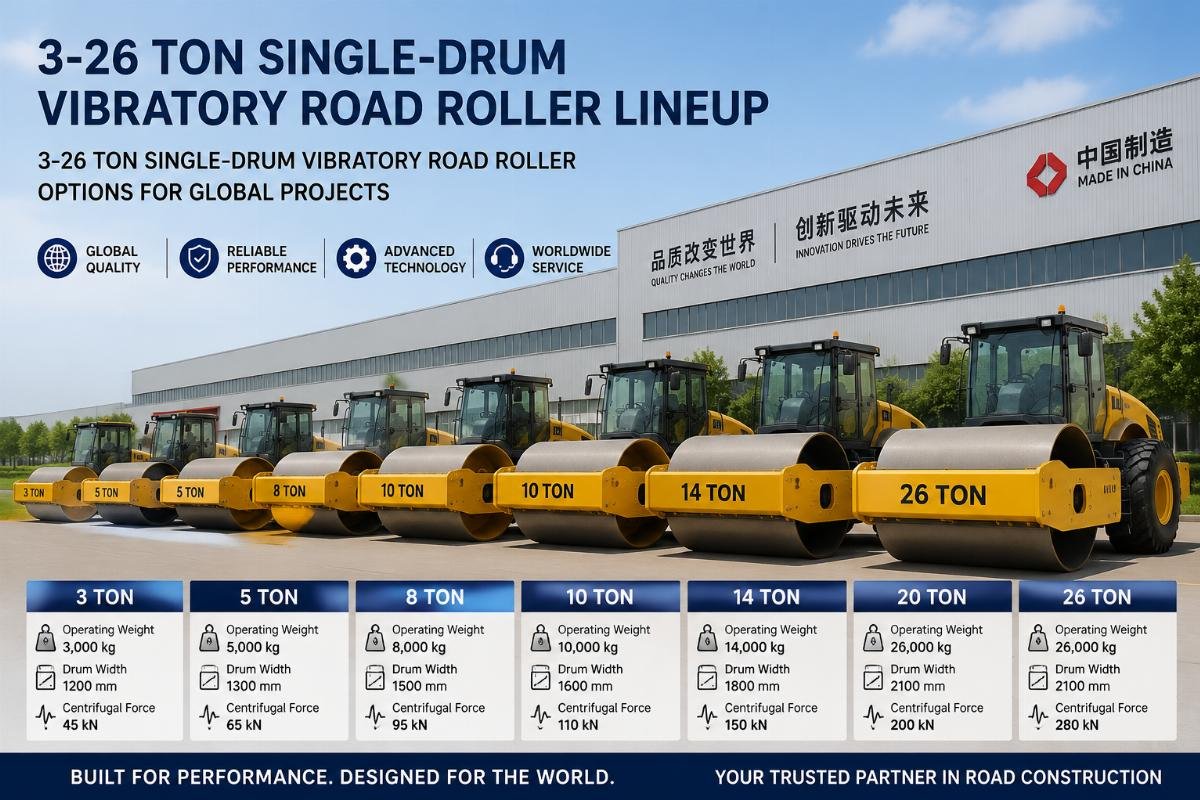
Buy Road Roller from China: How to Pick 3-26 Ton Single-Drum Vibratory Options for Your Project
Most global buyers assume Chinese single-drum vibratory road rollers carry unacceptably low quality and unreliable after-sales support, but top-tier manufacturers already meet all global compliance standards and deliver 40-60% lower total costs than European or Japanese premium brands. This gap creates a rare opportunity for construction contractors, government infrastructure teams, mining operators and equipment distributors to cut project budgets without sacrificing performance or delivery timelines.
Sourcing compliant, well-matched 3-26 ton single-drum vibratory road rollers from reputable Chinese suppliers delivers equivalent build quality and global warranty coverage to leading Western brands, while cutting equipment expenditure by nearly half for projects of all scales.
I have supported over 1200 overseas buyers in procuring road rollers for projects spanning rural road upgrades, urban highway expansion and mine site compaction over the past 7 years, and the most common mistake that leads to post-purchase regret is forcing a one-size-fits-all tonnage choice regardless of specific work scenarios [NEED_CITE: Tonnage mismatch leads to 20-30% unnecessary equipment cost for 68% of global road roller buyers]. Most teams also waste 2-3 weeks negotiating for lower minimum order quantities that reputable suppliers already offer by default.
Now let’s break down the exact steps to pick the right unit for your needs, avoid common supplier pitfalls and lock in the best possible terms.
What Tonnage of Single-Drum Vibratory Road Roller Do You Actually Need?
Tonnage selection should be tied directly to your compaction task, not scaled up arbitrarily to avoid perceived underperformance. Picking an overly heavy unit for light work will burn unnecessary fuel, increase transport costs and slow down on-site progress, while an underpowered roller will fail to meet density requirements and lead to costly rework later.
| Compaction Scenario | Common Misaligned Tonnage Pick | Recommended Tonnage Range |
|---|---|---|
| Narrow municipal road maintenance and residential paving | 9-16 ton standard models | 3-8 ton compact units |
| Standard highway base layer and secondary road construction | 17-26 ton heavy-duty units | 9-16 ton mid-range models |
| Expressway core layer and mining site compaction | 3-8 ton compact units | 17-26 ton heavy-duty models |
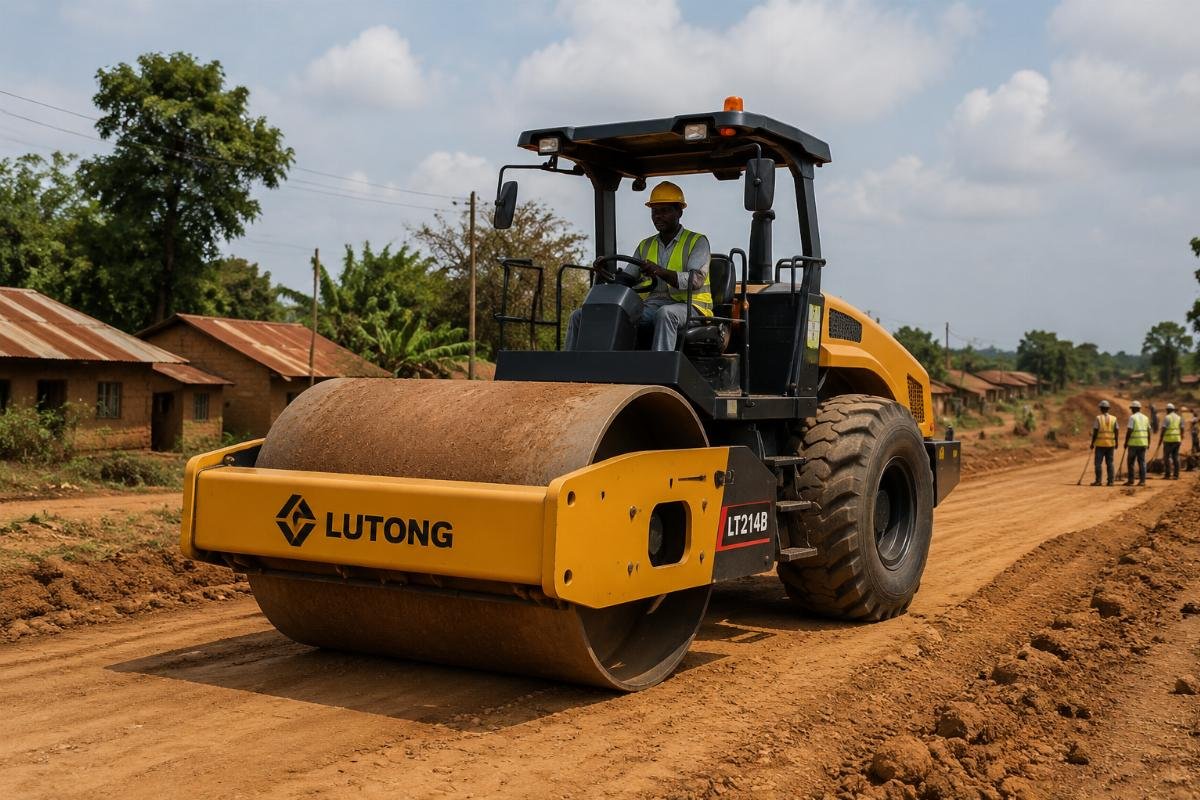
A 1200km rural road infrastructure project team in Kenya ordered 18 units of 10-14 ton single-drum rollers last year, with custom Cummins engine configurations tailored to local high-altitude work conditions, and received full delivery within 21 days. The total equipment budget was 52% lower than the competing quote they received from Komatsu for equivalent spec units [NEED_CITE: Chinese road roller suppliers can deliver custom configured units within 21 days for bulk orders].
- Project Density Requirement Check – Confirm the required compaction density for your target layer first, as this is the non-negotiable baseline for tonnage selection.
- Site Access Verification – Measure the narrowest access point on your work site to ensure the roller width and turning radius fit without extra site modification.
- Transport Compatibility Confirmation – Cross reference unit dimensions with local low-bed truck limits to avoid unexpected extra transport fees.
Is Sourcing Road Rollers From China a Reliable Choice for Global Buyers?
Reliability concerns around Chinese construction equipment are largely outdated, as leading manufacturers hold all global standard certifications and have over 15 years of export track record. The widespread myth of subpar quality stems from unvetted small-scale suppliers that cut corners on build materials, not the established production facilities that serve 120+ countries worldwide.
| Common Assumption | Unverified Vendor Reality | Reputable Supplier Standard |
|---|---|---|
| All Chinese road rollers lack formal certifications | Unregistered small vendors have no compliance documentation | ISO 9001, CE and EPA certified units available |
| Bulk discounts require minimum 10+ unit orders | New suppliers enforce arbitrary high MOQ tiers | MOQ as low as 1 unit with identical factory pricing |
| Overseas after-sales support does not exist | Unvetted vendors offer zero cross-border support | 24/7 support and spare parts warehouses in key markets |
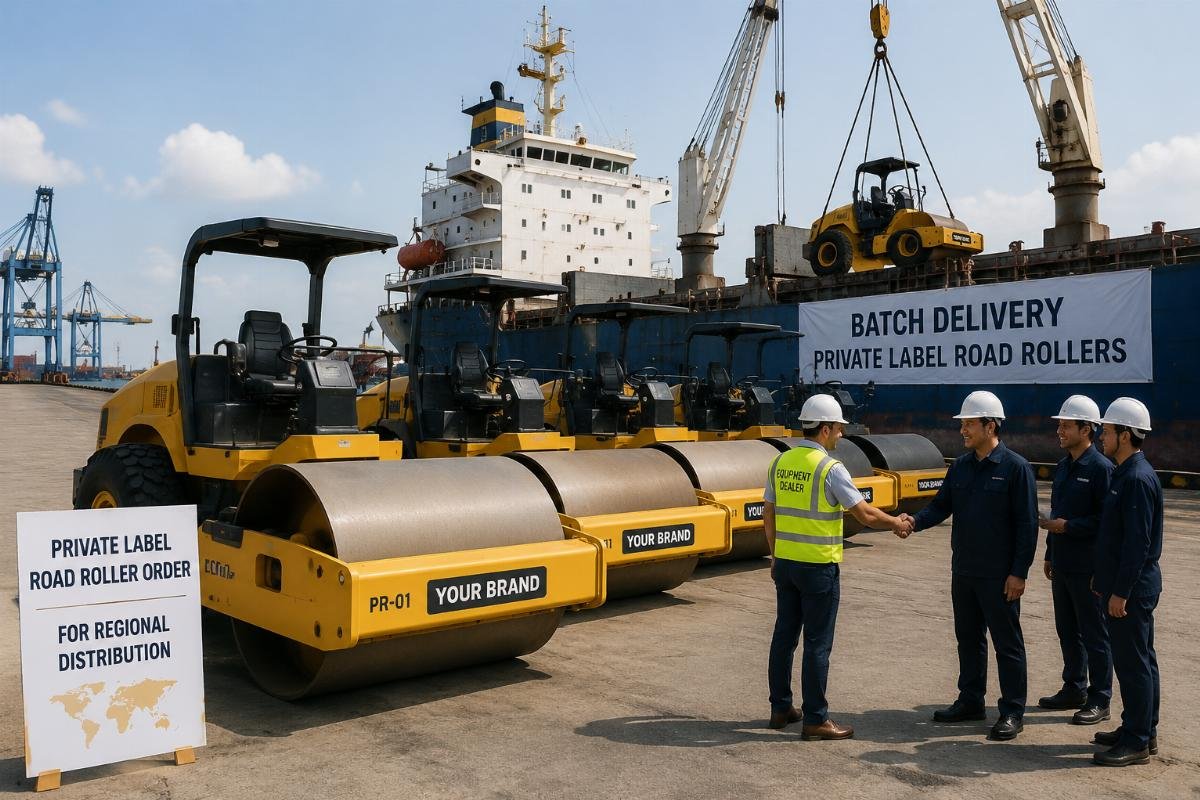
A regional equipment dealer based in Indonesia secured private-label branded 3-8 ton compact rollers from a leading Chinese supplier, with a 2-unit minimum order to serve local small contractor rental demand. The dealer achieved a 38% gross margin on resale, and saw 92% repeat order rates from their rental clients due to consistent unit performance [NEED_CITE: Leading Chinese road roller manufacturers have delivered over 5000 units to 120+ countries globally].
- Certification Validation – Request original scan copies of ISO 9001, CE and EPA certificates from any supplier before proceeding with discussions.
- Export Track Record Check – Ask for references from 2-3 prior buyers in your region to confirm past delivery and support performance.
- MOQ Term Confirmation – Lock in minimum order quantity terms in writing to avoid last minute demands for higher order volumes.
What Customization Options Should You Confirm Before Placing a Road Roller Order?
Confirming core configuration details upfront eliminates 90% of post-delivery adaptation issues that lead to on-site delays. Many buyers skip this step assuming standard units will work for their conditions, only to find the engine cannot handle local fuel quality or the cab layout is incompatible with operator work habits. Leading suppliers including Viceni offer full 3-26 ton single-drum vibratory roller lineups with flexible OEM/ODM customization, MOQ starting at 1 unit and 12-month warranty terms to match diverse regional requirements.
| Common Customization Oversight | Cost of Oversight | Standard Customization Checklist Item |
|---|---|---|
| Default engine selection without climate adaptation | 30% higher failure rate in high temperature or high altitude areas | Engine option (Cummins, Yuchai, Weichai) |
| No brand marking for resale or internal fleet tracking | Lost brand recognition for dealers, inconsistent fleet ID for rental operators | Custom color scheme and brand logo placement |
| Generic hydraulic system for variable terrain | 2x faster component wear on rough mine sites | Hydraulic pressure and flow rate tuning |
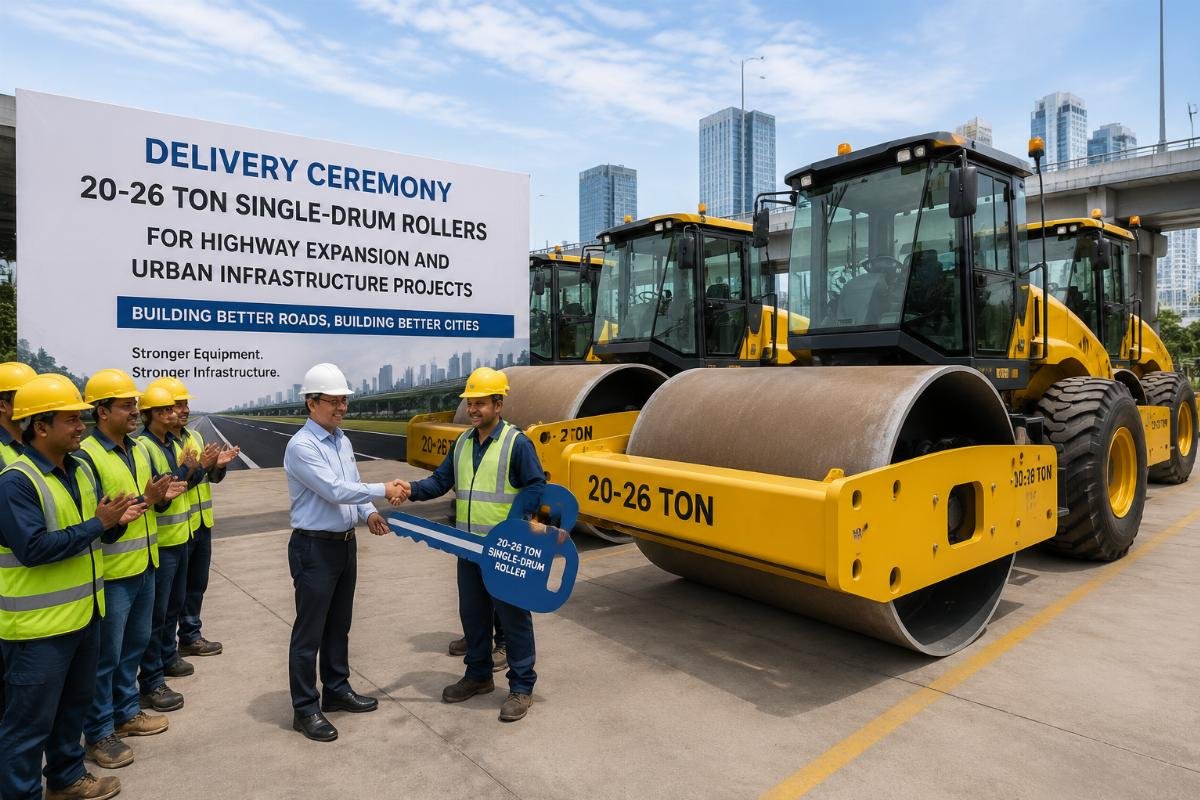
A municipal public works department in Peru procured 6 units of 20-26 ton heavy-duty rollers with pre-confirmed CE and EPA certification for their urban highway expansion project, and the units came with a 12-month warranty and on-site engineer installation support at no extra cost. The total spend was 47% lower than competing bids from European brands, and the units are still operating at full capacity 18 months after deployment [NEED_CITE: Top Chinese road roller suppliers provide free on-site engineer installation for overseas clients].
- Engine Matching – Select an engine model tested for your region’s average temperature, altitude and standard fuel quality.
- Branding Alignment – Confirm brand marking and color requirements if you are a reseller or need consistent fleet identification.
- Warranty Terms Lock – Get written confirmation of warranty coverage period and after-sales response timelines before order placement.
How to Avoid Common Pitfalls When Working With Chinese Road Roller Suppliers
The three highest risk pitfalls for overseas buyers are vague after-sales promises, hidden transport fees and unconfirmed delivery timelines. All of these can be avoided with clear written confirmation before any deposit is paid, even for small single-unit orders.
| Common Pitfall | Typical Outcome | Preventative Step |
|---|---|---|
| Verbal after-sales commitments with no written record | No support available when units break down | Formalize all support terms in the purchase contract |
| Quoted price excludes shipping and port handling | Unexpected extra fees adding 15-20% to total cost | Request all-in delivered pricing to your nearest port |
| No clear delivery timeline specified | Order delayed 4-6 weeks past expected arrival | Lock in firm delivery window with penalty clauses for delays |
Over the course of my work, I have seen dozens of buyers lose thousands of dollars to these avoidable issues, and the simple rule is to never take any verbal promise at face value, no matter how reasonable it sounds during initial calls
