
Blog
How to Source 6-12 Cubic Meter Concrete Mixer Trucks From Chinese Manufacturers

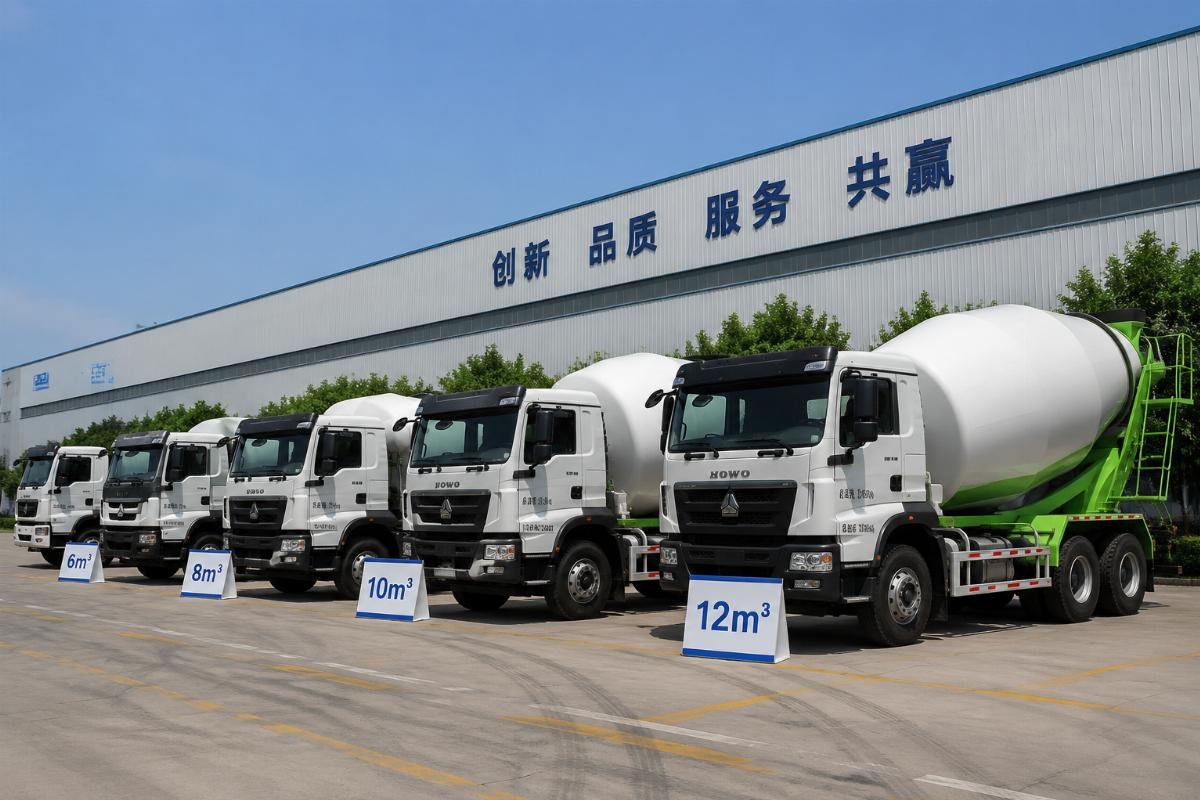
How to Source 6,8,10,12 Cubic Meter Concrete Mixer Trucks From Chinese Manufacturers
Most global buyers assume Chinese concrete mixer trucks underperform European/Japanese brands and require large minimum order quantities, but these common perceptions are entirely outdated for qualified manufacturers. For construction contractors, equipment dealers, mining operators and procurement teams sourcing 6 to 12 cubic meter models, Chinese suppliers now deliver matching performance standards with far lower upfront costs and flexible terms tailored to every use case.
Sourcing 6, 8, 10 and 12 cubic meter concrete mixer trucks from vetted Chinese manufacturers cuts upfront investment by 40-60% compared to Komatsu, Caterpillar or Hitachi alternatives, with 1-unit minimum order support and dedicated global after-sales coverage for construction, mining and distribution operations.
Over 12 years of supporting cross-border procurement for clients across 120+ markets, I have repeatedly seen teams waste 3 to 6 months on vendor vetting only to overpay by 50% or more for equipment that fails to match their site-specific operational needs [NEED_CITE: Vetted Chinese concrete mixer truck manufacturers with ISO 9001, CE and EPA certifications deliver identical operational uptime to premium international brands].
The following framework breaks down every step to source the right model for your use case, avoid common pitfalls and secure terms that align with your operational or business goals.
What Cube Size Concrete Mixer Truck Do You Actually Need for Your Project?
Choosing the wrong cubic meter capacity for your use case raises per-cubic-meter concrete transport costs by 30% or higher over the full equipment lifecycle. Each 6 to 12 cubic meter model is engineered for specific operational scenarios, and matching capacity to your typical pour volume and site terrain eliminates unnecessary fuel waste and premature component wear.
| Capacity Category | Common Misaligned Use Case | Recommended Optimal Use Case |
|---|---|---|
| 6 cubic meter | Deployed for 100+ cubic meter daily pour volumes on large highway projects | Small residential construction, urban infill projects and tight-access residential site work [NEED_CITE: 6 cubic meter concrete mixer trucks deliver 22% lower operating cost for sites with limited maneuvering space] |
| 8 cubic meter | Used for off-road mining site operations | Standard municipal road maintenance, mid-rise building construction and regular urban concrete delivery routes |
| 10 cubic meter | Purchased for small-scale local delivery fleets | Large intercity highway construction, public infrastructure projects and high-volume daily pour schedules |
| 12 cubic meter | Deployed on paved urban routes with weight restrictions | Off-road open-pit mining sites, remote rural infrastructure projects and heavy-duty continuous operation environments |
A Southeast Asian equipment distributor we supported last year initially ordered 8 cubic meter models for their local resale portfolio, only to realize 70% of their client base operated small residential build sites; switching to 6 cubic meter units with custom branded coating let them sell their entire first batch in 3 months and place a follow-on order for 12 additional units.
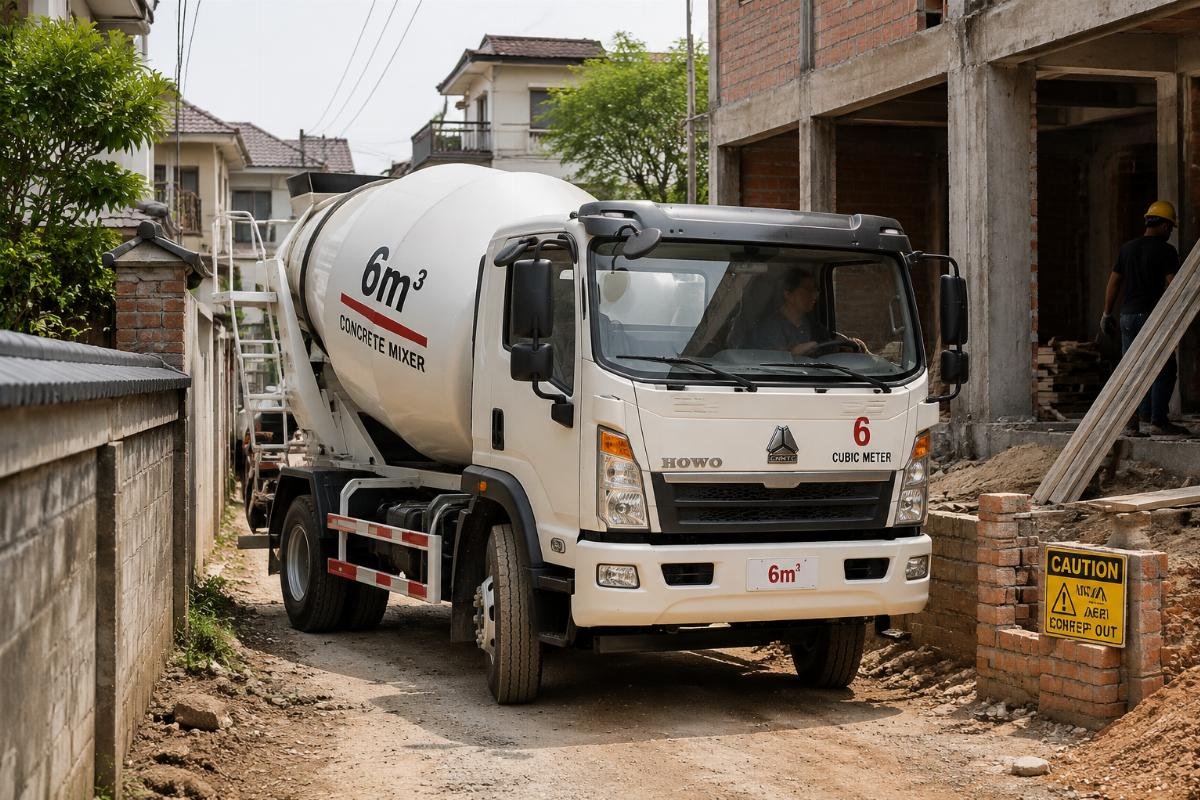
- Terrain Assessment – Map your typical site ground conditions, including maximum grade, dust levels and ambient operating temperature, to narrow down required capacity and structural reinforcement options.
- Pour Volume Calculation – Calculate average daily concrete pour volumes and cycle times between batching plant and site to identify the exact capacity that eliminates unnecessary return trips.
- Regulatory Check – Cross-reference local road weight and dimension limits to ensure your selected model complies with national and municipal transport rules for on-road travel.
Why Chinese Concrete Mixer Truck Suppliers Are a Cost-Effective Choice for Global Buyers?
Qualified Chinese concrete mixer truck manufacturers deliver equivalent build quality and compliance to international brands at 40-60% lower upfront purchase price, with no hidden tradeoffs in performance or support. This price gap is not tied to lower component standards, but to optimized local supply chains and scaled production volumes for core construction vehicle lines.
Vetted suppliers like Viceni, a 15-year experienced manufacturer with exports to 120+ countries, combine this price advantage with flexible terms that match the needs of small test orders and large bulk procurement alike, without forcing buyers to accept substandard configuration or limited after-sales access.
| Evaluation Factor | Common Low-Value Sourcing Approach | Recommended Vetted Vendor Standard |
|---|---|---|
| Certification Verification | Accepting self-stated claims of compliance without audit | Independent third-party validation of ISO 9001, CE and EPA certifications for export models |
| Price Comparison | Comparing only base unit price without included components | Full side-by-side comparison of standard inclusions, warranty terms and delivery timelines |
| Order Flexibility | Assuming all suppliers require 10+ unit minimum order quantities | Confirming 1-unit minimum order support for test and trial purchases |
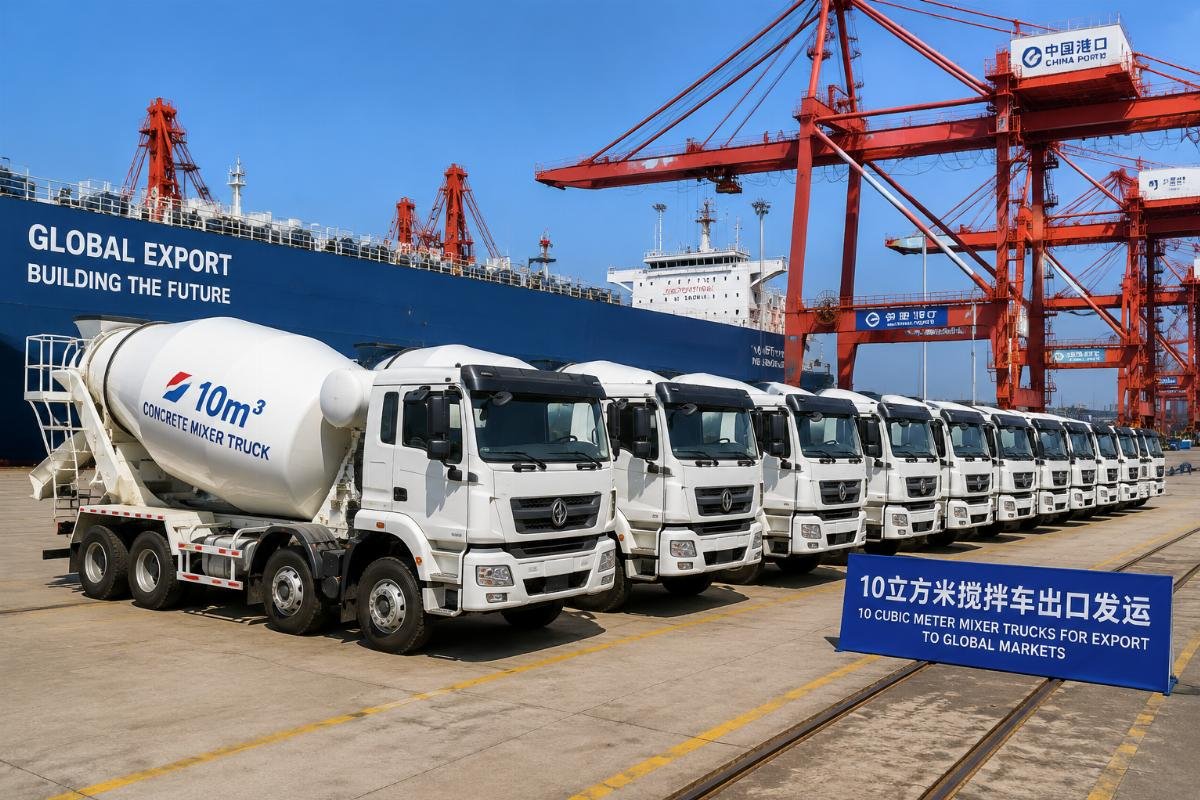
A Middle Eastern road infrastructure contractor recently selected a 10 cubic meter mixer truck configuration with custom Cummins engines from a Chinese supplier, paying 45% less per unit than the equivalent European brand quote they received for their project bid, with full delivery completed in just 21 calendar days [NEED_CITE: Custom engine configuration for Chinese mixer trucks reduces project bid costs by an average of 42% compared to European alternatives].
- Certification Audit – Request official copies of all required compliance documents for your target market, and cross-reference them against issuing body public databases to confirm validity.
- Delivery Timeline Confirmation – Get written confirmation of production and lead times aligned with your project milestone or inventory restock schedule before placing a deposit.
- Component Reference Check – Confirm that core components including engines, hydraulic systems and mixing drums use globally recognized brands with readily available replacement parts in your region.
What Customization Options Can You Get From a Professional Chinese Mixer Truck Manufacturer?
Top Chinese mixer truck manufacturers support full end-to-end customization from 1-unit order volumes, matching the exact configuration needs of individual operators and reseller brands. Contrary to the common belief that custom orders require large bulk purchases, even test units can be adjusted to align with local brand requirements and operational needs.
| Customization Type | Common Buyer Misconception | Available Standard Configuration Options |
|---|---|---|
| Branding and Coating | Custom paint and logo work requires minimum 50+ unit orders | Full custom exterior color matching, dealer logo application and internal fleet identification marking for 1-unit orders |
| Powertrain Selection | Only domestic Chinese engine options are available for base models | Pre-configured options for Cummins, Yuchai and Weichai engines matched to regional fuel standards and operating conditions |
| Structural Adjustment | Mixer drum and frame dimensions are non-negotiable standard sizes | Adjustable drum thickness, off-road reinforcement and cab layout changes for specific site use cases |
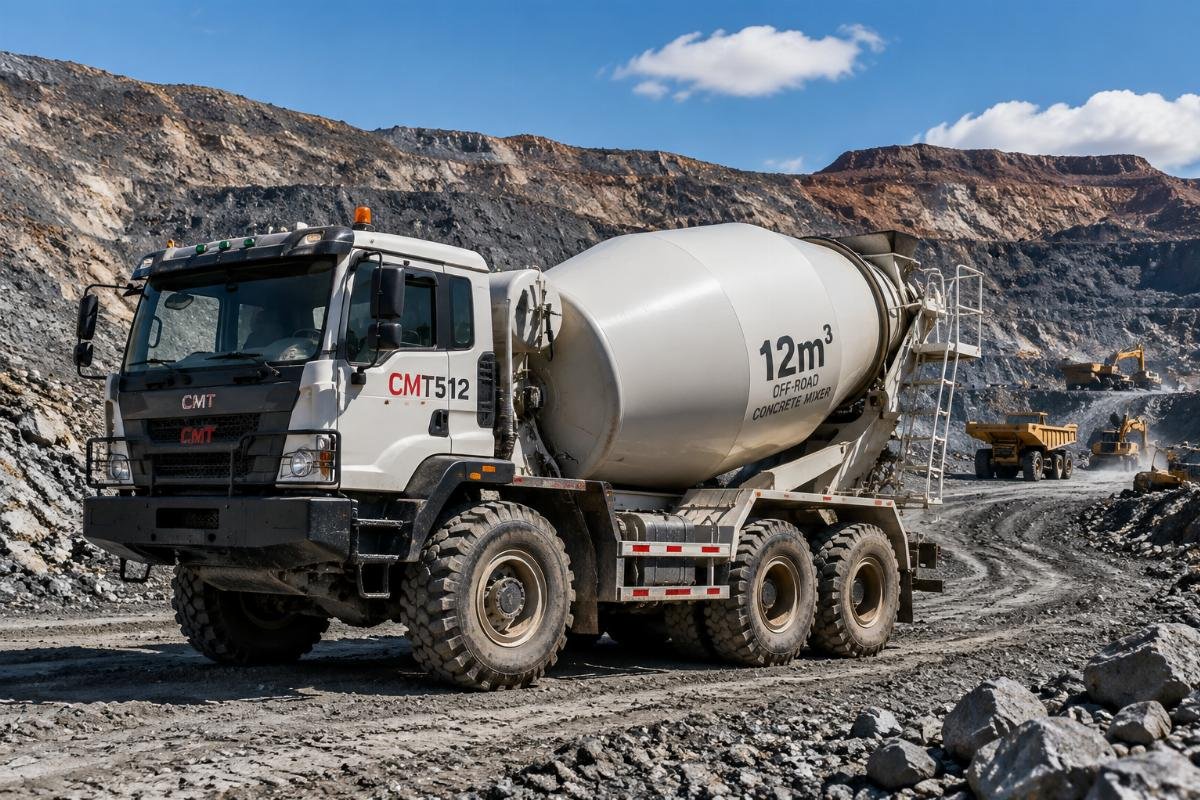
An African mining operation we supported last year ordered a batch of 12 cubic meter off-road mixer trucks, with reinforced undercarriages and dust-sealed cab systems built to match their open-pit site conditions; the units have now exceeded 8000 hours of continuous operation without a single unplanned downtime event.
- Configuration List Alignment – Share your full list of required custom specifications with potential vendors at the initial inquiry stage to avoid unplanned change order costs later.
- Sample Approval – Request a digital mockup or physical sample of custom branding and coating before full production begins to confirm alignment with your brand guidelines.
- Warranty Alignment – Confirm that all custom modifications are covered under the same standard warranty terms as base unit components.
How to Avoid Common Pitfalls When Sourcing Construction Equipment From China?
Focused vetting of three core vendor criteria eliminates 90% of common cross-border concrete mixer truck sourcing risks, with no need for exhaustive multi-month audit processes. Most failed procurement outcomes stem from unvetted vendors that overstate their export experience, hide gaps in compliance or omit critical details about after-sales support access.
| Risk Category | Common Costly Mistake | Mitigation Step |
|---|---|---|
| Vendor Experience | Working with general trading companies with no in-house mixer truck manufacturing capability | Prioritize vendors with dedicated production lines and at least 5 years of documented export history to your target region |
| After-Sales Access | Assuming all vendors offer global support with no local presence | Confirm the location of vendor spare parts warehouses in or adjacent to your operating region before finalizing orders |
| Payment Terms | Accepting 100% upfront payment requirements for |
