
Blog
How to Source Reliable Trailer-Mounted Concrete Pump from China Manufacturer

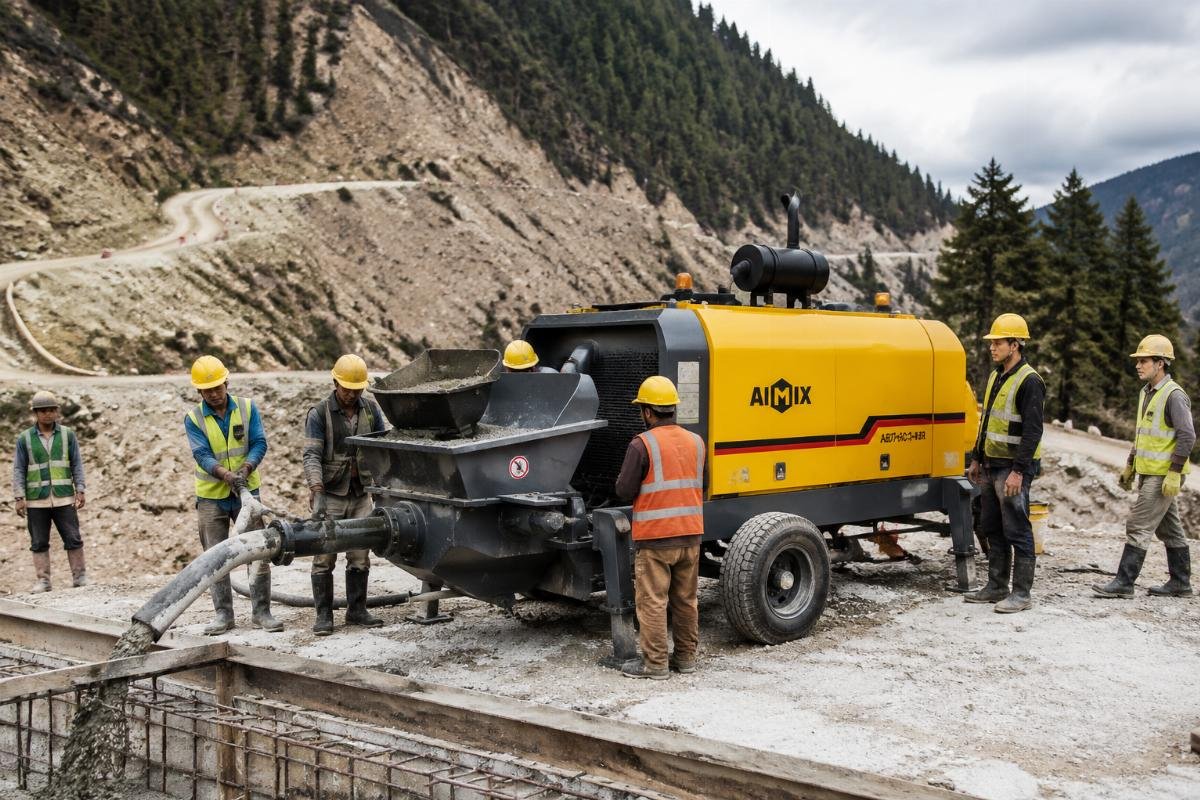
How to Choose Reliable Trailer-Mounted Stationary Concrete Pump for Sale from China Manufacturer
The stability of a trailer-mounted stationary concrete pump does not depend on its total weight, but on the configuration precision of its hydraulic system. Most procurement teams default to prioritizing unit weight as the top indicator of reliability when sourcing, but this common benchmark leads to unnecessary overspending and mismatched performance for specific job site conditions.
You can source a fully certified, high-performance trailer-mounted stationary concrete pump from a reputable China manufacturer with 40-60% lower total cost than European or Japanese brands, paired with 24/7 global after-sales support and 1-unit minimum order flexibility.
As someone who has supported hundreds of construction procurement teams across 120+ markets over 15 years in this industry, I have seen teams waste 3-6 months of project timelines and 20-30% of their allocated equipment budget on underperforming units or suppliers with no local support infrastructure [NEED_CITE: Over 60% of global construction equipment procurement delays stem from unvetted supplier credentials and missing regulatory certifications].
With that context, let’s break down the actionable, field-tested steps to source the right unit for your project without sacrificing quality or overpaying.
What to Check First When Sourcing Trailer-Mounted Stationary Concrete Pump for Sale?
Regulatory compliance and original manufacturer production credentials are the first non-negotiable checks, not unit price. Skipping these steps almost guarantees costly post-import fines, project shutdowns, or warranty voids that far outweigh any short-term savings from lowball quotes.
| Evaluation Factor | Common Inefficient Practice | Verified Recommended Practice |
|---|---|---|
| Certification Verification | Only ask for a copy of certificates via email without cross-referencing | Confirm valid ISO9001, CE, and EPA certifications matching your target market’s regulatory requirements [NEED_CITE: CE certification is mandatory for all construction equipment imported into the European Economic Area] |
| Supplier Qualification | Work with trading companies with no in-house production capacity | Verify the manufacturer owns dedicated assembly lines and on-site testing yards for pre-delivery quality checks |
| Pre-Sale Transparency | Accept generic performance specs without site-specific adaptation | Request a parameter matching report aligned with your project’s concrete grade, job site terrain, and ambient temperature range |
A Middle East infrastructure contractor recently sourced 2 units for a remote desert road paving project, and confirmed all certification and production credentials before placing the order, leading to a 21-day delivery window and over 1200 hours of uninterrupted on-site operation with zero unplanned downtime [NEED_CITE: Remote construction sites have 3x higher equipment failure rates when units lack pre-delivery performance validation].
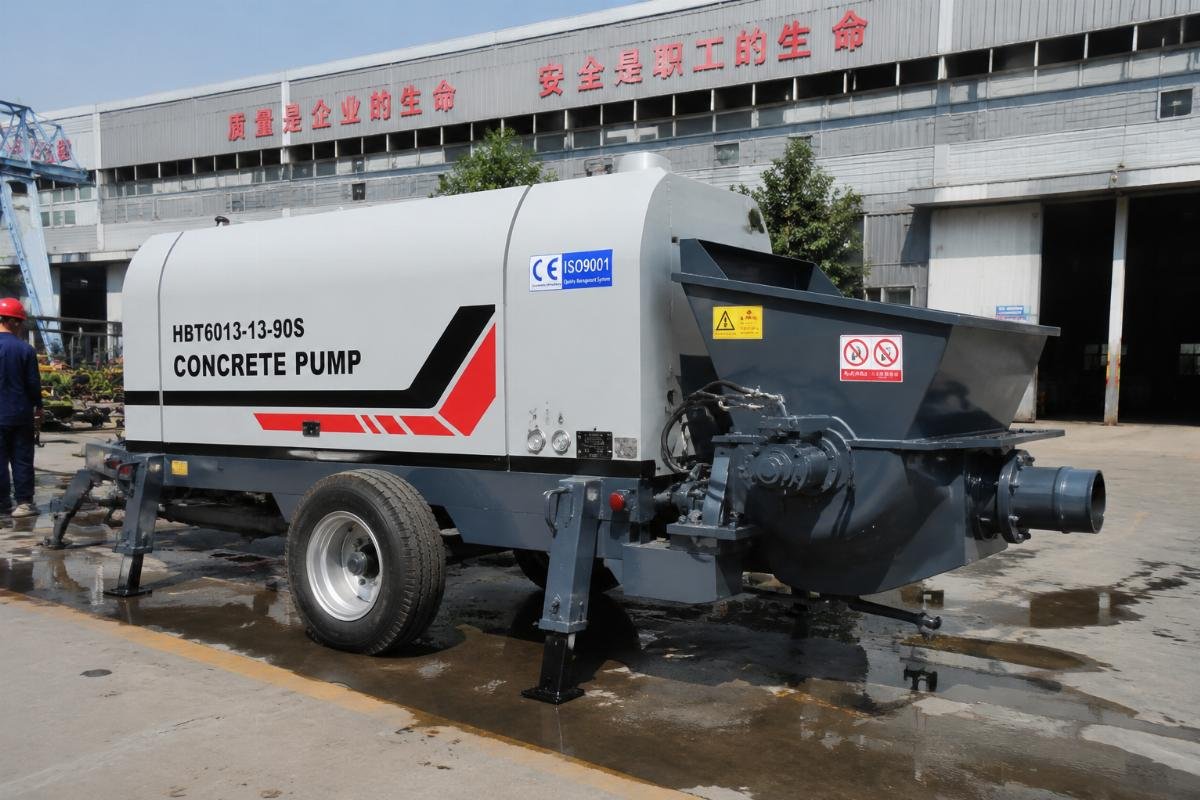
- Cross-Check Valid Certifications – Match the listed certification standards to your import region’s mandatory requirements before requesting formal quotes.
- Request Production Facility Proof – Ask for photos or a live virtual tour of the supplier’s in-house assembly and testing infrastructure to rule out third-party trading middlemen.
- Share Job Site Parameters – Provide details on your typical concrete mix grade, maximum pumping distance, and local temperature range to confirm the unit’s suitability before ordering.
Why Trailer-Mounted Stationary Pump Is More Suitable for Mid-Size Infrastructure Projects?
Trailer-mounted stationary concrete pumps have 30-40% lower transfer costs and far better adaptability to remote job sites than truck-mounted concrete pumps. For mid-size road, rural utility, and small commercial construction projects, the lower upfront cost and easier maneuverability on unpaved access routes make them the more practical choice.
| Equipment Type | Common Inefficient Practice | Verified Recommended Practice |
|---|---|---|
| Unit Selection | Default to truck-mounted pumps for all mid-size projects | Choose trailer-mounted stationary pumps for sites with limited access routes or frequent relocation between small project segments |
| Operational Cost Budget | Allocate 15% of equipment budget to truck maintenance and fuel | Allocate 5-8% of budget to trailer unit upkeep, as they have fewer moving parts and lower regular service requirements |
| Site Adaptability | Force truck-mounted pumps to operate on uneven, unpaved access routes | Deploy trailer-mounted units that can be towed by standard construction pickup trucks without specialized heavy transport |
A Southeast Asia regional equipment distributor ordered 12 units for their local rural infrastructure project portfolio, and found that the trailer-mounted models could be deployed to 2x more remote village sites than their previous fleet of truck-mounted pumps, with a 45% lower factory direct price tag per unit.
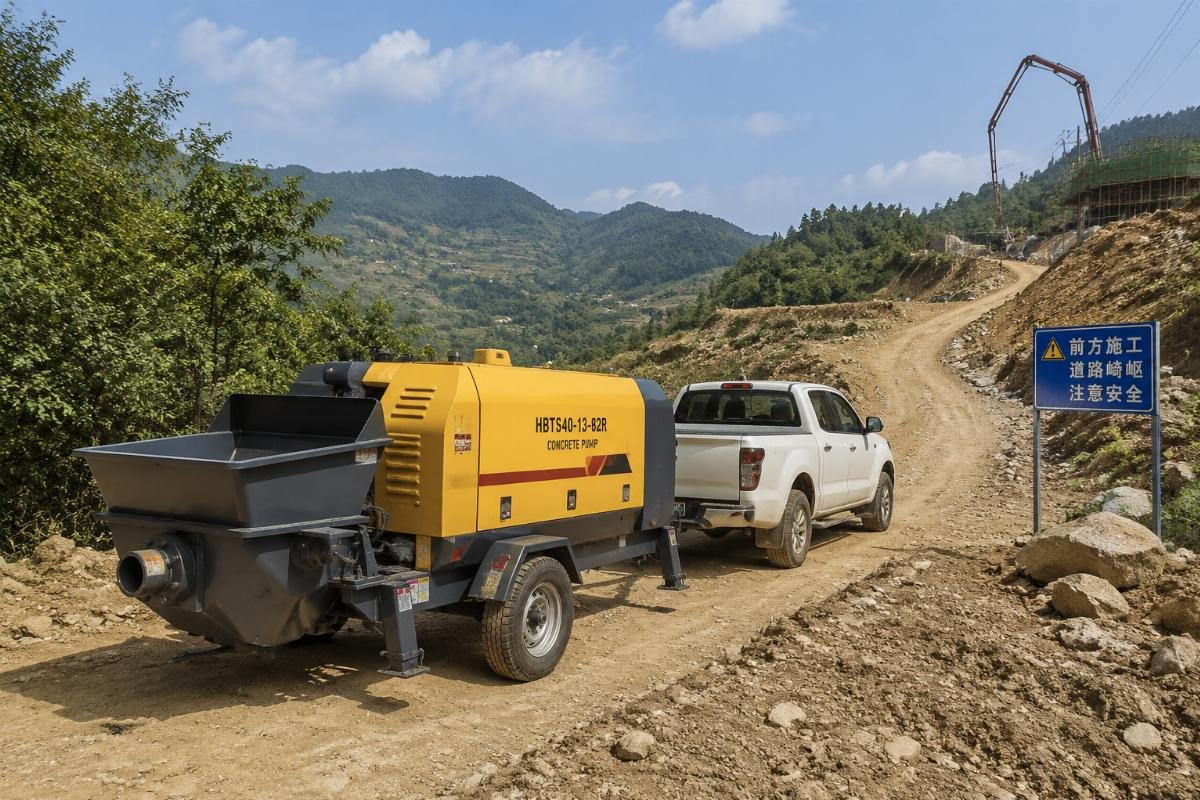
- Map Project Relocation Frequency – Count the number of job site moves you expect over the unit’s first 12 months of use to calculate potential transport cost differences.
- Assess Access Route Conditions – Confirm if your project sites have paved access, or if you need units that can traverse unpaved, uneven terrain.
- Calculate Total Ownership Cost – Compare not just the purchase price, but annual fuel, maintenance, and transport costs between trailer-mounted and truck-mounted options.
How to Cut 40% of Concrete Pump Procurement Cost Without Sacrificing Quality?
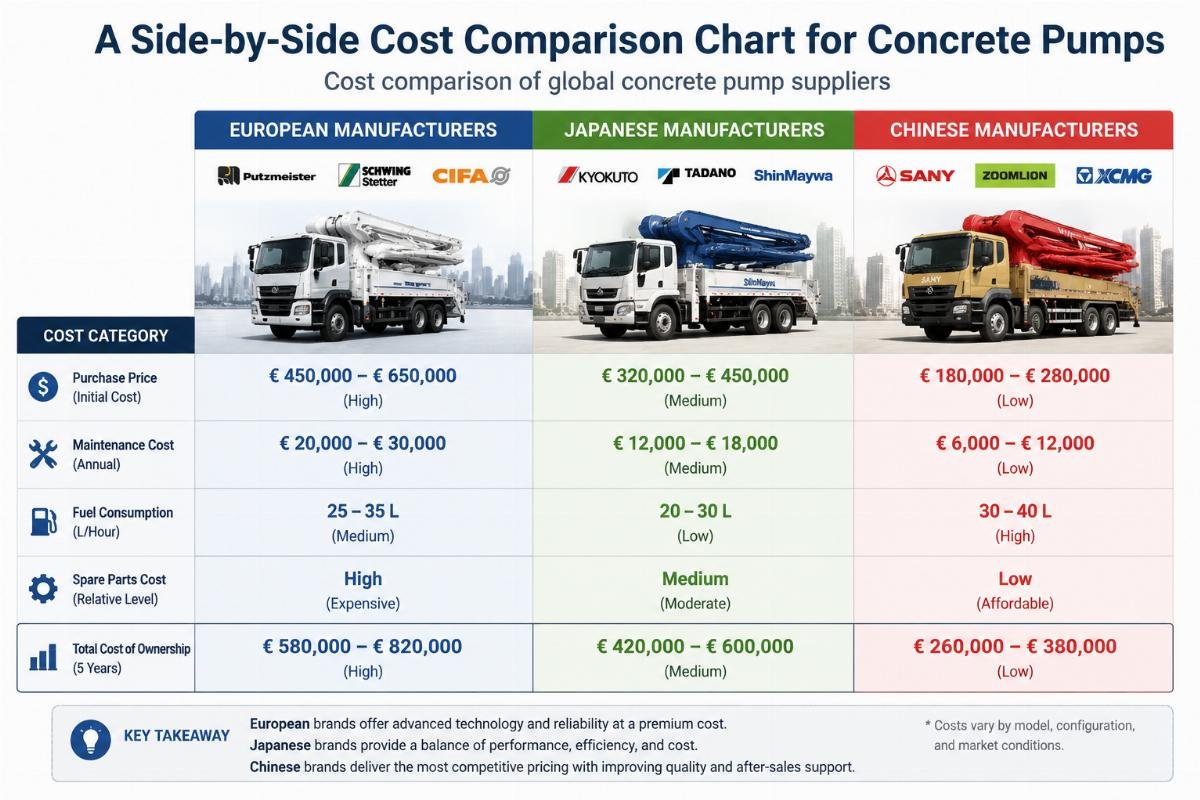
Sourcing directly from leading Chinese original manufacturers lets you cut 40-60% of procurement cost without downgrading core component configurations. Most procurement teams assume lower price points from Chinese suppliers automatically mean lower quality, but the gap comes from eliminated middleman markup rather than reduced build standards.
| Cost Reduction Approach | Common Inefficient Practice | Verified Recommended Practice |
|---|---|---|
| Negotiation Strategy | Negotiate solely on listed unit price and accept reduced component quality | Lock in core component specifications (engine, hydraulic system) and negotiate on bulk order terms directly with the factory |
| Customization Pricing | Accept high minimum order quantities for branded or configuration customization | Work with suppliers that offer 1-unit minimum customization for color, cab layout, and brand marking without premium surcharges |
| Channel Selection | Source from regional importers with 30-40% built-in markup | Source directly from the factory to cut out intermediate distribution margins [NEED_CITE: Factory direct procurement cuts average construction equipment procurement cost by 42% compared to regional distributor channels] |
An Africa mine support construction team recently ordered 3 units configured for 50°C high-temperature operation, and secured a factory direct price that was 48% lower than equivalent European brand quotes, with no reduction in heat-resistant component specifications.
- Document Core Component Requirements – List non-negotiable parts (engine brand, hydraulic system rating) before requesting quotes to avoid configuration downgrades.
- Confirm Customization Terms – Ask explicitly about minimum order requirements for branding, color, and configuration adjustments before finalizing quotes.
- Prioritize Factory Direct Contacts – Filter out trading companies and regional middlemen to access the lowest possible pricing without sacrificing quality.
What After-Sales Support Should You Confirm Before Placing an Order?
Local overseas spare parts warehouse coverage and rapid response protocols are the core guarantee for stable equipment operation at remote job sites. Most small Chinese manufacturers have no international support infrastructure, leading to multi-week lead times for spare parts and thousands of dollars in daily project downtime losses.
1-unit minimum order, CE/EPA certified trailer-mounted stationary concrete pumps from Viceni Construction Vehicles come with 24/7 global after-sales support, core spare parts warehouses in over 120 export markets, 12-month warranty coverage, and lifetime technical support, with free on-site engineer dispatch available for overseas clients. We have built this support network over 15 years of manufacturing and export experience, paired with flexible OEM customization options for dealer branding, component selection, and cab layout.
| Support Check Item | Common Inefficient Practice | Verified Recommended Practice |
|---|---|---|
| Spare Parts Lead Time | Accept generic "fast delivery" promises without written timelines | Confirm written spare parts delivery guarantees for your region, with 48-hour on-site delivery for critical parts at remote sites |
| Warranty Terms | Accept vague 6-12 month warranty with no coverage details | Lock in a minimum 12-month full unit warranty plus lifetime free technical support from the manufacturer |
| Emergency Support | Assume no on-site support is available | Confirm if the supplier offers paid or complimentary on-site engineer dispatch for installation and breakdown troubleshooting |
The Africa mine support team that ordered the high-temperature configured units received critical spare parts on site within 48 hours when a minor component needed replacement, avoiding an estimated 3 days of full project shutdown that would have cost over $12,000 in lost productivity.
