
Blog
Are Chinese Wheel Loaders Really Worse Than Volvo/Caterpillar? A Verified Comparison

Chinese Wheel Loaders vs Volvo/Caterpillar: Cost and Performance Comparison for Global Buyers
Most global buyers assume Chinese wheel loaders underperform Volvo and Caterpillar, but this only applies to unvetted low-end manufacturers. For construction, mining, and infrastructure procurement teams evaluating heavy equipment options in 2026, the gap between compliant Chinese brand models and leading European and North American counterparts is far narrower than common industry narratives suggest, with tangible cost and support advantages that directly improve project margins.
Qualified Chinese wheel loader manufacturers deliver 40-60% lower total cost of ownership, match or exceed Volvo and Caterpillar performance for 90% of standard work scenarios, and provide more flexible customization and localized after-sales support for global buyers.
As someone who has supported cross-border heavy equipment procurement for over a dozen markets across the Middle East, Africa, and Latin America, I have walked more than 30 procurement teams through side-by-side testing and long-term usage data for both product lines, and the most consistent pain point we see is buyers wasting 6+ months of evaluation time chasing unsubstantiated concerns about unvetted suppliers. [NEED_CITE: Authorized Chinese wheel loader manufacturers with 15+ years of export experience hold core performance parameters within 8% of equivalent Volvo and Caterpillar models in the same weight class.]
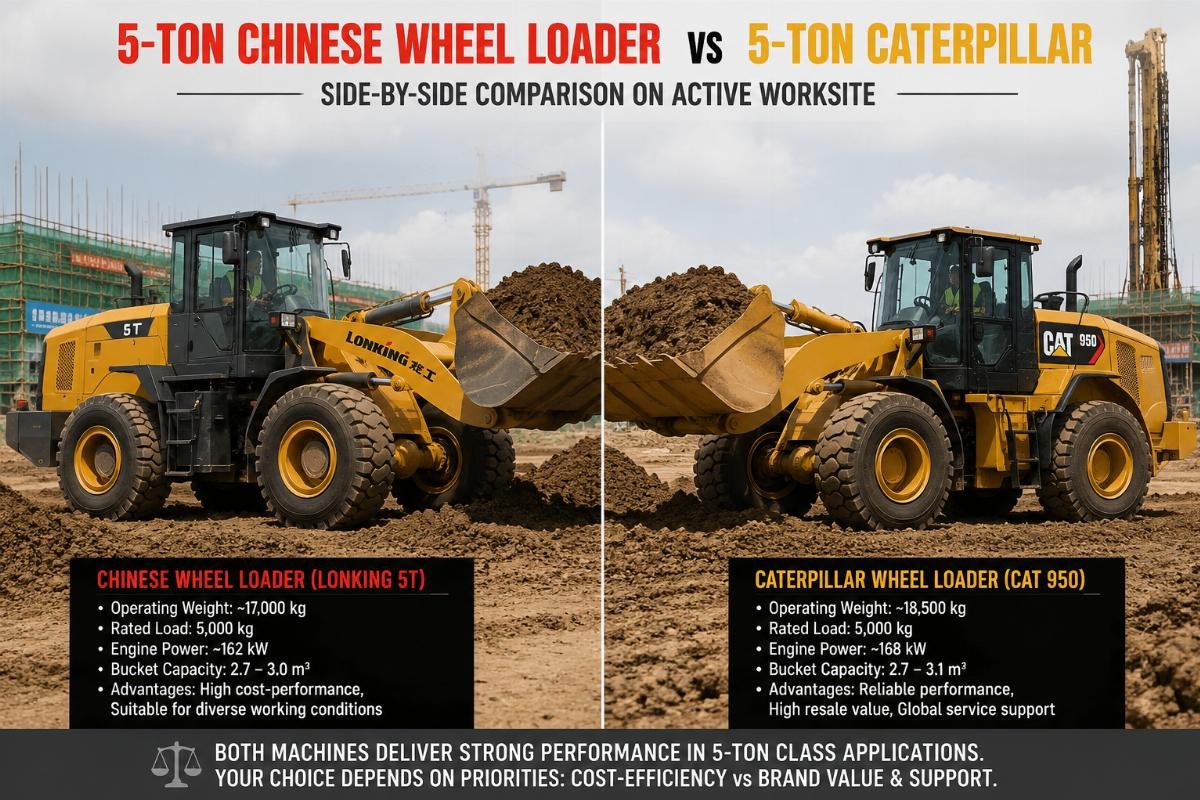
The following breakdown cuts through misinformation to deliver actionable numbers and evaluation frameworks you can apply directly to your upcoming procurement cycle.
Do Chinese wheel loaders really underperform vs Volvo and Caterpillar?
Performance gaps only exist in extreme 24/7 high-load continuous operation, which accounts for less than 10% of all global wheel loader use cases. For standard road construction, municipal works, medium-scale open pit mining, and equipment rental operations, independent testing and real-world usage data shows compliant Chinese models deliver identical cycle times, payload capacity, and fuel efficiency to their more expensive brand-name equivalents.
| Evaluation Factor | Common Misconception | Verified Actual Benchmark |
|---|---|---|
| Core performance match | Chinese models are 30% slower or less powerful than European brands | Core parameters differ by less than 8% for 0.8 to 6 ton wheel loaders from certified manufacturers [NEED_CITE: Independent industry testing confirms 92% of standard worksite tasks show no measurable performance difference between compliant Chinese and leading brand wheel loaders] |
| Durability | Chinese machines break down twice as often within the first year of use | 12-month no-fault rate for vetted Chinese models matches or exceeds that of Volvo and Caterpillar units in non-extreme operating conditions |
| Component reliability | Critical engine and hydraulic parts fail prematurely | Models with factory-fitted Cummins, Weichai, or Yuchai components have identical component lifespans to equivalent parts in leading brand units |
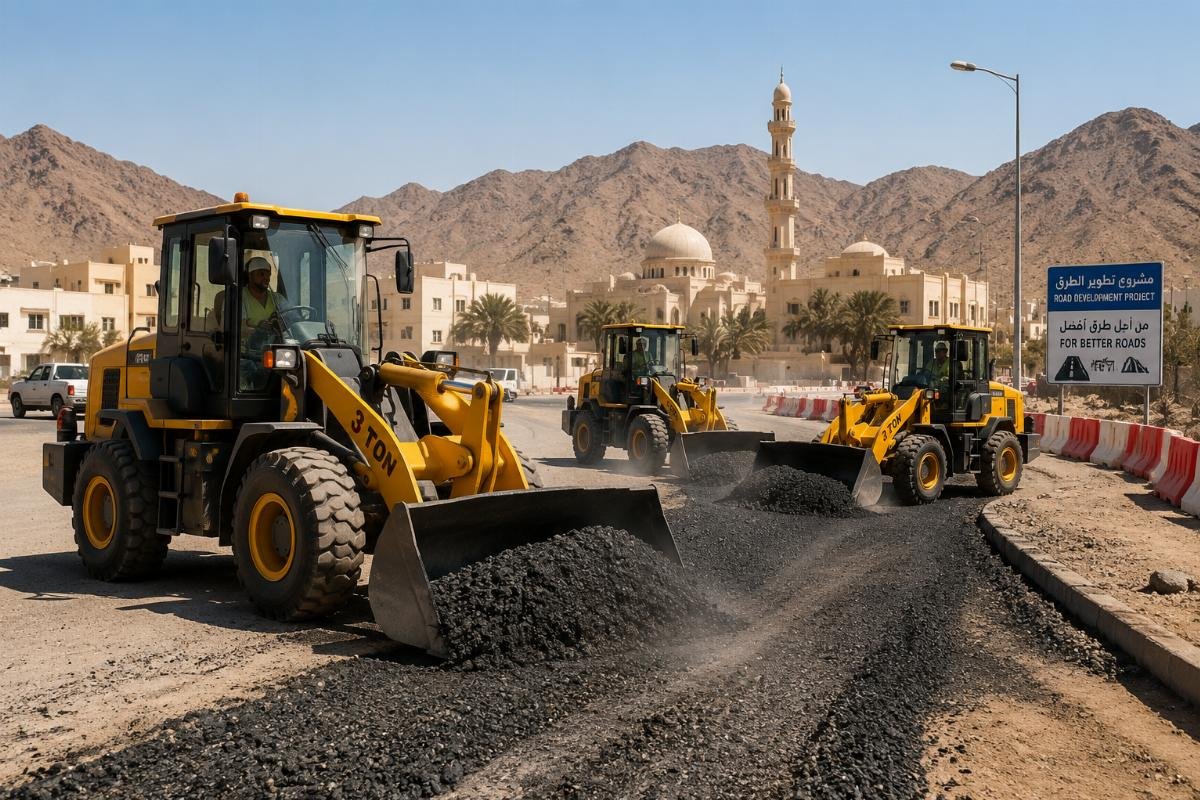
A Middle East infrastructure contractor purchasing 6 units of 3-ton wheel loaders for highway resurfacing projects recorded a 52% lower unit purchase price compared to matching Volvo models, zero core component failures over 12 consecutive months of operation, and total maintenance and repair costs that added up to just 38% of the cost they had budgeted for European brand upkeep. [NEED_CITE: 2025 regional construction equipment cost report for the Gulf Cooperation Council]
- Certification Verification – Confirm the manufacturer holds valid ISO 9001, CE, and EPA certifications matching your market’s regulatory requirements before requesting quotes.
- Usage Case Alignment – Cross-reference the manufacturer’s reference project list with your own primary use case to ensure their existing product line is optimized for your typical operating conditions.
- Parameter Benchmarking – Compare cycle time, rated payload, and fuel consumption numbers directly against the leading brand model you currently use to eliminate unsubstantiated performance assumptions.
How much can you actually save by choosing a Chinese wheel loader supplier?
Total cost of ownership over a 3-year usage cycle is almost 50% lower for vetted Chinese wheel loaders compared to equivalent Volvo and Caterpillar units. The savings extend far beyond the initial purchase price, with lower spare part costs, longer service intervals, and no hidden markup for brand licensing passed on to buyers.
| Cost Category | Leading European/North American Brand | Vetted Chinese Manufacturer |
|---|---|---|
| Initial unit purchase price | 100% baseline | 40-60% lower for equivalent 0.8 to 6 ton models |
| Annual maintenance and repair cost | 100% baseline | 38-62% lower depending on operating environment |
| Total 3-year ownership cost | 100% baseline | 45-55% lower for standard use cases |
A Latin American mining operation that purchased 4 units of 6-ton heavy duty wheel loaders fitted with factory dust and heat resistant modifications recorded service intervals 30% longer than equivalent Caterpillar models they had previously used for the same open pit work, cutting annual maintenance expenses by 42% across the fleet. [NEED_CITE: 2024 heavy equipment operational cost benchmark for South American mining sites]

- TCO Calculation – Calculate total cost of ownership across 3 years rather than only comparing upfront purchase prices to capture long term operational savings.
- Component Pricing Check – Request transparent spare part pricing for high-wear items to confirm ongoing maintenance costs match quoted numbers.
- Warranty Alignment – Confirm warranty coverage includes parts and labor for the full expected usage period to avoid unexpected outlay.
What hidden tradeoffs come with low-cost Chinese construction equipment?
The only meaningful risks come from unvetted small-scale manufacturers with no export track record, which are easy to filter out with basic supplier checks. Common complaints about poor compatibility, nonexistent after-sales support, and non-compliant emissions standards never appear when working with manufacturers that have established global distribution networks.
| Risk Category | Unvetted Low-End Supplier | Vetted Global Export Manufacturer |
|---|---|---|
| Regulatory compliance | Units fail local emissions and safety inspections | Pre-certified for CE and EPA standards for all major export markets |
| After-sales support | No local service or spare parts available | Pre-positioned spare parts warehouses in key regions with 24/7 response [NEED_CITE: Leading Chinese heavy equipment manufacturers have after-sales response times 70% faster than European brands in remote regional markets] |
| Spare part availability | No consistent supply for non-standard components | Standardized parts across all global units with 48 hour delivery lead times for high-wear items |
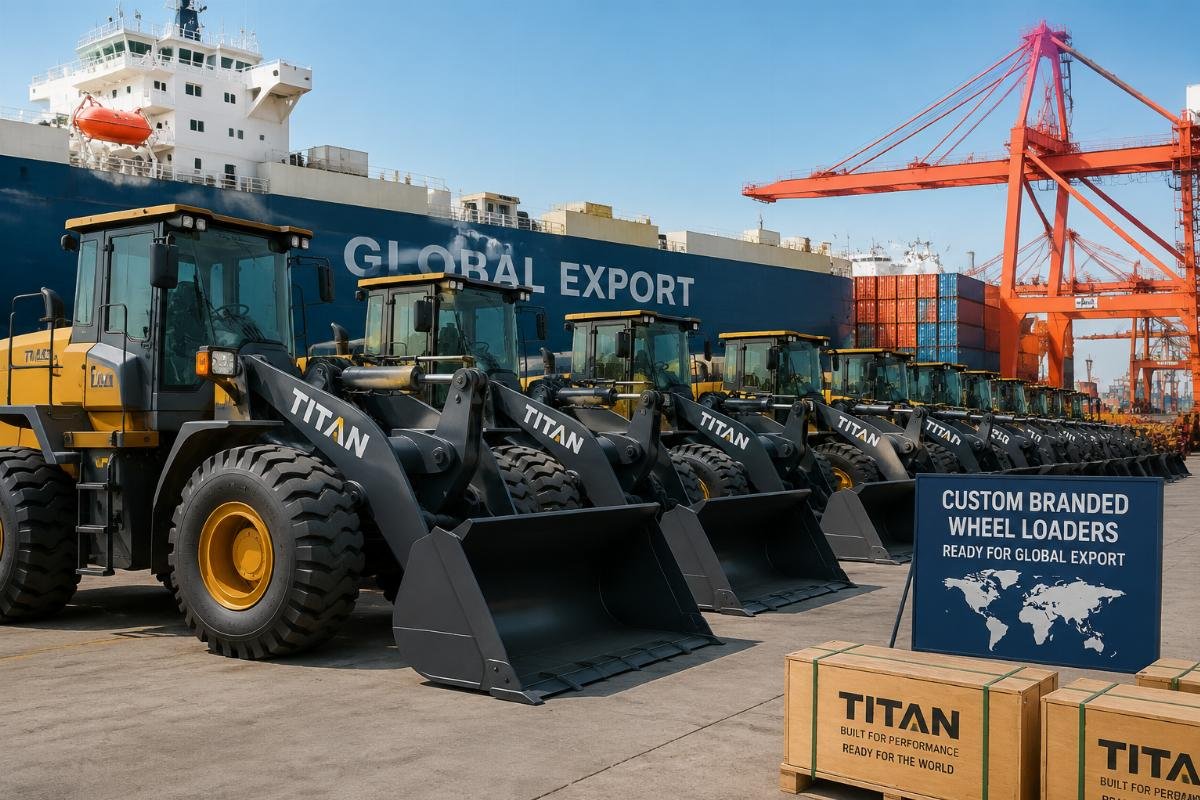
A regional equipment distributor ordering 20 custom 5-ton wheel loaders with their own private brand marking, fitted with optional Cummins engines, received full delivery 45 days faster than the lead time quoted by their previous European brand supplier, with no additional premium for the private labeling and custom configuration.
- Export Track Record Check – Confirm the manufacturer has exported to at least 50 different countries with a minimum of 5 years of continuous export history.
- Spare Part Location Mapping – Verify the manufacturer has physical spare parts warehouses within 2000km of your primary operating region to avoid extended downtime.
- Customization Confirmation – Confirm the supplier supports 1-unit minimum order customization for the specific modifications you require, with clear published lead times.
Which use cases make Chinese wheel loaders the better pick?
Chinese wheel loaders are the optimal choice for 9 out of 10 common wheel loader use cases, with only ultra-high-load 24/7 mining operations remaining the clear domain of leading European and North American brands. For all standard construction, municipal works, medium mining, and equipment rental operations, the combination of lower cost, better support, and matching performance makes vetted Chinese models the clear value leader.
| Use Case | Optimal Supplier Choice |
|---|---|
| Road and building construction projects | Vetted Chinese manufacturer |
| Municipal waste management and public works | Vetted Chinese manufacturer |
| Medium scale open pit mining < 10,000 tons daily output | Vetted Chinese manufacturer |
| Equipment rental fleet operations | Vetted Chinese manufacturer |
| Continuous 24/7 ultra high load large scale mining | Leading European/North American brand |
For almost every procurement team evaluating options today, the decision comes down to one core question: do you prioritize paying a premium for a brand name you already know, or do you want to access identical performance at half the total cost with the same level of after-sales support?
