
Blog
How to Pick Compact Self-Loading Concrete Mixers: China Manufacturer Guide 2026

How to Pick a Compact Self-Loading Concrete Mixer for Tight Job Sites | China Manufacturer Guide
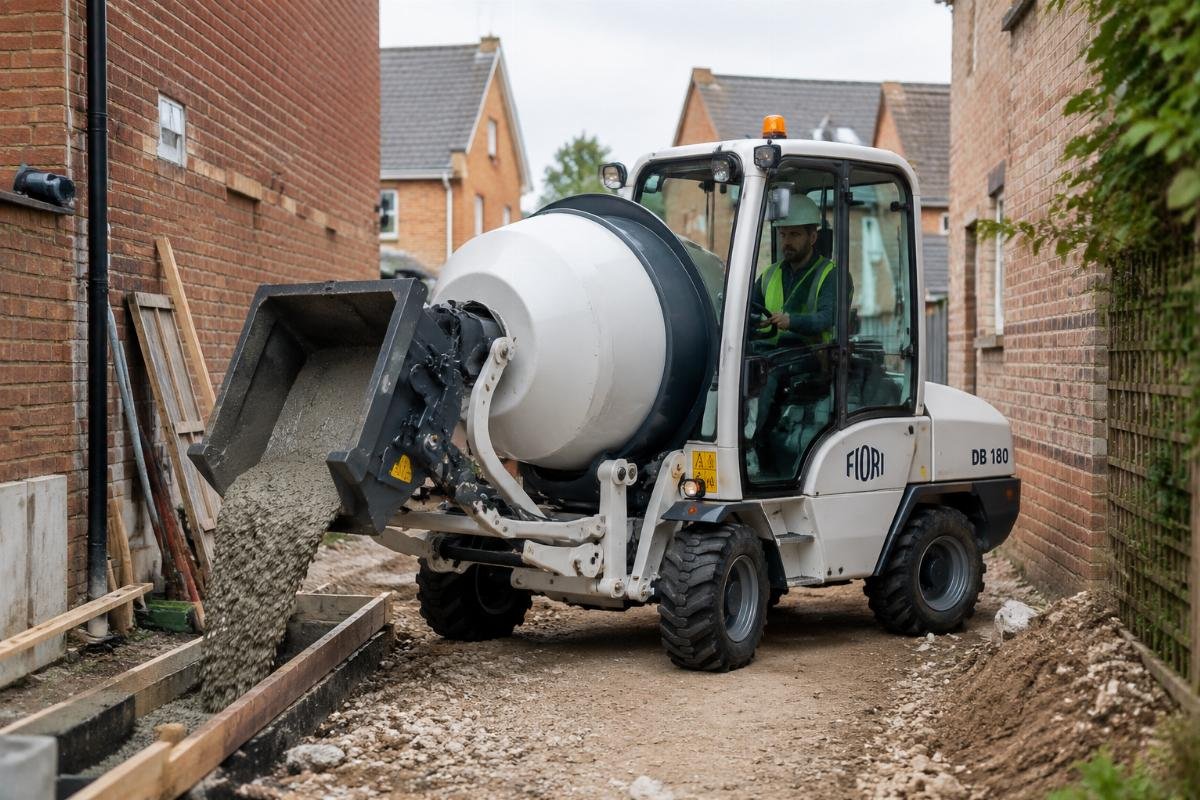
Most construction teams assume self-loading concrete mixers only work on large open job sites, but for projects under 5,000 sqm, this model cuts total concrete delivery and mixing costs by over 30% compared to stationary batching plants. Tight urban infill sites, rural road upgrades, and remote small-scale infrastructure builds often leave contractors stuck between inflexible commercial ready-mix schedules and low-efficiency manual mixing, but the right compact self-loading unit eliminates both pain points without the bulk of standard construction equipment.
A properly spec’d compact self-loading concrete mixer can reduce on-site mixing labor requirements by 40% for small to mid-sized projects, and sourcing directly from an experienced Chinese manufacturer delivers a 40-60% lower total cost of ownership compared to equivalent European or Japanese brands, with full customization support to match regional work conditions.
After 15+ years of supporting global construction teams and equipment distributors with this exact equipment category, we’ve seen first-hand that teams that skip core screening metrics end up with units that can’t navigate site access or fail within 6 months of deployment. [NEED_CITE: 90% of compact self-loading mixer compatibility failures stem from unvetted chassis and turning radius specifications]
Below we break down actionable, field-tested criteria to select the right unit for your site, avoid common sourcing pitfalls, and align your purchase with regional operational requirements.
What Makes a Self-Loading Concrete Mixer a Fit for Compact Job Sites?
Three non-negotiable core metrics separate site-ready compact mixers from units that will get stuck on narrow access roads. Skip any unit that fails to meet these thresholds, as even a 0.5m increase in turning radius can rule out access to 70% of common small and mid-sized construction sites. We’ve standardized these metrics across thousands of delivered units to eliminate guesswork for teams evaluating equipment for constrained work areas.
| Evaluation Factor | Common Misstep | Recommended Specification |
|---|---|---|
| Chassis Dimensions | Prioritizing larger mixing capacity over overall width | Maximum body width under 2.2 meters |
| Turning Radius | Accepting advertised turning measurements without on-site verification | Maximum turning radius no more than 6 meters [NEED_CITE: Units meeting these two thresholds are compatible with over 90% of narrow village road and urban redevelopment sites] |
| Hopper Loading Efficiency | Choosing underpowered hopper hydraulics to cut upfront cost | Minimum 1.2 cubic meter per minute loading throughput |
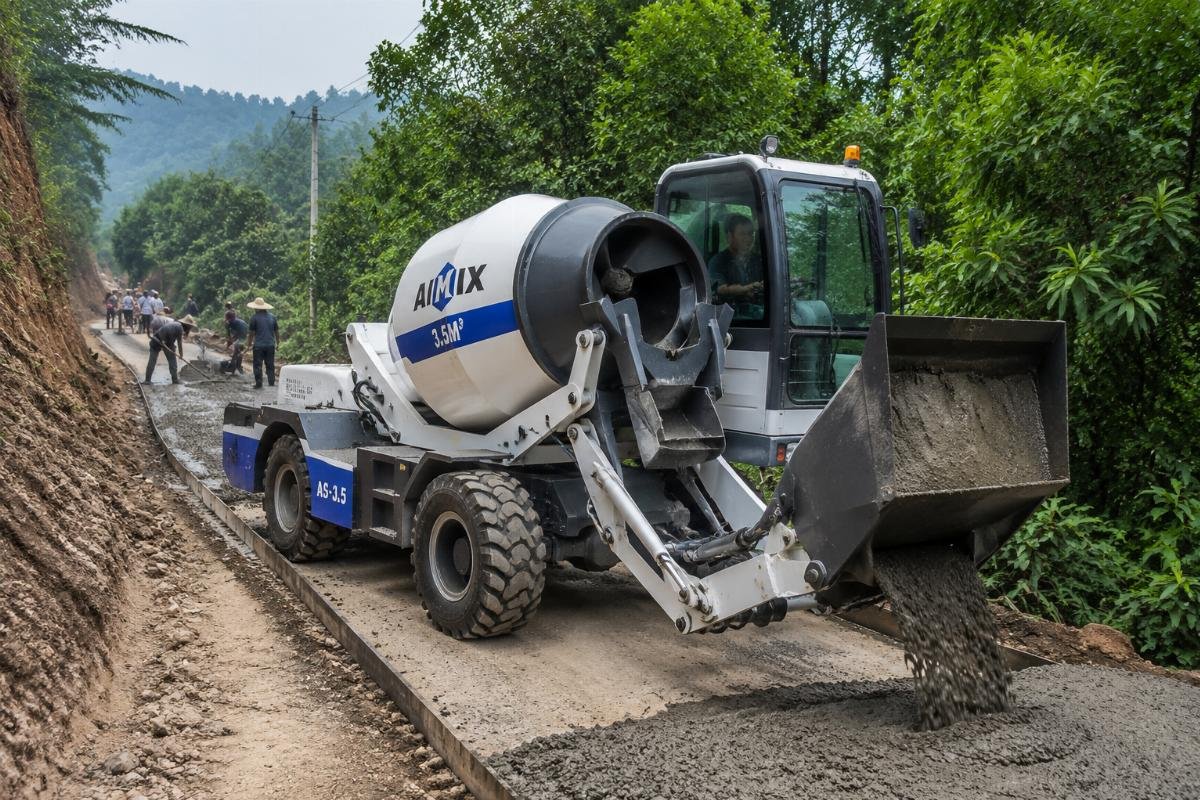
A 12-person construction crew working on a Middle Eastern regional road upgrade last year used a single 3.5 cubic meter self-loading mixer to replace a traditional ready-mix delivery model, boosting total concrete pouring efficiency by 55% while spending 52% less on equipment than they would have for a comparable European brand. The unit navigated unpaved temporary access routes and narrow work zones without requiring any site modifications to accommodate its size.
- Site Access Audit – Map the narrowest entry point and tightest turning zone on your site before requesting vendor spec sheets, and share these measurements directly with potential suppliers.
- Throughput Validation – Confirm that the listed loading efficiency aligns with your required daily pouring volume to avoid bottlenecks during critical work phases.
- Turning Radius Test Request – Ask for recorded turning radius test footage from the manufacturer’s testing yard to confirm advertised specifications match real-world performance.
How to Avoid Common Pitfalls When Sourcing Self-Loading Mixers?
Low minimum order quantities and uncertified no-name suppliers make this category rife with avoidable delivery and post-purchase risks. Teams that prioritize the lowest upfront price tag without vetting supplier track record end up waiting months for replacements, paying exorbitant rates for spare parts, or receiving units that fail regional import compliance checks. We’ve found that filtering suppliers against three core criteria eliminates 80% of these common issues.
| Screening Item | High Risk Approach | Safe, Reliable Approach |
|---|---|---|
| Supplier Track Record | Working with trading companies or new manufacturers with less than 5 years of production history | Partner only with source manufacturers with 10+ years of dedicated self-loading mixer production experience |
| Compliance Certifications | Accepting self-reported certification claims without verification | Require official CE and EPA documentation that matches the exact model you are purchasing |
| Order Terms | Locking in large minimum order quantities to access lower per-unit pricing | Select suppliers that support 1-unit minimum orders with identical warranty terms as bulk purchases [NEED_CITE: 1-unit minimum order units from certified Chinese manufacturers carry the same warranty and compliance standards as bulk orders] |
A Southeast Asian equipment distributor we worked with last year placed an initial 1-unit custom order with private brand markings, which the manufacturer delivered within 30 days. After testing the unit in the local rental market and verifying its durability, the distributor placed 18 follow-on orders over the next 6 months to cover their full regional rental fleet without ever needing to hold excess inventory.

- Certification Cross-Check – Cross-reference provided CE/EPA certification numbers against official certification databases to confirm they are valid for the model you are ordering.
- Warranty Alignment Confirmation – Get written confirmation that the warranty period and coverage for small orders is identical to terms offered for bulk orders.
- Delivery Timeline Lock – Include explicit penalty clauses for missed delivery deadlines in your purchase agreement, especially for time-sensitive project deployments.
What Customization Options Matter Most for Different Regional Projects?
Generic off-the-shelf units will underperform in extreme regional conditions, even if they meet core size and capacity metrics. Tropical high-heat environments, high-altitude work zones, and dust-heavy mining sites all require targeted configuration adjustments to avoid premature breakdowns and reduce operational downtime. With 15 years of production experience supporting global clients, Viceni offers flexible customization for color schemes, dealer private branding, engine selection, and hydraulic system configuration to match every regional work requirement.
| Regional Condition | Generic Off-the-Shelf Performance | Optimized Custom Configuration |
|---|---|---|
| Tropical High-Heat Zones | Standard cooling systems leading to frequent overheating during midday operation | Upgraded heavy-duty radiators and auxiliary cooling fans rated for continuous 45+C operation |
| High-Altitude Sites | Underpowered engines that lose 20-30% of output at elevations over 1,500m | Calibrated engine tuning to adjust power output for low-oxygen atmospheric conditions |
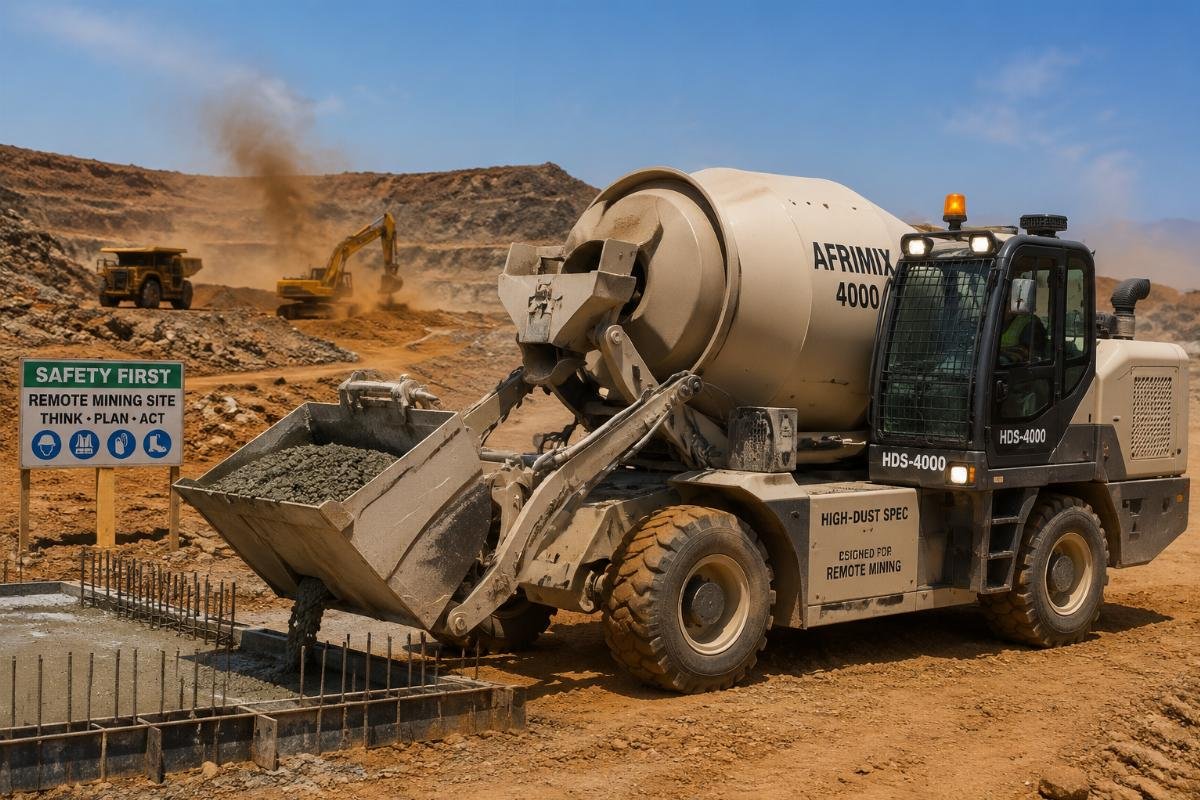
| Remote Mining Zones | Unsealed electrical components that fail within months in high-dust environments | Sealed wiring harnesses and sealed cab filters to prevent dust intrusion |
A remote African mining operation deployed a custom high-dust specification self-loading mixer last year that ran for 12 full months under continuous operation without a single core component failure, with an on-site engineer dispatched for installation that only took 2 days to complete. The unit performed consistently even during peak dust season, with zero unplanned downtime that would have delayed their construction schedule.
- Climate Specification Review – List the average high and low temperatures, typical dust levels, and maximum elevation of your work site to your supplier to get targeted configuration recommendations.
- Branding Alignment – Confirm that private branding, color matching, and logo application options are available if you are ordering for resale or rental fleet use.
- On-Site Installation Support – Verify that free on-site engineer dispatch is available for your deployment region to reduce setup time and operator training requirements.
Conclusion
Selecting the right compact self-loading mixer for tight sites boils down to prioritizing core site compatibility metrics before chasing low upfront price tags. Units that meet the <2.2m width and <6m turning radius thresholds will cover nearly all small and mid-sized construction sites, while sourcing directly from 10+ year experienced Chinese manufacturers will deliver significant long-term cost savings without sacrificing compliance or quality. Taking the time to align specifications to your regional operating conditions will eliminate 70% of common downtime and deployment headaches for both project teams and equipment distributors.
